

























Lindsey Vonn injury update after Olympic crash—officials say she “will be okay” post-surgery as recovery timeline begins

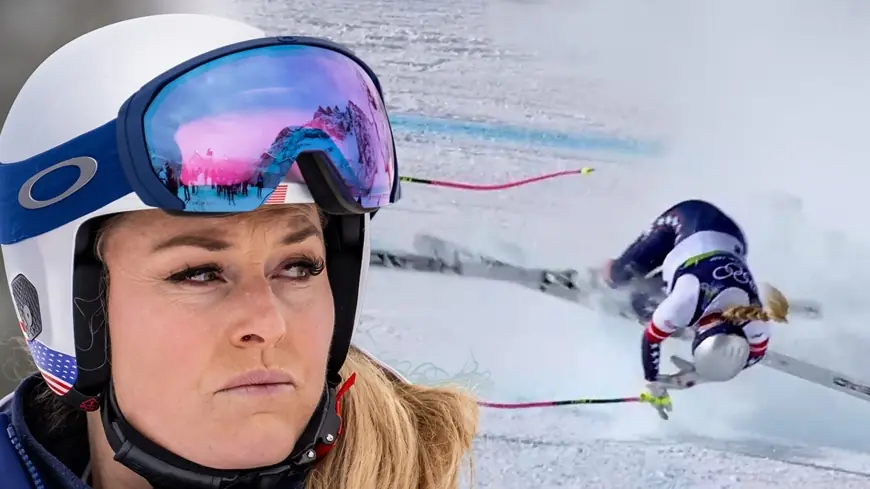
U.S. ski star Lindsey Vonn is expected to recover after emergency surgery for a leg fracture sustained in a frightening crash during her first alpine race at the 2026 Winter Olympics. Team officials said Monday that she “will be okay,” even as they acknowledged the recovery process will be lengthy and closely managed.
The 41-year-old was airlifted off the course in Cortina d’Ampezzo, Italy, after her downhill run ended just seconds after leaving the start gate. She underwent surgery Sunday, Feb. 8, and remained under close medical supervision as her team began outlining next steps for rehabilitation and follow-up care.
Crash happened seconds into the downhill
Vonn’s run lasted about 13 seconds before she lost control and went down hard, sliding into the protective netting. Medical personnel reached her quickly on the slope, and she was transported by helicopter for further treatment.
Officials have not released a detailed, play-by-play cause for the crash, and there has been no indication of a course equipment failure. What is clear is the severity of the impact: the fall resulted in a significant leg injury requiring immediate surgical stabilization.
Surgery details: stabilization and swelling concerns
Doctors performed an orthopedic procedure to stabilize the fracture, and additional treatment was done to address complications that can accompany high-energy leg injuries—particularly swelling and the risk of impaired blood flow.
Medical teams often treat these cases in stages, especially when swelling is significant. Early procedures can prioritize stabilizing bones and protecting soft tissue, with the full repair plan adjusted as the initial trauma response settles over the following days.
Vonn’s team indicated that she came through surgery in stable condition. Updates on her medical status are expected to be released through the U.S. delegation, rather than through routine hospital briefings.
Why the torn ACL became part of the story
The injury has drawn extra scrutiny because Vonn entered the Olympic downhill after recently suffering a fully ruptured ACL in the same knee. Her decision to race despite that injury has sparked a debate about athlete autonomy and risk tolerance—especially in alpine skiing, where speeds and forces are extreme even under ideal conditions.
Some voices in the ski world have argued that the crash appears more consistent with bad luck on a demanding course than with a knee giving out. Others have pointed to the cumulative risk of competing while already compromised, even if the immediate trigger was unrelated. At this stage, there is no public medical conclusion tying the crash directly to the ACL rupture.
What “recovery timeline” realistically means
Officials have been careful not to put an exact return-to-sport date on the calendar, and it’s too early for a definitive projection. Recovery from a significant leg fracture can stretch across months, and the presence of soft-tissue concerns—along with her recent ACL injury—adds complexity to rehab planning.
What the next phase typically involves:
-
Early protection and monitoring: pain control, swelling reduction, and frequent checks of circulation and nerve function
-
Progressive mobility work: gradual weight-bearing only when cleared, with physical therapy ramping up in phases
-
Follow-up procedures or adjustments: hardware checks, imaging, and possible additional interventions depending on how the injury heals
Vonn has signaled that her focus is now on rehabilitation. Whether the injury alters her competitive plans will depend on how quickly healing progresses and how her knee and leg respond to therapy over time.
The immediate impact on Team USA and the Games
Vonn’s crash landed as one of the most talked-about moments of the alpine schedule, both because of her stature in the sport and because it came during a highly anticipated Olympic return. Team staff and fellow athletes have expressed support while emphasizing how unforgiving downhill racing can be.
For now, her Olympic participation appears over, with attention shifting to medical recovery rather than competition. The next meaningful update is likely to come once doctors can better quantify healing progress and outline a more precise rehab plan—typically after the early post-surgery period when swelling and pain begin to stabilize.
Sources consulted: Reuters; People; CBS News; Los Angeles Times