

























Israel Urges U.S. Envoy to Address Iran Nuclear Threat Amid Talks

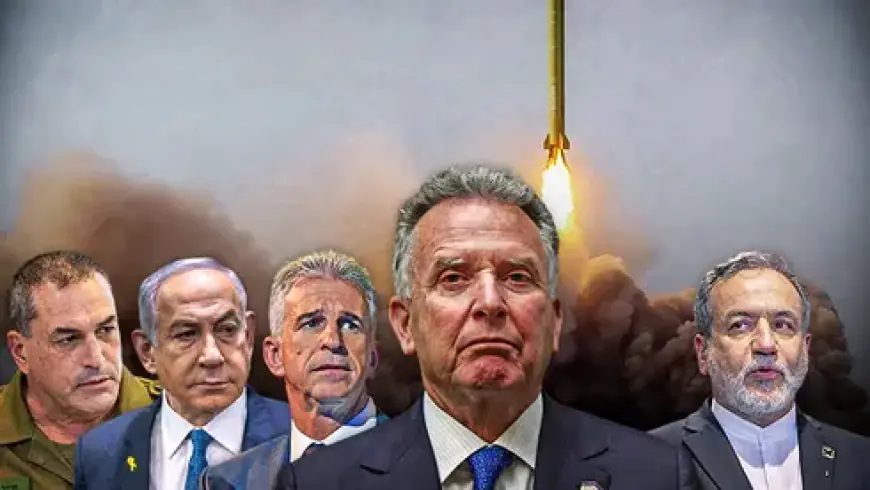
Israel has urged the United States to firmly address the threat posed by Iran’s nuclear program during impending negotiations. On Tuesday evening, U.S. envoy Steve Witkoff met with Israeli Prime Minister Benjamin Netanyahu and top security officials to discuss the situation ahead of talks between Washington and Tehran scheduled for Friday in Istanbul.
Key Concerns Over Iran’s Nuclear Threat
During the three-and-a-half-hour meeting, Israel’s security chiefs briefed Witkoff on Iran’s nuclear development and its ballistic missile initiatives. Netanyahu clarified Israel’s non-negotiable red lines regarding any potential agreement with Iran:
- Zero uranium enrichment.
- Removal of Iran’s enriched uranium stockpile, estimated at 450 kilograms.
- A complete halt to Iran’s ballistic missile program.
- An end to Iran’s support for regional proxies.
Escalating Tensions Before Negotiations
As U.S.-Iran talks approach, tensions have intensified. Reports indicated two significant incidents on Tuesday in the Persian Gulf: an attempted hijacking of an American tanker in the Strait of Hormuz and the downing of an Iranian drone near the USS Abraham Lincoln. Diplomatically, Iran has introduced new challenges by requesting the relocation of talks from Istanbul to Muscat, Oman, while also seeking to exclude Arab and Muslim states from participation.
Iran’s demands have shocked U.S. officials. Some speculate that Tehran believes it has the upper hand and may test the limits of U.S. resolve. Concurrently, there are concerns that a military option might be more likely in the event of a standoff during the negotiations.
Israel’s Position and Security Strategy
Following the meeting, Netanyahu reiterated Israel’s position on the necessity of disarming Hamas in Gaza. He emphasized preventing Hamas from obtaining any weapons that could threaten Israel. The Prime Minister has also communicated that the Palestinian Authority would not be involved in governing Gaza as Israel looks to reshape the enclave’s security landscape.
Negotiation Dynamics and Future Implications
If the U.S.-Iran negotiations occur without early collapse, follow-up discussions could extend for weeks or months. There are conflicting views regarding President Trump’s potential use of military force; some officials suggest that he may reconsider his stance depending on the negotiation outcomes. The large U.S. military presence in the Middle East currently incurs significant costs, leading some to question its purpose if tensions do not escalate into direct conflict.
The upcoming meeting between Witkoff and Iranian Foreign Minister Abbas Araghchi will be crucial in determining the future of these talks. While Iran has hinted at possible concessions, doubts linger over whether these would align with U.S. expectations for complete nuclear compliance.
- Complete halt to nuclear enrichment.
- Removal of enriched uranium stockpile.
- End of ballistic missile activities.
Israeli officials are concerned that any concession on these aspects could embolden Iran and compromise regional stability. Experts emphasize the need for robust preconditions to any agreement, warning that weak negotiations in the past have only strengthened authoritarian regimes in Iran.
Ultimately, Israel believes the only way to prevent Iran from developing nuclear capabilities is through the complete dismantling of its programs before talks can lead to any form of agreement, underscoring its resolve to hold the U.S. accountable in these critical discussions.