





















Ousmane Dieng and Mason Plumlee Moved in Deadline Week Shuffle as Three-Team NBA Trade Reshapes Bulls, Hornets, and Thunder

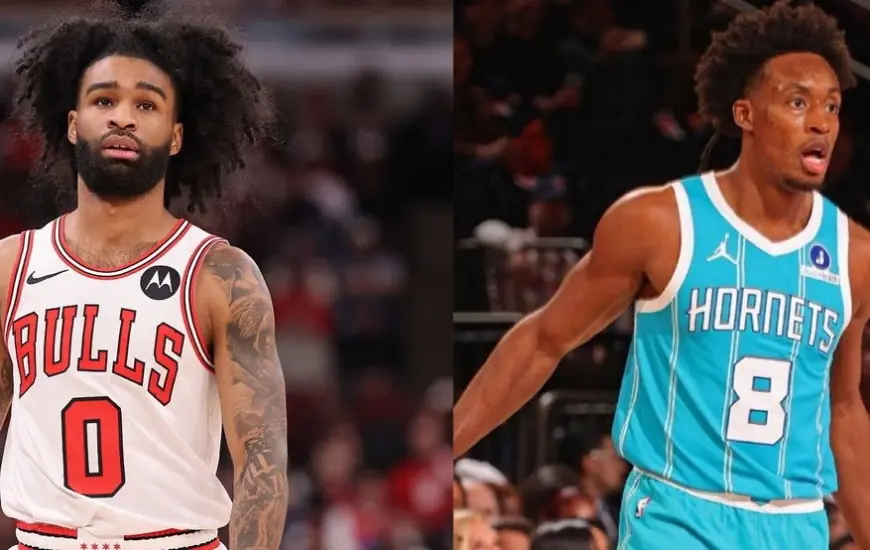
Ousmane Dieng and Mason Plumlee became key connective pieces in one of the most telling moves of NBA trade-deadline week, with both players changing teams as part of a three-team transaction designed as much around roster mechanics and payroll math as on-court production. The deal, completed on Wednesday, February 4, 2026 (ET), sends Dieng to the Chicago Bulls and routes Plumlee to the Oklahoma City Thunder before he was immediately waived, turning his contract into a temporary tool rather than a long-term roster fit.
The trade underscores a modern NBA reality: not every “headline trade” is primarily about talent swaps. Sometimes it’s about clearing a pathway for a separate acquisition, staying under a financial line, or converting flexibility into draft capital.
What happened: where Ousmane Dieng and Mason Plumlee ended up
In the completed sequence of moves, Dieng ultimately lands with Chicago, while Plumlee is funneled through Oklahoma City and then released. The broader transaction also relocates veteran guards and draft assets among Chicago, Charlotte, and Oklahoma City, with each team chasing a different objective before the February 5, 2026 trade deadline at 3:00 p.m. ET.
For Dieng, the move is a change-of-scenery bet: a young forward with developmental tools heading to a franchise that can offer a clearer runway if it chooses to prioritize growth. For Plumlee, the move functions more like a financial bridge and roster-spot maneuver than a basketball fit.
Why Mason Plumlee was waived: health, timing, and roster math
Plumlee has been sidelined by a groin injury that required surgery, with an evaluation timeline that stretches beyond the immediate trade window. That matters because contending teams prioritize healthy, plug-and-play depth in February, not rehabbing bigs who won’t be fully assessed until later.
Oklahoma City’s decision to waive him points to two practical pressures:
-
Roster slot management: teams rarely keep a non-rotation veteran if they need space for an incoming player.
-
Financial positioning: even small differences in salary can matter when a team is trying to complete additional moves while staying under key thresholds.
Plumlee is now more likely to be viewed as a post-waiver market option for teams seeking emergency center depth later in the season, depending on his recovery and the league’s shifting needs after the deadline.
Ousmane Dieng’s upside: why Chicago took the swing
Dieng’s production this season has been modest, but his value has always been rooted in profile rather than box-score certainty: size, skill flashes, and the kind of developmental arc teams still bet on at 22. Chicago’s incentive is straightforward—if the Bulls are pivoting toward flexibility, adding a young forward who still has room to grow is a sensible way to diversify outcomes.
Dieng also fits a common post-deadline archetype: a player who can look ordinary in a tight role on a deep team, then pop when given consistent minutes and a clearer set of responsibilities. Chicago can test that quickly—either he becomes part of a longer plan, or he becomes a movable asset that retains some “project” appeal.
Behind the headline: what each team is really optimizing
This is not just about Dieng and Plumlee. It’s about three different timelines colliding.
-
Chicago is balancing two pressures: staying competitive enough to keep relevance while also accumulating pieces that increase future flexibility.
-
Charlotte continues to behave like a team trying to reframe its roster and asset base, taking advantage of financial room and opportunistic deals.
-
Oklahoma City is operating like a contender that thinks several moves ahead—every roster spot and cap number is a lever that can unlock the next transaction.
The incentives are clear: contenders treat the deadline like a chessboard, while teams in transition treat it like a shopping cart for draft value and developmental bets.
What we still don’t know
Even with the trade completed, several questions remain unresolved:
-
Whether Chicago intends to keep Dieng through the rest of the season or treat him as a flip candidate.
-
How quickly Plumlee will be ready to contribute if another team signs him, and whether his mobility returns fully after surgery.
-
Whether this transaction is a prelude to additional moves by any of the three teams before Thursday’s deadline buzzer.
What happens next: realistic scenarios with triggers
-
Dieng earns a real rotation role if Chicago opens minutes at forward and prioritizes length and switching on defense.
-
Dieng becomes a secondary trade chip if Chicago consolidates again and uses him as a sweetener in a larger deal.
-
Plumlee draws quick interest if a contender loses a center to injury and needs a veteran insurance policy for April.
-
Plumlee’s market waits if teams prefer healthy options now and revisit him only after an updated medical evaluation later in the season.
-
The trade becomes “Move No. 1” if Oklahoma City or Chicago uses the cleared space and financial positioning to finalize another upgrade before 3:00 p.m. ET on February 5.
In the end, this is a deadline-week story that captures how the NBA actually functions: young talent like Ousmane Dieng can be acquired as a future-facing bet, while a veteran like Mason Plumlee can be moved primarily to make the rest of the puzzle fit—then set loose to find the next landing spot when the league’s needs change.