Columbus High School Miami lockdown ends after hoax report; no injuries found

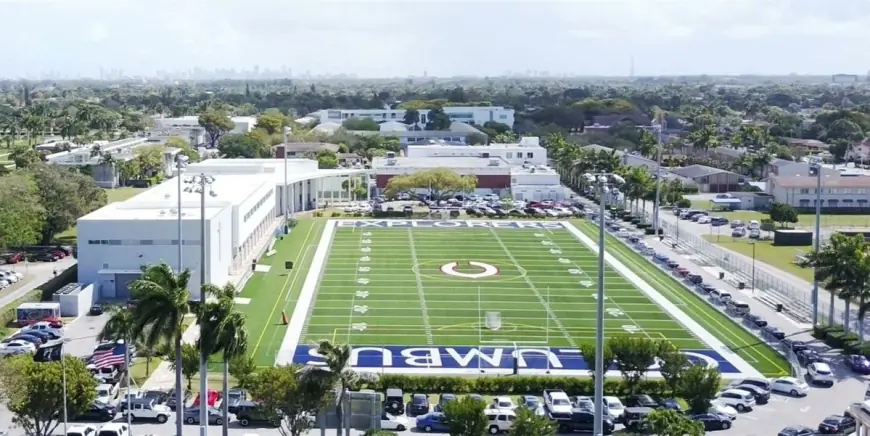
Christopher Columbus High School in Miami was placed on lockdown Wednesday after a report of a potentially armed person triggered a large law-enforcement response and a sweep of nearby campuses. By late morning, authorities said no injuries were reported and no active shooter was found, while investigators increasingly treated the call as a hoax.
The incident rattled students, staff, and parents, and it renewed questions about how schools handle fast-moving threats—especially when the initial information turns out to be false.
What happened at Columbus High School
The lockdown began Wednesday morning, February 4, 2026 (ET), after law enforcement received a call about a potential armed subject on campus. Deputies and a specialized response team moved in to search school buildings and grounds, and officers were seen staged around entrances while parents gathered outside the perimeter.
Officials said the search expanded beyond one campus as a precaution. Christopher Columbus High School and nearby St. Brendan campuses were swept, and another nearby elementary campus was also placed on lockdown during the response. Traffic backed up as roads were blocked and emergency vehicles converged on the area.
Authorities later said they believed the call was a hoax, but continued the search out of an abundance of caution before easing restrictions.
Schools affected and the immediate response
Officials said multiple campuses were placed on lockdown during the sweep, with deputies working through buildings and school grounds before clearing areas. The visible police presence—some officers with weapons drawn—reflected the “treat it as real until it isn’t” approach that has become standard for school threat calls.
Key points confirmed by officials:
-
No shots were fired and no injuries were reported.
-
No active shooter was found during the sweep.
-
Investigators believed the initial call was a hoax, though the response continued until searches were completed.
Why hoax calls cause real disruption
Even when an alarm turns out to be false, the disruption is real: classes halt, students shelter in place, and families rush to campuses seeking information. For school leaders, the first priority is safety and accountability—confirming where students are, keeping hallways clear, and coordinating with law enforcement so the search is not impeded.
Hoax calls also create a difficult communications problem. Early details are often incomplete, and officials must balance speed with accuracy while preventing rumors from escalating panic. The result is often a short period where social media fills the gaps faster than verified updates can.
What happens next for the investigation
Authorities typically treat false reports involving weapons or threats at schools as serious criminal matters, because they divert emergency resources and place communities under stress. The next steps usually include reviewing call records, tracking digital traces if any were used, and interviewing witnesses who may have seen or heard anything relevant before or during the lockdown.
For families, the most immediate follow-through tends to be procedural: confirming release protocols, counseling availability for students who were frightened by the response, and a review of how quickly notifications reached parents.
Columbus High School’s wider profile and community impact
Columbus High School is a prominent Miami institution with a large footprint in academics, service, and athletics. The school describes itself as an all-boys college preparatory program founded in 1958, with a strong emphasis on community service. Its sports programs are also widely recognized statewide, and its football network has recently been in the national spotlight due to alumni and coaches connected to top-level college programs.
That profile is part of why incidents like Wednesday’s lockdown draw such intense attention. Large schools with high visibility can become targets for hoaxes seeking to cause maximum disruption, even when there is no credible threat on campus.
What parents and students should watch for
In the days after a lockdown, the most meaningful updates are practical rather than dramatic: whether officials confirm a suspect identification in the hoax call, whether the school adjusts entry procedures, and whether families receive clear guidance on reunification plans if another emergency occurs.
If officials release more detail about how the call was placed—or whether it was linked to a wider pattern of hoax threats—those specifics will likely shape any security changes moving forward.
Sources consulted: Miami-Dade Sheriff’s Office; Associated Press; NBC 6 South Florida; Local 10 News