

























Big Batteries Surpass Gas Generators in Australia’s Largest Energy Market

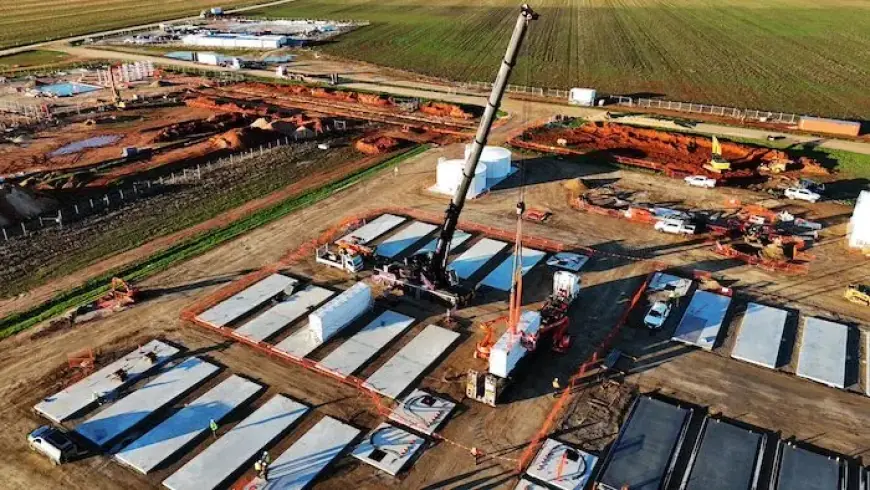
Australia’s energy landscape is undergoing a significant transformation. A recent report by Rystad Energy reveals that large-scale battery storage systems are now surpassing gas generators in three major state power grids. This shift underscores a pivotal moment in the country’s approach to energy production.
Battery Storage Surpassing Gas Generators
In 2025, battery energy generation in Victoria overtook gas-fired peaking output for the first time. This event marked a significant milestone for the Australian power system. Similar developments took place in New South Wales (NSW) and Queensland in December of the same year. It is anticipated that battery generation will consistently outpace gas production throughout the year.
Structural Changes in Power Generation
According to Rystad, “Utility-scale batteries are no longer a complementary technology in Australia’s power system.” Instead, they are actively displacing gas generation across various states. Despite high coal-fired generation in NSW, Queensland, and Victoria, these changes indicate a shift in the energy mix.
- In South Australia, battery storage contributed to 30% of evening peak demand.
- Gas generation is rapidly declining, aligning with Australia’s goal of achieving 100% net renewables by 2027.
Global Impact and Future Trends
The report indicates that Australia, alongside California, serves as a global proof point for the central role large-scale battery storage can play in energy stability. This trend is expected to spread to other regions, including parts of the Middle East and Southern Europe, where solar generation is reliable.
Globally, battery storage capacity surpassed an inflection point in 2025. The addition of over 100 gigawatts and 280 gigawatt hours has increased total capacity to more than 250 GW. This rapid expansion highlights the growing demand for flexible energy solutions in the face of increasing renewable energy use.
Primary Drivers Behind Battery Growth
- Lower costs and technological advancements are fueling the growth of battery storage systems.
- Today’s battery systems can last beyond 20 years and endure over 10,000 cycles.
- The capital cost has dropped to around $200 per kWh, translating into a levelized cost of approximately $50 per MWh.
As renewable energy continues to rise, solar-plus-battery storage projects are becoming the most competitive option for new power generation.
For those interested in the evolving landscape of energy storage in Australia, further insights can be found on the Big Battery Storage Map of Filmogaz.com.