Prince Andrew Faces Renewed Pressure Over Epstein Ties as New Claims Surface and Prince Edward Breaks the Royal Silence

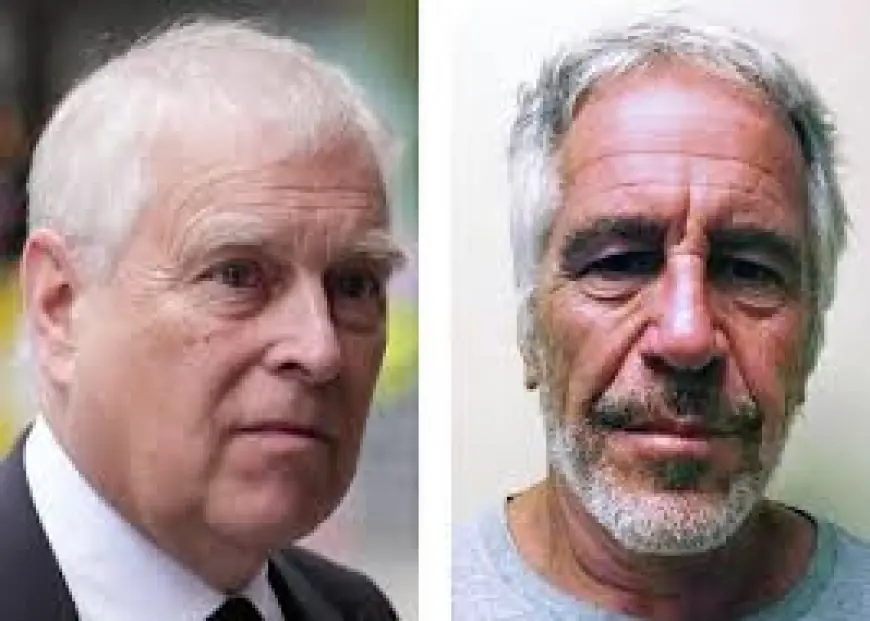
Prince Andrew, also known as Andrew Mountbatten-Windsor, is back at the center of a fast-moving controversy after a new release of U.S. justice records reignited scrutiny of his relationship with Jeffrey Epstein and raised fresh questions about what he told the public about when their contact ended. The moment has also widened beyond Andrew himself: Prince Edward, the Duke of Edinburgh, has now publicly urged focus on victims, marking a notable shift in how the wider royal family is addressing a story it has tried to keep at arm’s length.
The latest burst of attention comes amid two parallel developments: newly public emails that appear to show continued communications after Epstein’s 2008 conviction, and a second woman’s allegation that she was sent to the United Kingdom for a sexual encounter with Andrew in 2010, an allegation Andrew denies. The renewed focus has also revived interest in Virginia Giuffre, the most prominent accuser connected to Andrew’s civil case, who died in April 2025.
What happened: records, a new allegation, and a rare royal comment
In recent days, a trove of previously unseen documents has circulated widely, including email exchanges that appear to depict ongoing contact between Andrew and Epstein after Epstein’s criminal case in Florida. That sits uncomfortably alongside Andrew’s past public messaging that he ended the relationship.
At the same time, a second woman’s lawyer has publicly described an alleged encounter in 2010 at Andrew’s Windsor-area residence. The allegation adds a new front to an already well-known set of claims that have followed Andrew for years.
On Tuesday, February 3, 2026 ET, Prince Edward addressed the issue in remarks during an overseas engagement, emphasizing the importance of remembering victims. In the carefully calibrated world of royal communications, even a short statement can be a signal: the institution wants distance from Andrew’s decisions while also acknowledging the human cost that the scandal represents.
Behind the headline: why this is flaring up now
This story is not only about one man’s past. It is about incentives, risk management, and institutional containment.
Andrew’s incentives are straightforward: avoid fresh legal exposure, limit reputational damage, and resist actions that could be interpreted as admissions. The monarchy’s incentives are different: protect the legitimacy of the institution, preserve the King’s ability to represent national unity, and prevent a private family problem from becoming a constitutional headache.
For U.S. lawmakers and investigators, the incentive is accountability and optics. High-profile testimony is a way to demonstrate that status does not grant immunity from scrutiny. For survivors and advocates, the incentive is fuller disclosure: more names, more documentation, and clearer consequences for people who enabled abuse networks.
This is also a timing story. Public interest spikes when new materials appear, even if the underlying allegations are old. The release of documents creates a “new facts” moment that collapses time and pulls the entire Epstein universe back into the present.
Virginia Giuffre: why her name is still central
Virginia Giuffre became the best-known public accuser to allege she was trafficked by Epstein and forced into sexual encounters with Andrew when she was 17. Andrew has always denied wrongdoing. The civil lawsuit between them was settled in early 2022 without an admission of liability.
Giuffre’s death in April 2025 has intensified public sensitivity around the story. Her absence means there will be no new testimony from her, and it raises the emotional stakes for survivors who argue that public attention often arrives too late to ease the long-term burden of trauma.
What we still don’t know
Several missing pieces will determine how far this goes:
-
Whether U.S. authorities will formally seek cooperation or testimony from Andrew, and under what mechanism
-
How much of the new material is genuinely new evidence versus context that reframes known events
-
Whether the second woman’s allegation develops into a legal filing or remains a public claim through counsel
-
How the royal household will respond if pressure grows for Andrew to testify or provide fuller cooperation
-
Whether any additional individuals emerge with corroborating details tied to specific dates, travel records, or witness accounts
Without those elements, the story remains a high-heat political and reputational crisis with an uncertain legal trajectory.
Second-order effects: what this could change
Even if no immediate court action follows, the ripple effects are real:
-
The monarchy’s “working royal” line may harden further, limiting any path back for Andrew and tightening rules around family members’ public roles.
-
International perceptions of royal accountability may shift, especially in countries where the monarchy’s moral authority is already contested.
-
Charities, patronage networks, and social institutions connected to the royal orbit may face renewed questions about vetting and access.
-
Survivors’ advocacy could gain momentum, pushing for broader disclosure and more aggressive enforcement against trafficking networks.
This is how reputational crises evolve in modern politics: the immediate scandal is only the first wave, followed by policy pressure, institutional reforms, and a long tail of trust erosion.
What happens next: realistic scenarios and triggers
-
Andrew is urged to testify or provide formal cooperation in the U.S.
Trigger: lawmakers publicly escalate requests, or investigators signal a concrete interest in sworn statements. -
The second woman’s claim becomes a legal case.
Trigger: a filed complaint, named parties, and supporting documentation moving into public view. -
The palace increases distance publicly.
Trigger: sustained headlines, political pressure, or new disclosures that make silence costlier than comment. -
The story shifts toward broader accountability beyond Andrew.
Trigger: additional records implicating facilitators, intermediaries, or institutions that provided access. -
Attention fades, then returns with another document release.
Trigger: periodic unsealing or publication of additional materials, prompting new cycles of coverage.
Why it matters
This is a story about power and access: who gets proximity to influence, who is believed, and what institutions do when personal conduct threatens public legitimacy. The renewed focus on Prince Andrew is also a reminder that scandal containment is rarely permanent. It holds only until the next set of facts, claims, or documents breaks the seal again.