

























Gold price today rebounds sharply after steep selloff

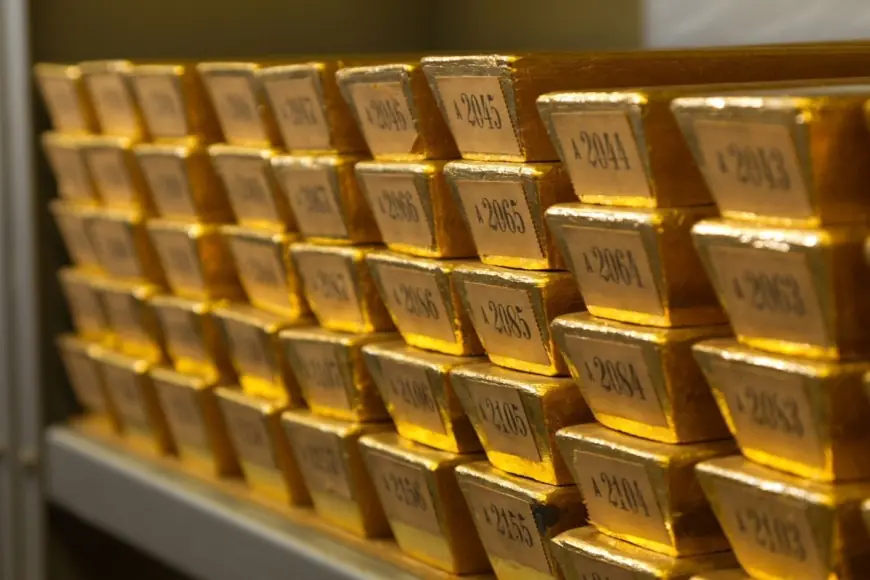
Gold prices jumped Tuesday, Feb. 3, 2026, as traders bought back into the market after a violent, margin-fueled slide late last week and further weakness on Monday. The rebound put gold back near the $5,000-per-ounce threshold, highlighting how quickly sentiment can swing when leverage is high and macro headlines shift.
As of 9:12 a.m. ET, spot gold was around $4,940 per troy ounce, up roughly 6% on the day. The move followed Monday’s intraday low near $4,403, leaving the market with a whiplash sequence: record highs in late January, a sharp multi-session drop, and then a rapid snapback.
| Contract / reference | Level (USD) | Change | Time reference (ET) |
|---|---|---|---|
| Spot gold (per oz) | ~4,940 | ~+6% | 9:12 a.m. |
| U.S. gold futures, Apr (per oz) | ~4,936 | ~+6% | morning trade |
| Monday low (spot, per oz) | ~4,403 | — | prior session |
| Late-January peak (spot, per oz) | ~5,608 | — | record high |
Gold price today: what the numbers show
The day’s rally was notable not just for its size, but for the context. Gold had been pushing to new records through late January before a sudden break lower that accelerated into a broad precious-metals unwind. In that kind of environment, “today’s” price is best understood as part of a fast-moving range rather than a stable level.
In practical terms, today’s quote near $4,940 reflects two competing forces: a market that still has strong longer-term demand drivers, and a short-term trading structure that can amplify moves when margins rise or positions are forced out.
Why gold is swinging so hard
Several factors have collided at once:
-
Leverage and margin pressure. When prices fall quickly, leveraged traders can face margin calls that force selling into weakness. If margin requirements rise after a plunge, the selling can intensify, creating a feedback loop.
-
U.S. monetary policy headlines. Recent developments around the future direction of U.S. central-bank policy have created unusually sharp repricing in rates, the dollar, and inflation hedges.
-
Rates and the dollar. Gold often reacts to changes in real yields and the dollar’s direction. A softer dollar can make gold cheaper for non-U.S. buyers, while shifting rate expectations can change the appeal of non-yielding assets like gold.
The combination helps explain how gold can drop dramatically on one day and then regain a meaningful chunk in the next session or two.
What Tuesday’s rebound does—and doesn’t—mean
A powerful rebound can look like a clean turning point, but it doesn’t automatically confirm that the selloff is over. Markets that have just experienced forced liquidation can bounce hard as positioning resets, only to chop around while traders reassess macro risks and liquidity conditions.
Still, today’s move does suggest that bids remain deep when prices retreat—an important signal after any “air pocket” drop. It also shows that many participants continue to treat gold as a strategic holding even when short-term trading flows turn disorderly.
Near-term catalysts to watch
The next directional push could come from a few measurable developments rather than folklore or narrative:
-
U.S. data flow and policy communication. When top-tier economic releases are disrupted or delayed, markets can become more reactive to headlines and positioning.
-
Further changes in futures margins. Any additional hikes—or reversals—can affect how aggressively leveraged traders participate.
-
Dollar and yield moves. If the dollar continues to ease and yields stabilize, gold can find support. If yields jump or the dollar strengthens sharply, gold can face renewed pressure.
-
Volatility in silver and other metals. Silver’s even larger swings can influence cross-asset positioning in precious metals as a group.
The forward look from here
After today’s surge, the key question is whether gold can hold gains without another wave of deleveraging. If the market stabilizes, traders may refocus on longer-run themes that have supported gold: demand from reserve managers, persistent geopolitical risk, and shifting views on the long-term path of inflation and interest rates.
If volatility stays elevated, though, day-to-day price action may remain dominated by liquidity and positioning rather than fundamentals. For anyone watching “gold price today,” the most useful framing may be this: the trend and the trading tape can diverge sharply in the short run, and the next move may hinge on rates, the dollar, and margin dynamics as much as on safe-haven demand.
Sources consulted: Reuters; Trading Economics; MarketWatch; London Bullion Market Association