Caden Nowicki cause of death: died from injuries in ATV-towed “sledding” crash

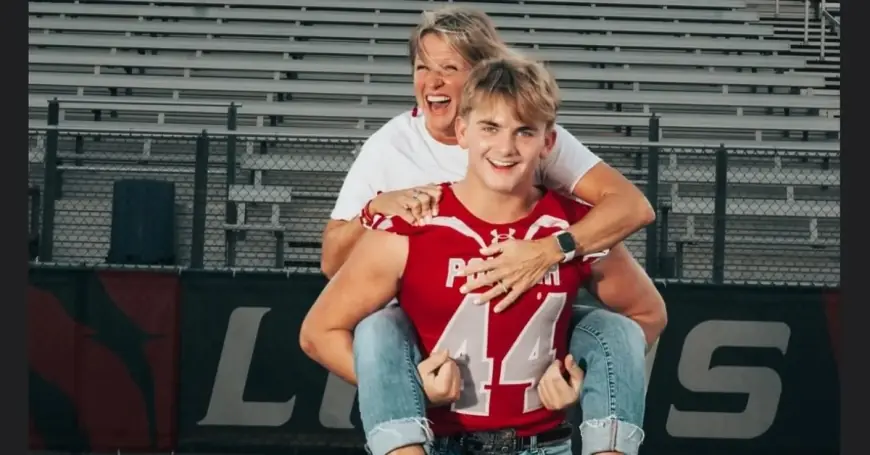
Caden Nowicki, a 17-year-old high school senior and football player in North Texas, died from injuries he suffered in a sledding-style accident during icy weather. He was riding in a kayak being towed behind an ATV when the kayak left the roadway and he was thrown into a fence, causing critical trauma. He died Thursday, January 29, 2026, after several days in the hospital.
The case has drawn wide attention because it mirrors other recent winter-storm tragedies in the region involving makeshift sleds pulled by vehicles—an activity safety officials warn can turn lethal even at low speeds.
What happened in the crash
The incident occurred on Monday, January 26, 2026, on Amyx Hill Road in Ponder, a small town in Denton County northwest of Dallas. The ATV was towing a kayak being used as a sled on the snow and ice.
Investigators say the kayak left the road, and Nowicki was ejected and struck a fence. The driver of the ATV and an additional rider on the ATV were not reported seriously hurt.
The timing released publicly places the crash at about 3:30 p.m. ET (about 2:30 p.m. local time) on January 26.
Cause of death, stated plainly
When people ask “cause of death,” the clearest confirmed answer is:
Caden Nowicki died from complications of severe injuries sustained in the sledding accident.
Public details consistently describe those injuries as resulting from being ejected from the towed kayak and colliding with a fence. No separate medical condition has been cited as the primary cause—his death was tied to the crash injuries.
Timeline: injury to death
| Date (ET) | Key event |
|---|---|
| Mon, Jan 26, ~3:30 p.m. | Crash on Amyx Hill Road in Ponder; Nowicki critically injured |
| Mon–Thu, Jan 26–29 | Hospitalized in intensive care |
| Thu, Jan 29 | Death confirmed by school and team leadership |
The precise time of death has been shared in some community posts, but official public summaries focus on the date and the fact that he died after being hospitalized from the crash.
Why vehicle-towed sledding is so dangerous
Safety officials have repeatedly warned that towing a person on a kayak, inner tube, sled, or other improvised device behind an ATV, truck, or SUV creates a high-risk situation with very little margin for error. Several factors make it especially hazardous:
-
The rider has no brakes or steering, so any drift becomes uncontrolled.
-
Ice changes traction instantly, even if the towing vehicle seems stable.
-
Turns create a whip effect, swinging the sled wide toward obstacles.
-
Roadside hazards are everywhere—fences, mailboxes, trees, curbs, parked cars.
-
Speed is deceptive: a “slow” pull can still generate deadly impact force.
In Nowicki’s case, the critical risk was the combination of losing the roadway line and the presence of a fixed object (the fence) close to the shoulder.
Community response and broader context
Nowicki’s death prompted vigils and fundraising efforts in and around Ponder, where he was known through football and school activities. The loss also landed during a winter-storm week in North Texas when other teenagers were fatally injured in similar towing-related incidents, intensifying public warnings from law enforcement and emergency responders.
The clustering of tragedies has pushed a consistent message: if people want to slide on snow or ice, safer choices are open hills away from traffic and fixed obstacles—without any motorized towing.
What investigators typically examine next
Authorities have not publicly announced charges, and the investigation into the incident has been treated as ongoing. In cases like this, the most common investigative priorities include:
-
the exact path of the ATV and the point where the kayak left the road
-
road conditions (ice patches, ruts, visibility, slope) at the time
-
the towing method (rope length, attachment point, stability)
-
estimated speed and turning behavior before the ejection
-
witness accounts and any available video from nearby cameras
Any conclusions—such as whether it involved reckless driving, a mechanical issue, or a momentary loss of control—depend on those findings and have not been fully detailed publicly.
Sources consulted: Texas Department of Public Safety; CBS News Texas; FOX 4 Dallas-Fort Worth; The Dallas Morning News