

























Catch the Majestic ‘Snow Moon’ at Sunset in the Eastern Sky Tonight

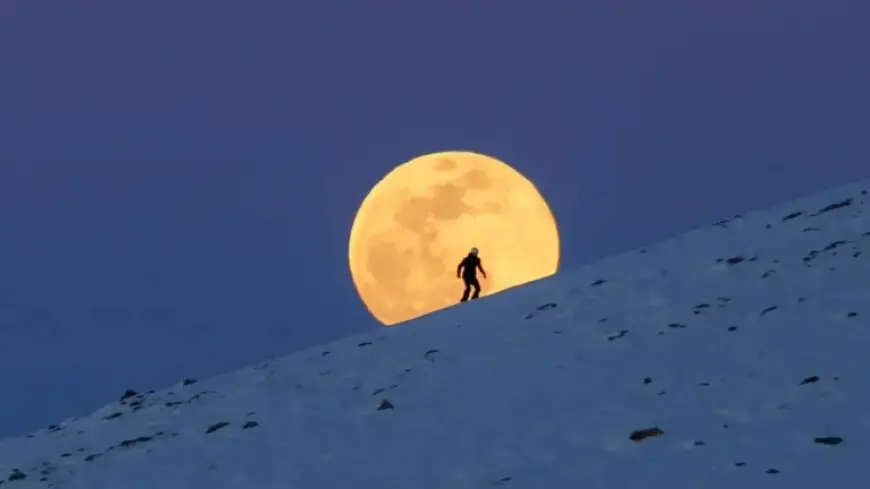
The February full moon, widely referred to as the ‘Snow Moon’, is set to captivate stargazers tonight. It will rise in the eastern sky during sunset, illuminating the night with its striking glow. Observers in the United States can expect to witness this beautiful celestial event, which coincides with the visibility of the gas giant Jupiter nearby.
Details About the Snow Moon
The Snow Moon achieves full illumination at 5:09 p.m. EST on February 1. This specific moon is named for the heavy snow falls typical during this time of year. Traditionally, it is also called the “Bear Moon” due to the birthing season of bear cubs and the “Hunger Moon,” reflecting the scarcity of food in winter months.
Observing the Moonrise
- Time of Full Illumination: 5:09 p.m. EST (1009 GMT)
- Location: Visible across the U.S., particularly in the eastern sky
- Associated Planet: Jupiter will appear close to the moon
When it first rises, the Snow Moon may take on a yellow-orange hue. As it rises higher, it will transition to its characteristic silvery glow. This phenomenon is the result of Rayleigh Scattering, which allows the longer red wavelengths of moonlight to travel through the atmosphere while scattering the blue wavelengths.
Lunar Features to Explore
Each full moon presents an opportunity to observe unique lunar features. Notably, the Snow Moon will highlight bright ejecta rays extending from craters such as Tycho, a prominent 53-mile-wide crater located near the south lunar pole. These rays are remnants of material ejected during ancient asteroid impacts.
Viewing Conditions and Nearby Celestial Bodies
As the Snow Moon rises, Jupiter will be positioned as a steady point of light to its upper right. The constellation Gemini will feature the prominent stars Castor and Pollux to the moon’s left. Additionally, the constellation Orion and the brightest star in the sky, Sirius, will also be visible nearby.
Tips for Stargazers
- Check local moonrise and moonset times for your specific area.
- Consider using a telescope for detailed views of the lunar surface.
- Enjoy the overall night sky, including surrounding constellations and planets.
Embrace this celestial spectacle tonight and enjoy the beauty of the Snow Moon at sunset in the eastern sky! For any astrophotographers eager to share their captures, submissions are welcome from readers at Filmogaz.com.