Groundhog Day 2026 Results: Punxsutawney Phil Saw His Shadow, Signaling Six More Weeks of Winter

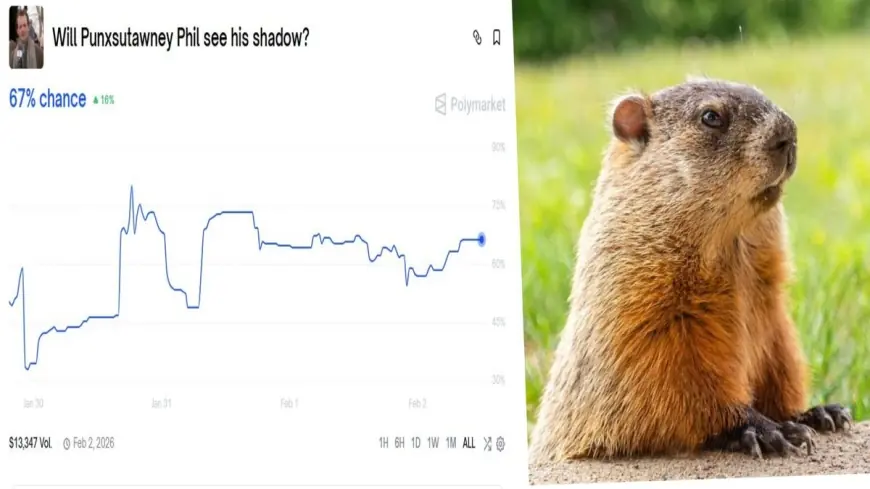
Groundhog Day 2026 delivered its most predictable kind of surprise: the spectacle looked the same, the crowd roared the same, and the forecast landed on the most-debated outcome of the tradition. Shortly after sunrise on Monday, February 2, 2026, Punxsutawney Phil “saw his shadow” at Gobbler’s Knob in Punxsutawney, Pennsylvania, which in Groundhog Day folklore means six more weeks of winter. The announcement came during the pre-dawn ceremony window, with Phil’s reveal occurring around 7:25 a.m. ET, after hours of festivities.
If you’re searching did the groundhog see his shadow 2026, did Phil see his shadow 2026, or did Punxsutawney Phil see his shadow today, the answer for the main event is yes. In the tradition’s simplest binary logic, shadow equals longer winter, no shadow equals early spring.
Did the groundhog see his shadow today 2026, and what did the groundhog say?
Yes, Phil “saw” his shadow in 2026.
As for what the groundhog said: Phil doesn’t literally speak a forecast. The handlers deliver a playful proclamation on his behalf, presenting it as Phil’s message “translated” for humans. The core outcome is always one of two options, and this year’s was the classic winter extension.
This matters less as meteorology and more as ritual. People don’t tune in because a groundhog beats a forecast model. They tune in because Groundhog Day is a shared seasonal checkpoint: winter has a storyline, and this is the day it gets narrated.
Groundhog Day 2026 predictions beyond Phil: Staten Island Chuck, Buckeye Chuck, and Georgia’s Beau
Groundhog Day has become a patchwork of local ceremonies, and the 2026 results were not unanimous.
Staten Island Chuck, New York City’s hometown groundhog, also saw his shadow on February 2, 2026, pointing to six more weeks of winter. His ceremony typically lands around 8:00 a.m. ET, and this year the event was shaped by frigid conditions that affected public access.
Ohio’s Buckeye Chuck broke from the big-name consensus: he did not see his shadow, which in the tradition signals an early spring.
In Georgia, General Beauregard “Beau” Lee also saw his shadow around sunrise, aligning with the longer-winter call.
The mix is part of the formula. A split decision keeps the conversation alive because every region can choose the forecast it wants to believe.
How does Groundhog Day work, and what does it mean if the groundhog sees his shadow?
Groundhog Day happens every year on February 2, a date positioned roughly midway between the winter solstice and the spring equinox. The rule set is intentionally simple:
If the groundhog sees its shadow, it retreats and winter lasts six more weeks.
If the groundhog does not see its shadow, it stays out and an early spring is coming.
The “meaning” is symbolic, not scientific. The shadow is a theatrical device that turns a murky seasonal transition into a clean headline. It also creates an annual moment where people can joke about winter fatigue in a way that feels communal rather than grim.
How accurate is Punxsutawney Phil, and how often is the groundhog right?
Phil’s accuracy is famously debated because the tradition invites scoreboard-keeping. Independent analyses over the years commonly place Phil’s track record in the broad neighborhood of the mid-30 percent range to around 40 percent, depending on how you define “early spring” and what weather metric you use.
The deeper point is that the ritual is designed to be charming even when it’s “wrong.” In fact, the tradition benefits from imperfection: if it were reliably correct, it would feel like a forecast; because it’s not, it remains folklore.
How old is Punxsutawney Phil, and where does he live?
Officially, the lore claims Phil has been making predictions since the late 1800s, which would put him well past a normal groundhog lifespan. Real groundhogs do not live anywhere near that long, but the ceremony leans into the myth as part of the character.
Phil is associated with Gobbler’s Knob in Punxsutawney, Pennsylvania, the wooded hillside where the annual ceremony is staged. The location is central to the brand: it’s not just a groundhog, it’s a place people travel to for a winter festival that feels older than the modern news cycle.
Is Groundhog Day a federal holiday?
No. Groundhog Day is an observance and a tradition, but it is not a federal holiday in the United States. Government offices, courts, and banks generally operate on normal schedules.
Behind the headline: why Groundhog Day still wins a February morning
Groundhog Day persists because it solves a psychological problem: early February can feel like winter’s slowest stretch. A silly ceremony offers a clean narrative, a reason to gather, and a reminder that the season is moving, even if it doesn’t feel that way.
The incentives are straightforward. The town benefits from tourism and year-round identity. Broadcasters benefit from reliable live-morning programming. Viewers benefit from a low-stakes, repeatable ritual that’s easy to share. Local “rival” groundhogs benefit from a moment of spotlight, especially when they contradict Phil and give spring-hungry people a counter-story to root for.
What happens next: realistic scenarios after the 2026 result
One, the “six more weeks” meme cycle spikes today and fades fast, replaced by local weather reality.
Two, regions that got an early-spring call lean into it, while others treat Phil’s prediction as the default headline.
Three, attention shifts to whether late winter storms materialize, which will retroactively shape how “right” Phil is judged.
Four, planners use the moment as a seasonal cue, even if they don’t believe the forecast, because it’s a cultural marker that spring is on the horizon.
Five, the annual accuracy debate returns, with fans insisting the point was never precision, it was tradition.
For Groundhog Day 2026, the verdict is clear: Punxsutawney Phil saw his shadow, the story says winter isn’t done yet, and the rest of the country’s groundhogs supplied just enough disagreement to keep hope alive.