

























GNU Hurd Nears Completion: x86_64, SMP, and 75% Debian Package Build Success

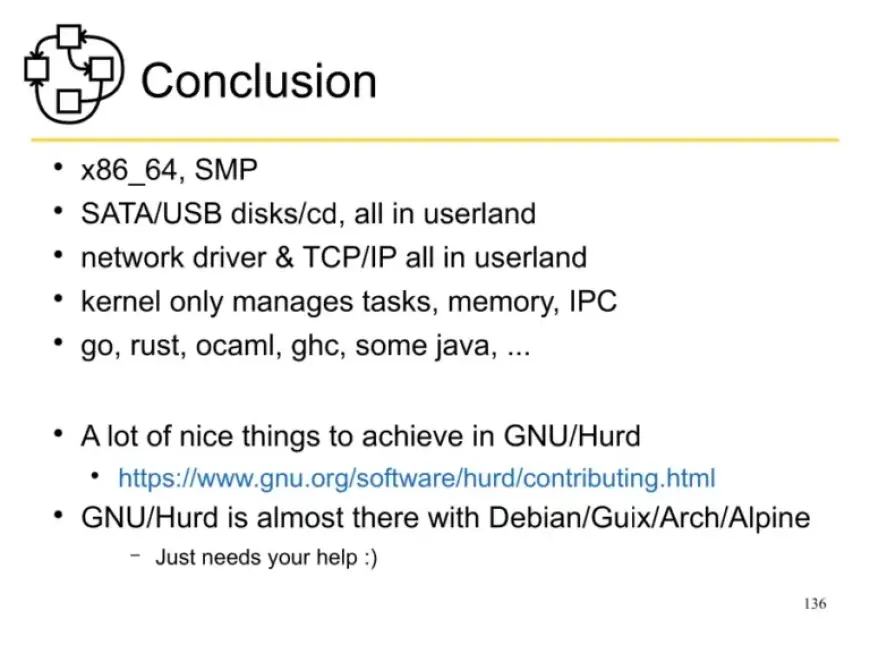
At FOSDEM 2026 in Brussels, Samuel Thibault provided an optimistic update on the GNU/Hurd project. Thibault, known for his insights into GNU Hurd, noted significant advancements in driver support and software compatibility. This news marks progress in a project that has historically lagged behind the Linux kernel and other contemporary operating systems.
Progress in GNU/Hurd Development
Driver support for GNU/Hurd is improving, largely due to the integration of the NetBSD rump layer. This development is a crucial step towards enhancing functionality on modern hardware. In addition to driver improvements, the project has made strides in supporting symmetric multiprocessing (SMP) for multi-core systems, a feature that had been lacking for years.
x86_64 and AArch64 Support
GNU/Hurd has traditionally focused on x86 32-bit architecture. However, the transition to x86_64 is now virtually finalized. Developers are also setting their sights on expanding support to the AArch64 architecture, broadening the project’s potential reach.
Debian and Alternative Distributions
The GNU/Hurd distribution is tied closely to Debian, functioning as an unofficial alternative to the Linux kernel. Recent developments indicate that approximately 75% of the Debian archive is now compatible with GNU/Hurd. This includes not only core packages but also various desktop environments.
- Guix/Hurd and Alpine/Hurd are additional distributions that promote Hurd usage.
- Community contributions are essential for continuing progress.
Concluding Remarks on GNU/Hurd
Thibault concluded his presentation with the encouraging statement that “GNU/Hurd is almost there.” However, the project will benefit greatly from further community involvement. For those interested in the future of GNU/Hurd, the recorded presentation from FOSDEM 2026 is available on FOSDEM.org and provides a compelling overview of ongoing efforts and achievements.