

























Why Asia’s Largest Muslim Nation Joined Trump’s Peace Board

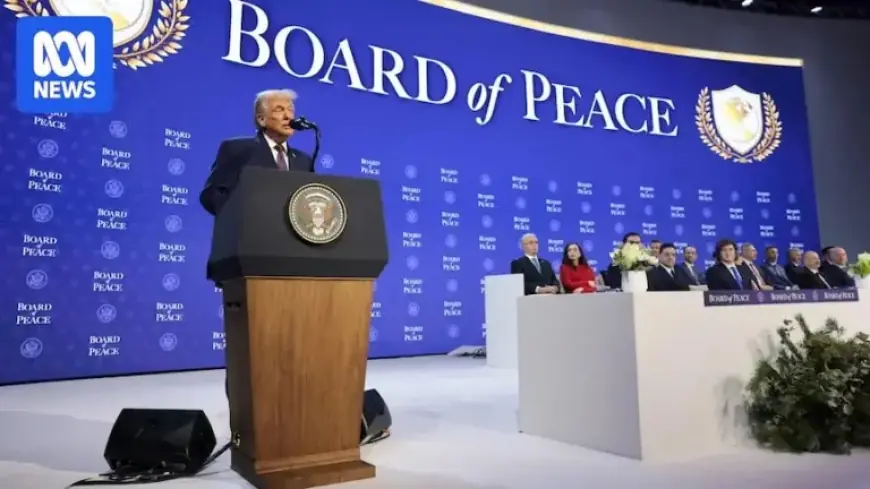
Amid increasing global tensions, several Asian nations have aligned themselves with President Donald Trump’s newly established Board of Peace. This initiative, initially aimed at resolving the Gaza conflict, is evolving into a broader platform for international conflict resolution.
Participation of Asian Nations
Countries including Indonesia, Vietnam, Mongolia, Cambodia, Uzbekistan, and Pakistan have joined the board, which now consists of 25 nations. The move is largely seen as a strategic attempt to enhance diplomatic and trade relations with the United States.
Economic Motives Behind Membership
- Indonesia values international recognition and aims to elevate its global standing.
- Vietnam’s participation is framed as a step toward strengthening economic ties with the US.
- Cambodia is cautious yet recognizes the economic benefits of maintaining good relations with Washington.
Analysts suggest that membership serves as leverage in the context of growing economic ties and the potential risks associated with US trade policies. Vietnam, in particular, is wary of US tariffs, which could significantly impact its economy.
The Structure of the Board of Peace
The Board of Peace is designed as a new peacekeeping entity under Trump’s leadership, requiring member states to contribute $1 billion for a three-year term. However, its operational mechanisms remain ambiguous. Critics argue that the board appears more focused on consolidating US influence than fostering a multilateral consensus.
Reasons for Joining
Joining the board allows countries to align with a structure characterized by US authority. Indonesia’s President Prabowo Subianto has notably shifted towards a more US-friendly foreign policy, signaling a departure from longstanding support for Palestinian statehood. This shift is embodied in his recent comments advocating for both Palestinian independence and Israeli security.
Indonesia’s Foreign Ministry has emphasized that its participation reflects a commitment to a just peace in Palestine, rather than merely a strategic image. Nevertheless, some experts view the move as a tactical political maneuver rather than a sincere engagement with pressing humanitarian issues.
Implications for Regional Dynamics
The decision of these nations to join the Board of Peace highlights a pragmatic approach to international relations amidst a fragmented global order. As Asian countries reevaluate their positions, they often prioritize their bilateral relationships with Washington over existing international frameworks.
A New Era of Diplomacy
This shift raises questions about the future of international institutions, especially as alternative frameworks like China’s International Organisation for Mediation gain traction. Observers are left to wonder how these competing approaches may shape global conflict resolution moving forward.
While some analysts express skepticism over the longevity and effectiveness of the Board of Peace, others recognize it as a reflection of the current geopolitical landscape—one that places the United States at its center while leaving many nations grappling with their role in a rapidly changing world.