Alex Honnold scales Taipei 101 without ropes in live skyscraper stunt

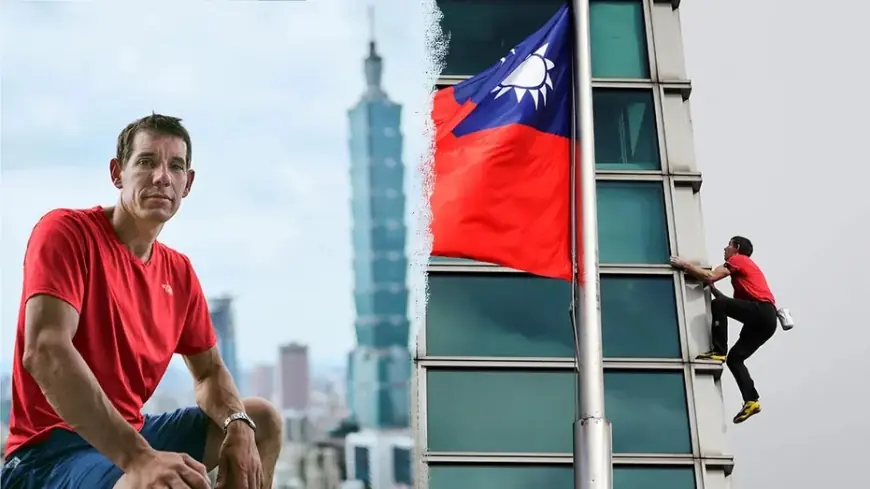
Alex Honnold has added an unprecedented skyscraper ascent to his résumé, free-soloing Taipei 101 without ropes or a harness in a made-for-live-TV event that quickly sparked both awe and renewed debate about broadcasting extreme risk. The climb unfolded late Saturday, Jan. 24, 2026, in a live special that aired at 8:00 p.m. ET after weather pushed it back from an earlier scheduled date.
The feat matters beyond spectacle: it signals a new kind of crossover between elite climbing and appointment-viewing entertainment, with safety, influence, and copycat concerns now inseparable from the headlines.
Alex Honnold takes on Taipei 101
Taipei 101 stands about 1,667 feet (508 meters) tall, and the climb required Honnold to translate outdoor movement to a built environment—using architectural seams, ledges, and ornamental features as makeshift “holds.” Coverage of the ascent described a steep middle section as the crux, where the building’s shape and spacing made upward progress more demanding.
Honnold reached the top in roughly 90 minutes, a pace that underlined both efficiency and composure. Even with a short broadcast delay, the event’s format amplified tension: there is no “safe” moment in a ropeless climb on a structure of that height, and the risk profile stays extreme from the first moves to the final meters.
A weather delay set the stage
The special was originally slotted for Thursday, Jan. 22, but rain and slick conditions forced a postponement. That delay wasn’t just a scheduling note—it reinforced how dependent even the most controlled stunts remain on basic variables like friction and wind.
When the climb finally went forward, organizers leaned on timing and lighting to keep the action legible for viewers. For Honnold, the delay also meant a longer mental runway: more time to wait, more time for nerves to build, and more time for the public conversation to sharpen before the first step up the façade.
Why the climb sparked fresh debate
The central argument isn’t whether the feat was impressive—it plainly was. The debate is about what happens when a high-risk discipline becomes a live event designed for maximum audience attention.
Critics focus on two concerns: normalization and imitation. Even when professionals stress that these stunts are the product of years of preparation, the images can travel faster than the nuance. Supporters counter that extreme sports have long been televised, and that careful planning and clear messaging can reduce harmful influence.
What’s clear is that the “live” framing changes the relationship between performer, audience, and consequence. In a recorded documentary, viewers know the outcome exists. In real time, the outcome is uncertain, and that uncertainty becomes part of the product.
Key details at a glance
| Item | Detail |
|---|---|
| Climb | Taipei 101 ropeless ascent |
| When | Sat., Jan. 24, 2026, 8:00 p.m. ET broadcast |
| Height | About 1,667 ft (508 m) |
| Time to summit | Approx. 90 minutes |
| Weather impact | Event postponed due to rain |
The quieter thread: philanthropy and solar grants
Away from the cameras, Honnold’s nonprofit work continued to advance on a separate track. His foundation has been promoting a 2026 grant cycle focused on community-led solar and energy access efforts, with applications open through Thursday, Feb. 12, 2026, at 5:00 p.m. ET.
That timeline matters because it intersects with the attention spike from the climb. Major public moments often expand an athlete’s platform, and in Honnold’s case, the platform has frequently been used to direct support toward climate- and equity-oriented energy projects. The grant window provides a concrete next step for organizations that might be discovering the foundation’s work for the first time.
What comes next in 2026
The immediate question is whether this skyscraper format becomes a repeatable template—more urban ascents, more live events, more pressure to escalate. Honnold’s public image has long been tied to restraint and preparation, so any future choices will be judged not only on difficulty but on messaging and guardrails.
Two practical markers to watch:
-
Whether organizers and sponsors introduce clearer on-air safety framing and anti-imitation messaging.
-
Whether follow-on projects shift back toward traditional climbing objectives, where the sport’s norms and community standards are more established.
Either way, the Taipei 101 climb has already altered the conversation. It wasn’t just a new line in a career highlight reel—it was a statement about where modern adventure media is willing to go, and what viewers are willing to watch in real time.
Sources consulted: Associated Press, Netflix Tudum, People Magazine, Honnold Foundation