
























February’s Full Snow Moon Illuminates the Night Sky

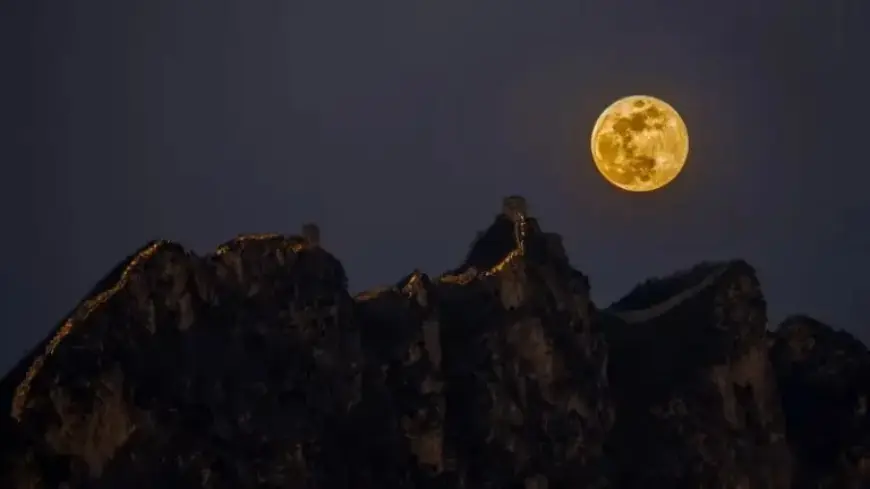
February’s Full Snow Moon offers a stunning sight for sky watchers this weekend. The full moon reaches its peak at 5:09 p.m. ET on Sunday, coinciding with sunset and showcasing its brilliance in the eastern sky. It will also appear full on Saturday and Monday, providing multiple opportunities for observation.
Understanding February’s Snow Moon
The February full moon is commonly referred to as the Snow Moon. This name reflects the heavy snowfalls often experienced across large parts of North America during this time. According to the Farmers’ Almanac, various indigenous tribes also have distinct names for this moon. For instance, the Comanche people call it the Sleet Moon, while the Creek tribe refers to it as the Wind Moon. The Shawnee name it the Crow Moon.
Looking Ahead to Artemis II Mission
As we prepare for NASA’s Artemis II mission, which is anticipated to launch sometime in February, this moment presents an excellent opportunity for moon enthusiasts. Noah Petro, chief of NASA’s Planetary, Geology, Geophysics and Geochemistry Laboratory, encourages the public to familiarize themselves with the moon’s features. He states, “Go out and look at it when it’s full or partially full.” Observing the moon’s surface can enhance appreciation for its geography and nuances.
Viewing Tips for the Moon
While casual observers can spot light and dark areas on the moon’s surface with the naked eye, using a telescope provides a more detailed view. Telescopes help in identifying craters and other lunar characteristics, which enriches the viewing experience.
Upcoming Celestial Events
In addition to the Snow Moon, sky-watchers can look forward to supermoons later this year. Supermoons occur when the moon is closest to Earth in its orbit, making it appear brighter and larger. Typically, the average distance of the moon from Earth is about 238,900 miles (384,472 kilometers). However, December’s supermoon will come particularly close at 221,667 miles (356,740 kilometers).
Full Moon Dates in 2026
- March 3: Worm Moon
- April 1: Pink Moon
- May 1: Flower Moon
- May 31: Blue Moon
- June 29: Strawberry Moon
- July 29: Buck Moon
- August 28: Sturgeon Moon
- September 26: Harvest Moon
- October 26: Hunter’s Moon
- November 24: Beaver Moon
- December 23: Cold Moon
Lunar Eclipses on the Horizon
For those seeking a different celestial experience, a total lunar eclipse will occur on March 3, visible from Asia, Australia, the Pacific Islands, and the Americas. This event happens during a full moon, providing a unique spectacle as Earth casts its shadow on the moon, creating what is often referred to as a “blood moon.” Sunlight filtering through Earth’s atmosphere casts a red hue on the moon’s surface.
A partial lunar eclipse will be accessible to observers in the Americas, Europe, Africa, and Western Asia from August 27 to 28. This type of eclipse occurs when the sun, Earth, and moon don’t completely align, resulting in only part of the moon being covered in shadow.
For additional details on lunar events and viewing times, consult resources like Time and Date’s website. Explore the universe further with Filmogaz.com for insights on fascinating discoveries and scientific advancements.