
























Meet Kevin Warsh: Trump’s Federal Reserve Chair Nominee

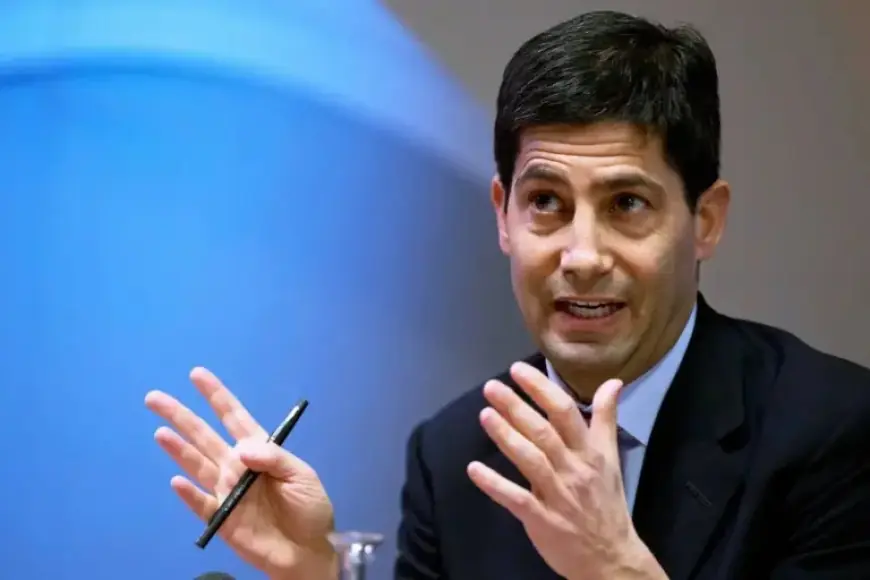
Kevin Warsh has emerged as a prominent nominee for the role of Federal Reserve Chair under President Donald Trump. His candidacy comes after a previous effort in 2017, when he was a runner-up for the position now held by Jerome Powell. Warsh’s nomination reflects Trump’s desire to shape the economy according to his administration’s vision.
Kevin Warsh: Background and Credentials
Warsh, 55, holds degrees from Stanford University and Harvard Law School. He made history as the youngest ever member of the Federal Reserve Board, serving from 2006 to 2011. His experience includes a role as an economic aide in George W. Bush’s administration and as an investment banker at Morgan Stanley.
During his time at the Federal Reserve, he developed close ties with former Chair Ben Bernanke, especially during the 2008-2009 financial crisis. Bernanke later praised Warsh as one of his closest advisors.
Political and Economic Views
Warsh’s views diverge from some traditional Republican principles, particularly regarding trade and economic policy. In 2010, he advocated for reducing trade protectionism, a stance that contrasts sharply with Trump’s aggressive tariff policies. More recently, his criticisms have focused on the Fed’s approach to climate change and social issues, arguing these matters are outside its mandate.
Challenges and Controversies
Despite his impressive resume, Warsh has faced scrutiny over his economic forecasts. He expressed skepticism about aggressive interest rate cuts during the Great Recession, fearing they could exacerbate inflation. However, despite a zero-interest-rate environment, inflation remained subdued.
Warsh has recently intensified his campaign for the Federal Reserve Chair position, critiquing the Fed’s current policies. He labeled the institution as being in need of significant change, particularly following the inflationary environment experienced in 2021-2022.
Future Predictions and Economic Insights
In his writings, Warsh has suggested that current inflation issues stem from excessive government spending rather than economic growth. He argues that advancements in artificial intelligence could enhance productivity without driving inflation. This perspective aligns with Trump’s view that AI could be a disinflationary force.
Conclusion
Kevin Warsh’s nomination as Trump’s Federal Reserve Chair candidate highlights the administration’s intentions to shift monetary policy. His theoretical approach to managing inflation and economic growth may have significant implications for both the central bank and the broader economy.