

























Farmers Shield Crops with Netting to Combat Heatwave Sunburn

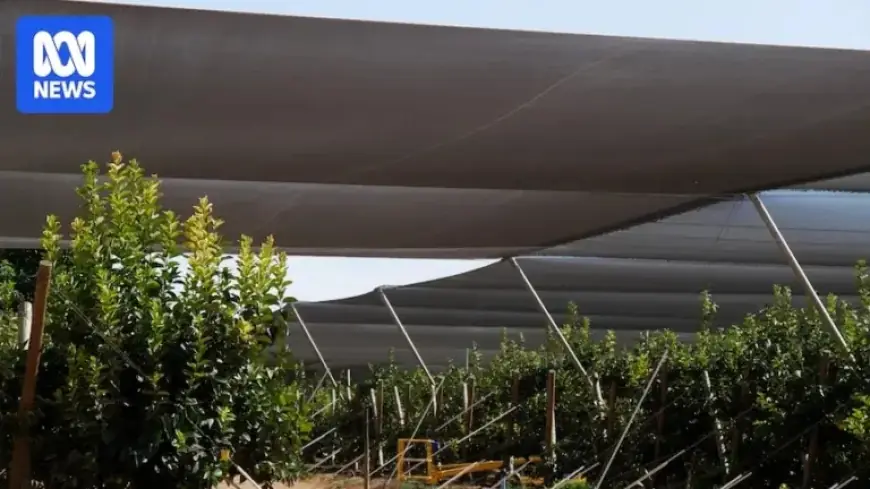
In response to the recent record-breaking heatwave, farmers are increasingly turning to netting as a protective measure for their crops. The heatwave, which reached temperatures above 49 degrees Celsius in New South Wales and South Australia, has raised serious concerns for agricultural productivity, especially in areas known for fruit-growing.
Farmers Shield Crops with Netting to Combat Heatwave Sunburn
Craig Burne, a persimmon and avocado grower in South Australia’s Riverland region, has found netting to be a crucial tool in safeguarding his crops. He combines this method with overhead misting systems, which activate at 35 degrees Celsius to help cool his avocado orchard.
- Netting provides essential shade for crops, particularly sensitive ones like avocados.
- Burne noted that some of his persimmons fared better than his avocados, which were not covered by netting.
- Exposure to extreme heat can cause fruits to sunburn, rendering them unmarketable.
Increasing Adoption of Netting
The G2 Netting Group reports a significant rise in netting sales throughout Australia, particularly in fruit-growing regions like Riverland, Sunraysia, and Goulburn Valley. Kyle Lamont, the group’s sales director, attributes this trend to the pressing need for crop protection against heat.
- Netting can reduce UV exposure by up to 20%.
- Under netting, temperatures can be 2 to 3 degrees cooler during peak heat events.
Export markets, especially in countries like China, Korea, and Japan, demand high-quality, blemish-free fruit. This requirement intensifies the need for protective measures against sunburn caused by extreme temperatures.
Cost and Lifespan of Netting Infrastructure
While the cost of installing netting can reach up to $60,000 per hectare, its benefits often justify the investment. Netting structures generally last for around 15 years, providing a long-term solution for growers.
For smaller fruit producers who may not afford netting, options were previously available through grants from South Australia’s Department of Primary Industries and Regions. These grants covered up to 50% of the installation or repair costs, but the funding opportunity ends on June 30, 2025.
The Future of Agriculture in a Warming Climate
Adelaide University’s environmental health researcher, Peng Bi, warns that heatwaves will likely continue to threaten agricultural productivity across Australia. He highlighted a pattern of increasing frequency in heatwaves, citing occurrences in 2009, 2014, 2019, 2024, and the looming 2026. Inland areas are expected to experience heatwaves more severely than coastal regions.
As farmers adapt to these ongoing climatic challenges, Burne indicates that he may consolidate his crop varieties, potentially shifting from less productive avocado orchards to more resilient persimmons covered by netting. This strategic decision reflects the necessity of adapting agricultural practices to ensure survival in an increasingly harsh climate.