

























Panther Lake vs. Apple M5 Benchmarks: Intel Achieves the Incredible

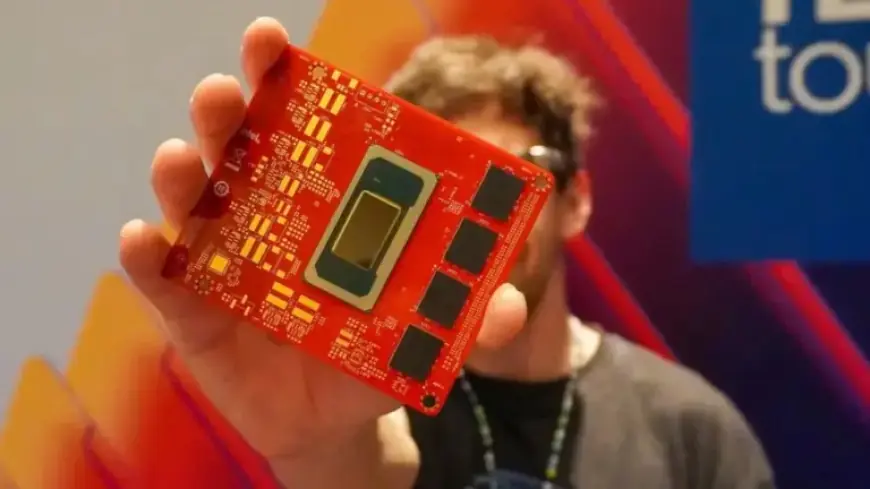
Intel’s Panther Lake architecture is causing a stir in the tech world, marking a significant shift in the performance capabilities of Windows laptops. After trailing behind competitors, Intel seems to have made substantial advancements, particularly against Apple’s M5 chip. Both chips have unique strengths, particularly in raw performance and efficiency, making them key players in their segment.
Performance Comparison: Panther Lake vs. Apple M5
Intel’s new Panther Lake chips, specifically the Core Ultra X7 and X9 models, were tested alongside Apple’s M5 in various benchmarks. The Geekbench 6 scores and Handbrake video transcoding results provide insight into their capabilities.
| Processor | Geekbench 6 Single / Multi | Handbrake (Time: Min:Sec) |
|---|---|---|
| Intel Core Ultra X9 | 3,031 / 17,283 | 4:22 |
| Intel Core Ultra X7 | 2,938 / 17,162 | 4:04 |
| Apple M5 | 4,288 / 17,926 | 3:31 |
These results show that while Panther Lake holds its ground in multi-core tasks, Apple’s M5 excels in single-core performance, which is crucial for everyday tasks.
Graphics Performance of Panther Lake vs. Apple M5
In terms of graphics, the Intel Core Ultra series shows strong performance in 3D gaming metrics, highlighting its gaming capabilities.
| Processor | Steel Nomad Score | Solar Bay Score / FPS |
|---|---|---|
| Intel Core Ultra X9 | 1,483 | 26,589 / 101 fps |
| Intel Core Ultra X7 | 1,542 | 30,604 / 116 fps |
| Apple M5 | 1,122 | 23,950 / 90.4 fps |
While the Apple M5 demonstrates solid graphics performance, it falls short compared to Intel’s offerings, particularly in modern gaming tests.
Battery Life Insights
Battery life is another critical factor for laptop users. The following results showcase how each processor performs:
| Laptop | Battery Life (Hours:Minutes) |
|---|---|
| Asus Zenbook Duo (X9) | 14:23 |
| Samsung Galaxy Book6 Pro (X7) | 14:50 |
| MacBook Pro (Apple M5) | 18:00 |
The MacBook Pro’s M5 leads in battery life by a notable margin, showcasing its efficiency, while Intel laptops deliver impressive longevity as well.
Compatibility Considerations
The gap between x86 and ARM architectures has historically impacted software compatibility. Intel’s Panther Lake utilizes x86 architecture, allowing seamless use of Windows applications. In contrast, Apple’s M5 employs ARM architecture, which can lead to performance issues in non-optimized apps.
Conclusion: Intel’s Comeback
In summary, Intel’s Panther Lake represents a significant advancement in their chip technology, allowing for impressive competition against Apple’s M5. The results illustrate that while Apple excels in single-core performance and battery efficiency, Intel delivers strong multi-core performance and gaming capabilities. The future looks promising for Intel, as they appear ready to reclaim their place in the laptop market.
As Intel continues to innovate, the competition among chipmakers is expected to intensify. The Panther Lake architecture proves that Intel is back in the race, setting high expectations for future developments.