Government shutdown 2026: Senate deal splits DHS as ICE funding fight pushes deadline to the brink

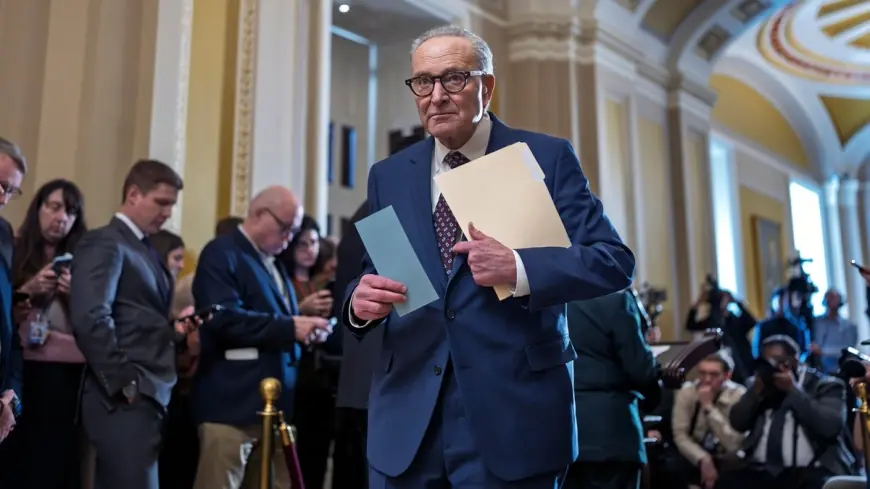
Washington woke up Friday, Jan. 30, 2026, to a narrow path out of the government shutdown 2026 drama: a late deal to move five major spending bills while carving out Department of Homeland Security money for a short-term stopgap. The stakes are immediate—without action in time, the federal government could begin a partial lapse in funding at 12:01 a.m. ET Saturday.
Government shutdown update: A two-track plan to keep most agencies open
The breakthrough centers on separating DHS from the broader funding package that keeps most federal operations running. Under the plan, the Senate would advance five appropriations bills that cover the bulk of the government, while DHS would be funded at current levels for two weeks—creating a window for negotiators to revisit the most contentious piece: immigration enforcement and ICE oversight.
That approach is designed to “pass” what can pass now, and quarantine the toughest fight. It also acknowledges a logistical reality: even if the Senate clears the revised package quickly, the House is not scheduled to return until Monday, Feb. 2, 2026—leaving open the possibility of a short-lived disruption depending on timing and procedure.
Senate vote today: ICE funding becomes the fault line inside DHS
The showdown is less about top-line spending than conditions on enforcement—specifically, whether Congress should attach new guardrails to DHS dollars after recent public backlash over immigration operations, including a fatal shooting during an enforcement action in Minneapolis on Jan. 24, 2026.
Earlier Thursday, Jan. 29, the Senate failed to advance a six-bill “minibus” that included DHS, falling well short of the 60 votes needed to move forward. That stalled effort hardened the message from Senate Democrats: they want legislative changes tied to DHS funding, not handshake promises. The proposals circulating in the talks have included tighter rules on agents’ identification and conduct in the field—such as limits on masks, broader use of body cameras, and stricter standards around warrants and use-of-force policies. Republicans have pushed back on rewriting the homeland security bill itself, arguing the policy fight should be handled separately.
For now, the two-week DHS extension is meant to buy time—but it does not resolve the underlying dispute that triggered the gov shutdown threat in the first place.
“Seven” House Democrats and the Tom Suozzi flare-up
The House already delivered a preview of how politically volatile the DHS question has become. On Jan. 22, 2026, the chamber passed a DHS funding measure 220–207, with seven Democrats crossing party lines to support it—an early flashpoint for “senate democrats government shutdown” tensions as the deadline approached.
The seven House Democrats who voted yes were:
-
Henry Cuellar
-
Tom Suozzi
-
Vicente Gonzalez
-
Laura Gillen
-
Marie Gluesenkamp Perez
-
Jared Golden
-
Don Davis
Suozzi, in particular, became a symbol of the intraparty squeeze: moderate Democrats in swing terrain wary of being blamed for a shutdown, versus progressives and activists demanding the funding be used as leverage to change enforcement behavior. The backlash has mattered in the Senate, where Democrats are trying to keep their caucus aligned while still preserving a path to keep the lights on.
Angus King, 60 votes, and why the shutdown math is so unforgiving
Independent Sen. Angus King has been explicit that he doesn’t want the country to stumble into a shutdown—but he also doesn’t want DHS money to roll forward without changes tied to ICE. That posture matters because Senate leaders must assemble 60 votes to clear procedural hurdles, even when a simple majority might ultimately pass final legislation.
This is what makes “is the government shutting down again” such a live question. The Senate can strike a deal in principle, but the clock is still governed by floor time, amendment fights, and the mechanics of getting identical language through both chambers. In other words: the Senate vote can move the ball, yet still leave a narrow timing gap that triggers a brief lapse if the House can’t act before the deadline.
What happens next in shutdown 2026: A short runway for DHS negotiations
If lawmakers follow the two-track plan, most agencies would be funded through the end of the fiscal year while DHS runs on a two-week patch, setting up a second, high-pressure deadline around Feb. 13, 2026. The forward look is straightforward—even without guessing outcomes: the next round becomes a test of whether negotiators can translate calls for oversight into concrete statutory language that can pass both chambers.
The uncertainty is not whether the issue goes away—it won’t—but whether the compromise path holds. A temporary fix can prevent the worst disruption, yet it also turns the ICE funding debate into a countdown with DHS at the center. The question now is whether Congress can lock in reforms and funding in the same bill—before the shutdown threat resurfaces again.