Amy Klobuchar jumps into Minnesota governor race as 2026 campaign is reshaped by immigration enforcement clashes and fraud scrutiny

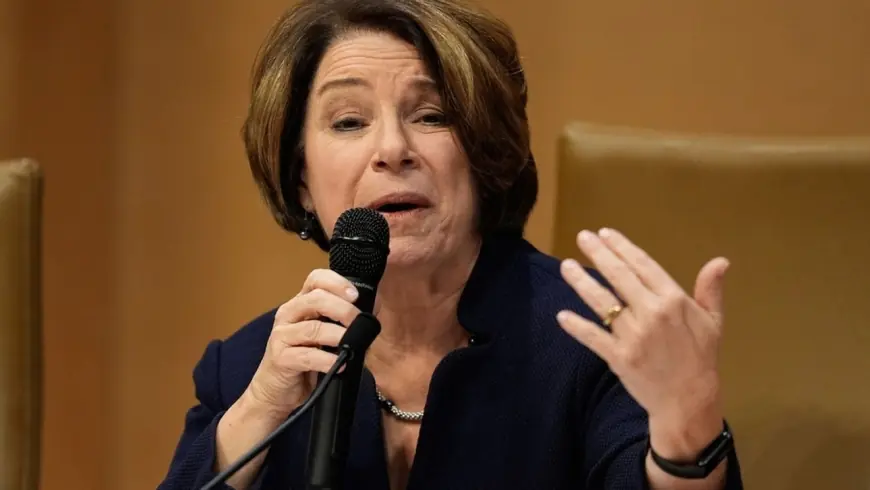
Sen. Amy Klobuchar announced Thursday, January 29, 2026 ET that she is running for governor of Minnesota, opening a high-stakes chapter in a race that is already unusually national in tone. Her entry comes weeks after Gov. Tim Walz said he would not seek a third term, and it lands amid an escalating state-federal showdown over immigration enforcement tactics in the Twin Cities and a parallel debate over fraud investigations tied to social programs.
Klobuchar’s move matters because it pairs a familiar statewide brand with an electorate that is being pulled in two directions at once: demands for public safety and stability, and anger over federal operations that have sparked protests, lawsuits, and two fatal shootings this month.
Klobuchar’s announcement and the opening created by Walz stepping aside
Klobuchar enters as one of the most recognizable Democrats in the Upper Midwest, with deep relationships across the state’s donor and party infrastructure. Moving from the Senate to a governor’s office is also a strategic shift: it trades national legislative leverage for direct control over state agencies, emergency response coordination, and the day-to-day levers that shape how Minnesotans experience government.
Walz’s decision not to run again removes the advantages of incumbency and effectively turns 2026 into a contest about who can credibly claim to steady the state through overlapping crises. It also raises a second, quieter set of questions that will hover over the race: if Klobuchar wins, how Minnesota fills her Senate seat and whether that downstream contest becomes a second battlefield in the same election year.
The immigration enforcement conflict that is dominating Minnesota politics
The political temperature rose sharply after a large federal immigration operation, known as Operation Metro Surge, sent thousands of federal personnel into Minnesota. The operation has been at the center of legal fights between Minnesota officials and the federal government, with judges demanding explanations of the operation’s scope and tactics and activists organizing rapid-response networks to document arrests and street encounters.
The most combustible developments have been two fatal shootings involving federal agents in Minneapolis. Renée Nicole Good was killed on Wednesday, January 7, 2026 ET. Alex Pretti was killed on Saturday, January 24, 2026 ET. Video and competing official descriptions of those incidents have intensified public distrust and pushed the state’s political class into a tightrope act: condemning violence and disorder while also confronting federal conduct that many residents view as heavy-handed.
This is where Klobuchar’s incentives become clear. A governor’s campaign gives her a platform to argue she can confront federal pressure while still projecting competence and control. It also gives her opponents an opening to frame her as escalating conflict rather than lowering the temperature.
Fraud and childcare oversight: the pocketbook lane running alongside the street protests
Alongside the enforcement conflict is a separate argument that may prove just as decisive with swing voters: allegations of fraud tied to public programs, including childcare assistance systems and related oversight failures. Federal scrutiny and funding threats have elevated what would normally be bureaucratic disputes into front-page political combat.
For Klobuchar, this creates a complicated balancing act. She can promise aggressive accountability and tighter oversight while simultaneously resisting what Democrats describe as selective enforcement and politicized targeting. For Republicans, the fraud narrative is a ready-made critique of one-party governance, especially if voters feel the state lost control of program integrity.
The stakeholder map here is wide: working families who rely on childcare support, providers facing compliance uncertainty, immigrant communities wary of being singled out, state agencies under audit pressure, and local leaders trying to keep services running while the rules shift around them.
Behind the headline: what each side is trying to achieve
Klobuchar’s pitch is likely to revolve around executive competence: restoring order, reducing chaos, and rebuilding trust. The federal government’s incentive is different: demonstrating visible enforcement intensity and deterrence, while defending tactics under legal and political scrutiny. Activist coalitions are trying to raise the costs of the operation through sustained protest, documentation, and litigation support. Local governments are trying to avoid being squeezed between federal operations and public backlash.
Second-order effects are already visible. Businesses worry about disruption. Hospitals and frontline workers worry about safety and staffing. Courts face mounting pressure as detention and transfer decisions become flashpoints. Even when the immediate events cool, the institutional aftershocks can linger in morale, recruitment, and community trust.
What we still don’t know
Several missing pieces will shape whether Klobuchar’s entry becomes a fast consolidation or the start of a bruising fight:
-
Whether federal officials actually draw down personnel or simply rebrand tactics as more targeted
-
What investigators ultimately conclude about the Good and Pretti shootings, and whether accountability actions follow
-
Whether a serious Democratic challenger emerges who argues the moment requires a different kind of leadership
-
How the Republican field narrows and whether it coalesces around a single message: law-and-order, anti-fraud oversight, or a full alignment with the federal crackdown
-
How voters react if the governor’s race also becomes a preview of a separate Senate battle triggered by a vacancy
What happens next: realistic scenarios and triggers
Scenario one: Klobuchar quickly becomes the clear front-runner. Trigger: early endorsements, strong fundraising, and no major Democratic challenger.
Scenario two: The election becomes a referendum on federal enforcement in Minnesota. Trigger: continued street clashes, new videos, or major court rulings tied to detention, transfers, or use-of-force disputes.
Scenario three: Fraud and program oversight eclipse the enforcement debate. Trigger: new audits, prosecutions, or a disruption in funding that directly hits families and providers.
Scenario four: The race nationalizes further and hardens partisan lines. Trigger: high-profile visits, escalating rhetoric from national leaders, or a major federal-state standoff over cooperation.
Scenario five: Voters punish all sides for instability and demand a pragmatic reset. Trigger: sustained fatigue, economic anxiety, and a broad preference for de-escalation over confrontation.
Klobuchar is betting that Minnesotans want an executive who can fight when necessary but govern every day. Whether that message wins will depend less on a single speech and more on what happens next in the courts, on the streets, and in the state systems that families rely on.