
























Trump Team Criticizes Europe for Prioritizing India-EU Trade Over Ukraine

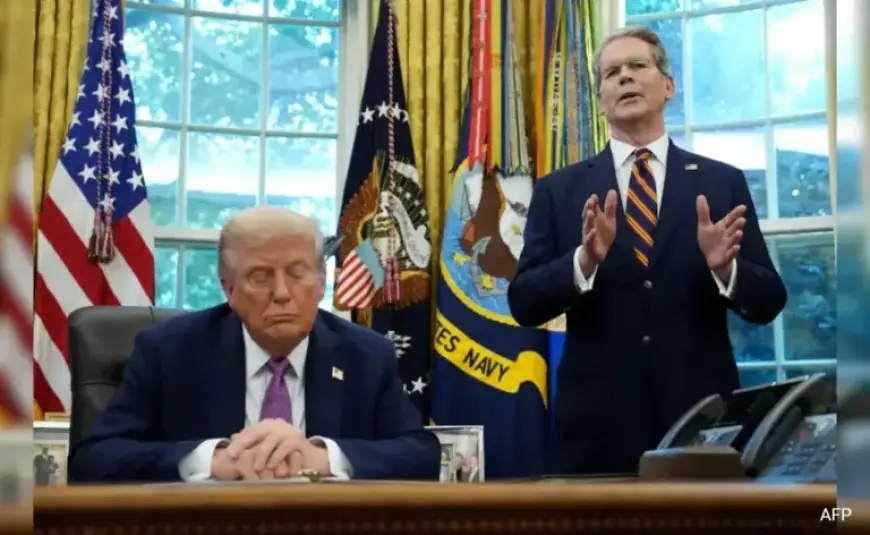
The recent free trade agreement between the European Union and India has drawn criticism from US Treasury Secretary Scott Bessent. He argues that this deal contradicts Europe’s stance on the ongoing Ukraine conflict. Bessent emphasizes that European leaders are prioritizing economic interests over geopolitical responsibilities and energy security.
Critique of European Priorities
In a comprehensive interview with US media, Bessent expressed disappointment regarding the EU-India trade deal. He believes that while nations can pursue their economic goals, Europe’s choices reveal a significant inconsistency in its Ukraine policy.
Bessent remarked, “Europe and India signing this massive trade deal—does that threaten America? They should do what’s best for themselves. But I find the Europeans very disappointing because they are on the front line of the Ukraine-Russia war.”
Funding the Conflict
Bessent accused European nations of financially supporting their adversaries. Following Russia’s invasion of Ukraine, India notably escalated its acquisition of discounted Russian oil. He pointed out that Europe became a significant purchaser of the refined oil products derived from this crude. “India started buying sanctioned Russian oil, and guess who was buying the refined products? The Europeans,” Bessent stated.
Tariffs and Trade Dynamics
In response to India’s oil purchases, the United States imposed a 25% tariff on Indian imports. However, Bessent noted that Europe chose not to follow suit, potentially to maintain its trade negotiations with India:
- Europe hesitated to implement similar tariffs.
- The desire for a trade deal with India influenced Europe’s decisions.
He criticized European priorities, suggesting, “Every time you hear a European talk about the importance of the Ukrainian people, remember that they put trade ahead of the Ukrainian people.”
Energy Dependency and Moral Dilemma
Bessent acknowledged that Europe’s heavy reliance on energy imports complicates its policy decisions. He framed the situation as a moral and strategic dilemma. “They need energy, I guess, which is part of their issue. They want cheap energy,” he explained. He also noted that the US could benefit from similar policies if it chose to purchase sanctioned Russian oil.
Tensions Among Allies
The remarks illustrate growing tensions within the Western alliance regarding economic pressure on Russia and the associated domestic costs. While European officials stress the importance of energy security and economic stability, they simultaneously assert support for Ukraine.
Bessent briefly mentioned a “rift” in US-Canada relations, highlighting differing narratives between Washington and Prime Minister Mark Carney concerning recent communications after the Davos meetings, without providing further details.
Conclusion
The EU-India trade pact represents one of the most significant agreements in recent years, aiming to enhance economic relations. However, Bessent’s comments suggest that the deal symbolizes Europe’s complicated balancing act between geopolitical strategy, trade, and energy security. The ongoing situation continues to evolve, reflecting the intricate dynamics at play on the global stage.