
























Australian Firm to Produce 10,000 Tonnes of AI-Critical Mineral

An Australian firm, Alpha HPA, is set to produce 10,000 tonnes of high-purity alumina annually. This mineral is essential for the global artificial intelligence (AI) industry. The announcement coincides with a significant investment from the National Reconstruction Fund Corporation (NRFC), amounting to $75 million, which will support the company’s expansion.
Investment and Expansion Plans
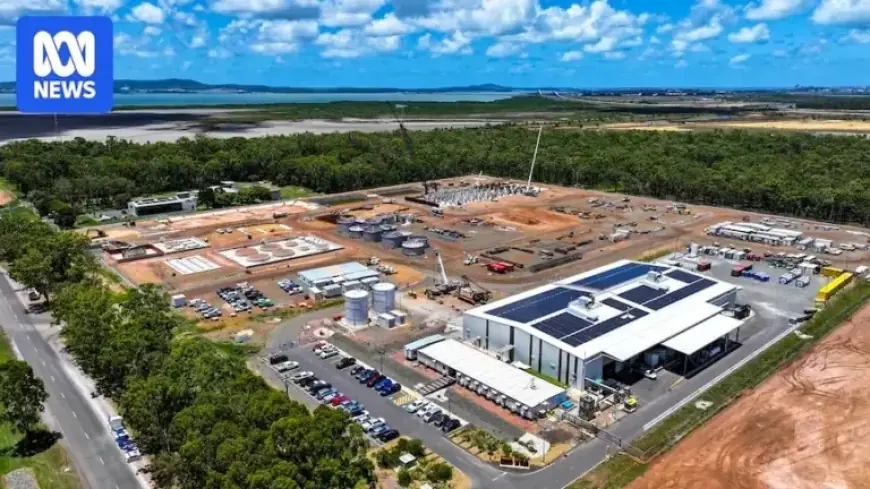
The NRFC is acquiring a 6.9% stake in Alpha HPA, a key player in the high-purity alumina sector. According to managing director Rob Williamson, the funding will aid in the second phase of construction at their Gladstone facility in central Queensland. This expansion aims to reinforce Australia’s role in supplying materials for advanced semiconductor manufacturing.
Significance of High-Purity Alumina
High-purity alumina is a critical mineral, comparable to icing sugar in texture. It has diverse applications, including:
- Cooling components in lithium-ion batteries.
- Manufacturing pharmaceutical products.
- Improving the performance of semiconductors used in AI technologies.
This mineral is crucial for companies like NVIDIA and Amazon, which rely on high-performance chips for AI processing.
Job Creation and Community Impact
The first stage of Alpha HPA’s project employs approximately 130 workers in Gladstone. The anticipated second stage will create an additional 120 full-time jobs and 420 construction positions, contributing to local economic growth.
Environmental Considerations
The NRFC has emphasized the environmental benefits of Alpha HPA’s technology. The company’s processes use 100% renewable electricity and operate at lower temperatures, resulting in up to 70% less emissions compared to traditional high-purity alumina production methods.
Future Outlook
Alpha HPA’s operations are set to be the world’s largest single manufacturing facility for high-purity alumina. The company has already secured substantial financing, totaling $400 million, from various government initiatives. The completion of the second phase is scheduled for 2027, solidifying Australia’s position in the global mineral supply chain.
Williamson believes that this project positions Australia favorably for future trade relations, particularly with the United States. The investment not only enhances supply chain resilience but also opens doors for further opportunities in the international market.