Ajit Pawar plane crash: Maharashtra deputy chief minister killed as investigators begin probe

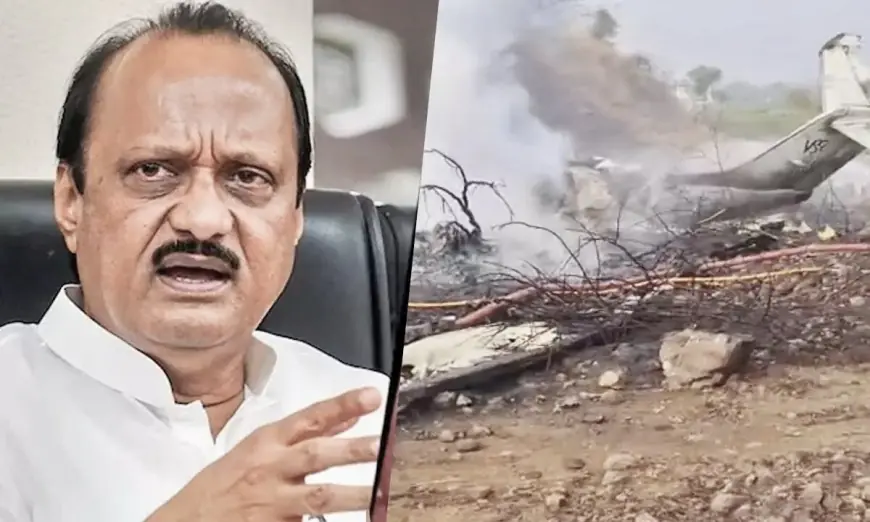
Ajit Pawar news took a tragic turn late Tuesday, January 27, 2026, ET, after officials said Maharashtra Deputy Chief Minister Ajit Pawar was among five people killed when a charter aircraft crashed near Baramati in Pune district. The business jet was traveling from Mumbai toward Pawar’s home region when it went down in flames during its approach, triggering an immediate national political shock and a rapid response from aviation and local authorities.
Further specifics were not immediately available about the precise chain of events in the final seconds before impact, and investigators have not released a definitive cause.
Crash near Baramati leaves five dead, including Ajit Pawar
Authorities said the aircraft was a Learjet 45-class business jet operated by a private charter company, carrying Ajit Pawar along with two staff members and two crew. The crash happened close to the runway area near Baramati, where footage from the scene showed burning wreckage scattered across an open field.
Officials said there were no survivors. Initial accounts indicate the jet was on approach to land when the accident occurred, but a full public timeline has not been released detailing the sequence of pilot communications, any attempted go-around, and the aircraft’s final flight path.
Some specifics have not been publicly clarified, including whether any mechanical warnings were reported before the approach and what data has been recovered from onboard systems.
Political shock in Maharashtra as tributes pour in and succession questions begin
Pawar was one of the most prominent power brokers in Maharashtra politics and came from an influential political family in the state. He served as deputy chief minister in the state’s coalition government and had been active in campaign activity tied to local body elections, according to officials familiar with his schedule.
National and state leaders issued condolence messages as news spread, and the state government signaled that formal mourning arrangements and funeral plans would follow. Key terms have not been disclosed publicly about the exact timing and protocol of the state funeral, including which officials will attend and how security and public access will be managed.
The death also creates immediate governance questions. Maharashtra’s coalition will need to determine interim responsibilities and a longer-term appointment process for the deputy chief minister’s role, while Pawar’s party faction will face a leadership vacuum at a sensitive political moment.
How an air crash investigation typically unfolds
Aviation investigations are methodical and evidence-driven, especially when a high-profile passenger is involved. Investigators typically secure the crash site, document the wreckage field, and recover flight records and maintenance documentation. They also review air traffic control communications, meteorological conditions at the time, pilot training and duty logs, and the aircraft’s recent service history.
Where available, onboard recording systems and other flight data can help reconstruct speed, altitude, engine performance, and cockpit actions. Even when those records are limited, investigators can still build a timeline using radar tracks, radio logs, and forensic examination of components to identify whether a failure occurred before or after impact.
The reason for the crash has not been stated publicly, and officials have cautioned against drawing conclusions before the early fact-finding phase is completed.
What this means for residents, voters, and the aviation sector
The immediate impact is being felt by multiple groups. For residents near Baramati and the broader Pune district, the crash has brought emergency activity, traffic restrictions, and heightened security. For voters and political workers, the incident introduces uncertainty into ongoing local election campaigning and the near-term direction of Maharashtra’s coalition politics.
There are also wider implications for the charter aviation sector. When a business jet crash results in fatalities, operators and regulators typically face renewed scrutiny over aircraft maintenance practices, pilot scheduling, and operational decision-making during approaches and landings at smaller airports. Even before an official finding, such incidents often prompt internal safety reviews and operational audits across similar fleets.
In the days ahead, the next verifiable milestone is an initial public briefing from aviation and state authorities outlining confirmed facts, followed by a preliminary investigation update that can clarify the aircraft’s approach sequence and the evidence recovered from the crash site.