Guilford County Schools Juggles Winter Storm Disruptions and New Policies for 2026

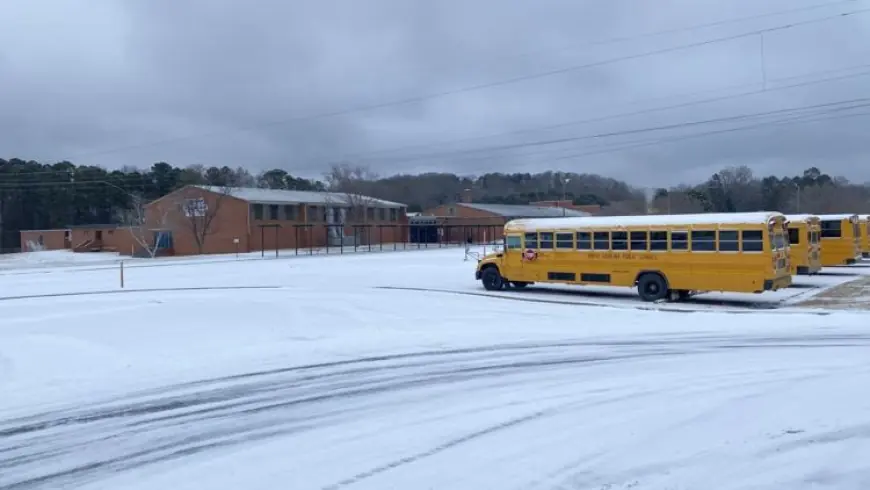
Guilford County Schools is moving through a busy stretch of early 2026, balancing storm-driven schedule changes with a slate of new board-approved policies that will shape classrooms, field trips, and family options around instructional materials. The district’s decisions this week reflect two priorities that don’t always fit neatly together: keeping students and staff safe when roads turn hazardous, and tightening rules that affect day-to-day learning once schools are back in session.
Winter Storm Fern forces closures, then remote learning
After freezing rain and icy conditions spread across Guilford County, the district shifted quickly from traditional school operations to weather-response mode. County government offices also closed as officials warned of overnight icing and unsafe travel conditions tied to Winter Storm Fern, underscoring the broader impact on roads and public services.
On Monday, Jan. 26, the disruption rolled into the school week. By Tuesday, Jan. 27, Guilford County Schools announced students would learn remotely because of hazardous road conditions across the county. Afterschool activities were canceled, and staff were directed to follow the district’s remote-learning plan.
Further specifics were not immediately available about how many families experienced connectivity issues or power interruptions that could affect participation in remote instruction. Some specifics have not been publicly clarified about the extent of storm damage across individual neighborhoods and routes used for school transportation.
Policy changes touch library checkouts, phones in class, and overnight trips
While weather dominated immediate operations, the Guilford County Board of Education has also been making longer-term changes. At its January meeting, the board approved multiple policy updates after a 30-day public input period.
Several of the changes are likely to be most visible to families:
-
Instructional materials and library media centers: The board updated its policy to align with state law requiring an option for parents to opt their children out of checking out specific materials from school library media centers.
-
Wireless devices during instructional time: Updates to the district’s technology responsible use policies incorporate state-required elements that prohibit the use of wireless communication devices during instructional time, aiming to reduce in-class distractions and standardize expectations.
-
Overnight field trips: Revisions to the field trip policy reflect state-law requirements for parental consent related to student rooming assignments on overnight trips, along with added language addressing non-school-sponsored trips.
The board also approved policy changes that primarily affect staff operations, including guidance related to emergency medications that schools may stock and administer under state law, and updates connected to background checks for contracted bus drivers.
Calendar updates for 2026–27 adjust key dates and early-college schedules
The board also approved modifications to the 2026–27 academic calendars based on updated schedules at local colleges and universities. One change shifts a fall optional teacher workday to Friday, Oct. 30, 2026, and moves the end of the first quarter grading period to Thursday, Oct. 29, 2026.
For early and middle colleges housed at local institutions, the revised calendar reflects a confirmed shared spring break week of March 8–12, 2027.
In the same action, the board approved its meeting calendar for the 2026–27 academic year, continuing the general pattern of meeting on the second Tuesday of each month, with a special June 2027 arrangement that includes a work session on the second Tuesday and a regular business meeting on the last Thursday of the month.
How weather calls and policy rollouts typically work
Weather decisions in large districts usually follow a practical sequence: road-condition checks across the county, consultation with local emergency and transportation partners, and an assessment of whether buses and car traffic can move safely during the morning and afternoon commute windows. When hazards are widespread but not uniform, districts often choose between closing, delaying, or switching to remote learning to maintain instruction while avoiding travel risk.
Policy changes, by contrast, tend to move on a slower track: draft language, a public input window, revisions based on feedback and legal requirements, then a final board vote. That process is designed to reduce surprises, but real-world implementation still depends on training, school-level consistency, and clear communication to families about what changes when and how rules will be enforced.
The reason for the change has not been stated publicly in a single summary that explains how each policy update will be monitored for consistency across all schools.
Who is affected and what comes next
Families and students feel the storm response first, especially when remote learning is announced with limited lead time. Parents must reorganize childcare and work schedules, students may face uneven access to devices or stable internet, and afterschool providers lose planned program days.
Teachers and staff are also directly affected. Remote days shift lesson delivery, attendance practices, and support services, while new policies on devices and instructional materials require classroom-level enforcement and consistent expectations from school to school.
The next verifiable milestone is the district’s next posted operational update on whether in-person instruction resumes on schedule after the latest round of icy conditions. On the governance side, the next key dates are the board’s upcoming committee meetings and the next regular Board of Education meeting later in February, where implementation details and community feedback on the new policies are likely to surface.