Melania movie opens in theaters with Brett Ratner back in the director’s chair, and reviews already turning into a culture-war proxy

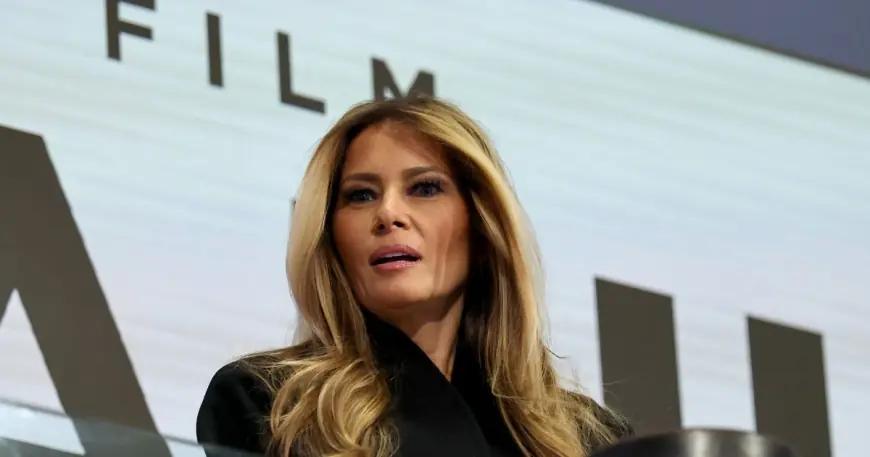
The melania movie is set to reach wide theatrical release on Friday, January 30, 2026 (ET), positioning itself as a high-profile political documentary at a moment when even basic questions about “reviews” are being argued in real time. Directed by Brett Ratner and centered on Melania Trump, the film promises a behind-the-scenes look at her return to the role of first lady during the 20 days leading up to the 2025 presidential inauguration.
The project has been marketed as unusually intimate, but it is also unusual in another way: Melania Trump is listed as a producer, a credit that has quickly become a focal point for debate about how independent the final cut can be when the subject has a direct hand in the production.
Some specifics have not been publicly clarified.
Key terms have not been disclosed publicly.
A documentary built on access, framed as a personal story
The film’s core pitch is access: private moments, planning sessions, and the mechanics of a high-security transition period presented through Melania Trump’s day-to-day perspective. That naturally makes the documentary less about campaign drama and more about the logistics of public life—scheduling, security constraints, family movement, and the choreography required to shift back into Washington.
That approach can be compelling on its own terms, but it also sets expectations that the movie will answer questions viewers have carried for years: what Melania Trump chooses to reveal, what she refuses to address, and how she wants her public image defined in a second turn as first lady.
A full public timeline has not been released for which moments, meetings, or locations appear in the final version beyond the broad transition window.
Brett Ratner’s return raises the stakes around the release
Brett Ratner’s involvement guarantees attention beyond the film’s subject. He is returning to directing after years away from mainstream production following allegations of sexual misconduct made in 2017, which he has denied. That history has made his role in a politically loaded documentary part of the story itself, especially among audiences who view Hollywood comebacks as a measure of industry accountability.
For the film, that means the conversation is happening on multiple tracks at once: what Melania Trump is presenting on screen, and what Ratner’s return signals about which projects get financed and elevated in the current media environment.
Melania movie reviews are a moving target before opening day
Searches for melania movie reviews have spiked even before the public rollout, but early “ratings” have been messy, in part because the film’s wide release date is still ahead. As of Thursday, January 29, 2026 (ET), several major review-tracking pages showed no published critic review count and no verified audience rating count for the film, a sign that the standard review cycle has not fully begun.
At the same time, the movie has already become a magnet for pre-release sentiment online, including waves of negative reactions from users who appear to be responding to the politics around the subject rather than the finished film. Some platforms typically remove or restrict pre-release reviews for films that have not opened widely, which can make the public “scoreboard” look like it is disappearing and reappearing.
Further specifics were not immediately available about how many early ratings were removed across various services, or how many were tied to date-listing errors versus content moderation policies.
How review systems shape public perception on day one
Here is the practical mechanism that often confuses audiences: the first “reviews” people see for a high-profile release are not always reviews of the movie. Many film-rating systems separate professional critic write-ups from audience ratings, and some separate “verified” ticket-based ratings from unverified commentary.
That matters because a documentary like this can generate three different reaction curves:
-
Critics may respond to craft, structure, and journalistic rigor.
-
Early online commenters may react primarily to the subject’s politics and celebrity.
-
General audiences may respond to clarity, novelty, and whether the film feels revealing or tightly managed.
When pre-release commentary floods in, moderation rules and verification systems can dominate the narrative as much as the content of the documentary itself. In effect, the debate becomes “who is allowed to rate this and when,” instead of “what does the film do well or poorly.”
Who’s affected and what comes next after opening weekend
Two groups will feel the impact immediately. The first is moviegoers, including politically engaged viewers and casual documentary fans, who may struggle to find trustworthy consensus in the first 48 hours because the public rating ecosystem can be volatile at launch. The second is theatrical exhibitors and staff, who must forecast demand for a film that can be driven by controversy as much as by word-of-mouth, creating unpredictable attendance patterns across regions.
There is also an effect on documentary filmmakers and distributors, because the outcome will be read as a test of whether high-cost, personality-led political documentaries can draw meaningful theatrical audiences—or whether the primary value is reputational, promotional, or strategic rather than box-office based.
The next verifiable milestone is the film’s wide opening on January 30, 2026 (ET), when traditional critic reviews and verified audience ratings are more likely to populate at scale. After that, the most measurable checkpoint will be opening-weekend performance, followed by any announced expansion, contraction, or timing updates for its at-home availability.