Marco Rubio Defends Venezuela Operation in Senate Hearing as Ukraine Peace Talks and Arctic Tensions Compete for Attention

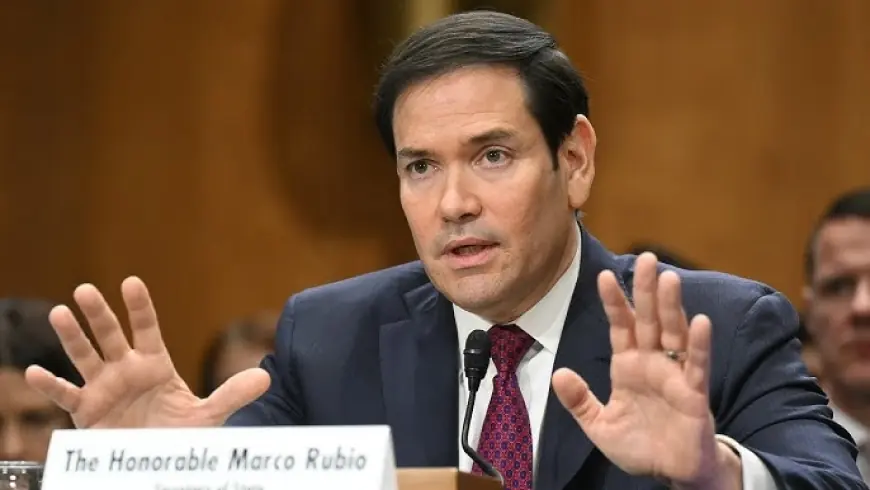
Marco Rubio faced pointed questions on Capitol Hill Wednesday as the secretary of state defended the Trump administration’s recent Venezuela operation while also juggling high-stakes diplomacy on Ukraine and a newly opened channel of talks tied to Arctic security. The overlapping crises have put Rubio at the center of a foreign-policy agenda that is moving quickly, with big decisions still unsettled and timelines still evolving.
By Wednesday, Jan. 28, 2026 ET, officials had not released a full public accounting of the Venezuela operation’s planning or the exact scope of U.S. commitments that may follow.
Senate hearing spotlights Venezuela after Maduro’s capture
Rubio appeared before the Senate Foreign Relations Committee on Wednesday morning to lay out the administration’s approach to Venezuela following a U.S. military operation that removed Nicolás Maduro from power and brought him into U.S. custody. In testimony and exchanges with senators, Rubio argued the operation was a strategic necessity and insisted the United States is not “at war” with Venezuela, while acknowledging the path toward a stable transition will be difficult.
Lawmakers pressed for clarity on what comes next: how the U.S. government intends to support interim governance, whether additional force could be used, and what legal framework governs future actions. Further specifics were not immediately available about the timeline for elections in Venezuela or the structure of any interim authority.
Some specifics have not been publicly clarified, including the precise limits the administration is placing on U.S. military involvement after the initial operation.
Donetsk emerges as the hardest issue in Ukraine peace talks
While facing questions on Venezuela, Rubio also described ongoing diplomatic work aimed at ending Russia’s war in Ukraine, pointing to the territorial dispute over Donetsk as the core obstacle still blocking an agreement. Rubio characterized Donetsk as a “very difficult” issue, with Russia pressing claims over areas it does not fully control and Ukraine resisting any settlement that requires giving up territory it has not lost on the battlefield.
The talks are continuing after a recent negotiating round in Abu Dhabi that did not produce a deal but did keep the process alive. Rubio indicated additional discussions are scheduled for Sunday, Feb. 1, 2026 ET, and said U.S. security guarantees for Ukraine are being discussed as part of a post-conflict framework rather than as an immediate wartime commitment.
Key terms have not been disclosed publicly, including the exact contours of any security guarantees and what conditions would trigger them.
Arctic security talks begin with Denmark and Greenland in the mix
Rubio also confirmed that technical talks have started with Denmark and Greenland officials on Arctic security, following a working group formed during a recent meeting in Washington that included Vice President JD Vance and senior Nordic representatives. The discussions are framed around regional security and the growing strategic competition in the Arctic, where the United States and allies have increasingly emphasized concerns about Russia and China.
The renewed focus comes after a period of public tension over Greenland, a semi-autonomous territory within the Kingdom of Denmark, and the broader question of how the United States should approach Arctic posture, basing, and maritime security. The administration has described the working group as a way to keep security coordination moving while lowering the temperature of earlier disputes.
A full public timeline has not been released for the working group’s next meeting or the specific deliverables it is expected to produce.
How oversight and diplomacy typically work in crises like this
When the executive branch undertakes a major overseas operation, Congress typically asserts oversight through hearings, classified briefings, and demands for legal justification, particularly when military force is involved. The Senate Foreign Relations Committee, along with other committees, uses testimony to probe strategy, costs, and end goals, and lawmakers may reference war-powers constraints, appropriations leverage, and reporting requirements to shape what the administration can do next.
Diplomacy runs on a parallel track. Peace talks generally narrow over time from broad positions to a few hard issues, often territory and security guarantees, because those terms determine whether an agreement can hold after fighting stops. Technical working groups, like the Arctic channel described by Rubio, are a common tool to keep coordination going below the political level while leaders manage the public-facing conflicts.
Who is affected and what to watch next in practical terms
The consequences land first on people closest to the conflicts. In Venezuela, civilians and political detainees face immediate uncertainty as governance shifts, security forces realign, and economic expectations reset. In the United States, military families and service members could be affected by any expanded operational footprint, while diplomats and aid officials may be tasked with stabilizing plans that are still being defined.
In Ukraine, the stakes are existential for Ukrainians living under attack or occupation and for displaced families who have waited years to return home. European allies and global energy markets also watch for any shift that could reshape sanctions, reconstruction commitments, and regional security posture.
The next verifiable milestones are already on the calendar: Rubio is expected to face additional congressional scrutiny as committees request follow-up briefings on Venezuela, and the Ukraine process is set to resume with another round of talks on Sunday, Feb. 1, 2026 ET. Separate updates are also expected from the Arctic working group as technical teams define next steps and security priorities for the months ahead.