
























Why Guinea’s Critical Minerals Are Key to U.S. Strategy

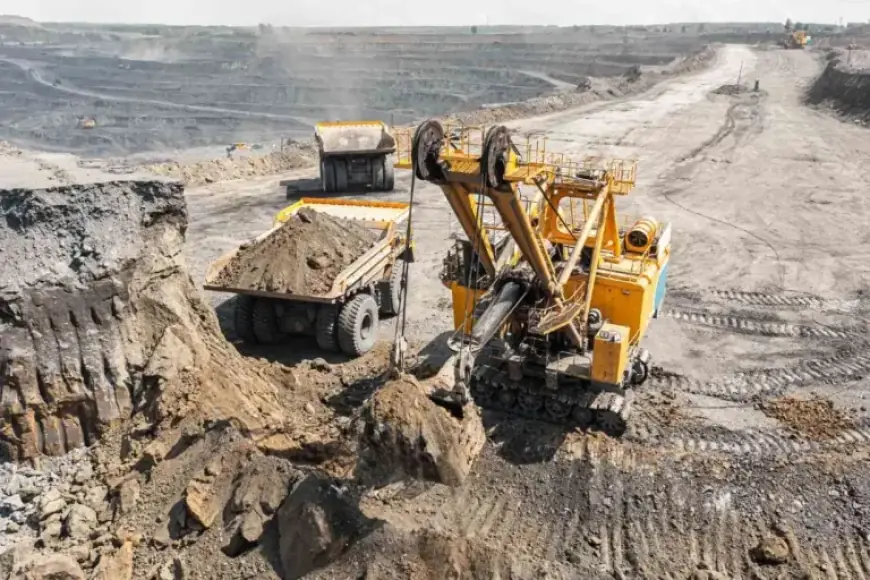
As the United States refines its strategy concerning critical minerals, the spotlight turns to the Republic of Guinea. This West African nation is endowed with rich mineral resources that are essential for U.S. economic and security objectives. These resources are not only vital for energy transition technologies but also significant for advanced manufacturing and defense systems.
Guinea’s Mineral Wealth
Globally recognized as the largest exporter of bauxite, Guinea plays a crucial role in the supply chain of several critical minerals. Beyond producing aluminum, bauxite is a key source of gallium. This vital mineral is indispensable in manufacturing semiconductors, advanced microelectronics, and 5G infrastructure. Furthermore, gallium plays a significant role in defense technologies such as radar systems and missile guidance. As China currently dominates gallium production, Guinea’s rich bauxite reserves present a unique opportunity for the United States to establish a non-Chinese supply chain.
Graphite and Other Strategic Minerals
In addition to bauxite, Guinea hosts significant reserves of graphite, which is crucial for lithium-ion batteries and electric vehicles. This underexplored mineral has immense potential, not just for the energy sector but also for various defense technologies. As global demand for critical minerals rises, Guinea stands out due to its capability to deliver large-scale resources.
Simandou: A Case Study in Strategic Engagement
The discussion about Guinea’s importance would not be complete without mentioning Simandou, a world-class iron ore deposit located in southeastern Guinea. The project is moving toward production under two major international consortia, including Rio Tinto. This progression highlights a strategic lesson for the U.S.: despite its significance, the project has advanced without substantial U.S. involvement. Instead, it has been shaped by non-U.S. actors, potentially allowing competitors to exert influence over supply and related infrastructure.
A Shifting U.S. Strategy Required
For over two decades, China has pursued a strategic approach in Africa by securing direct access to mineral resources, financing infrastructure, and establishing long-term agreements. The U.S. has typically focused on downstream partnerships and development but has largely shied away from direct involvement in mining operations. To effectively compete with China, the U.S. must evolve its approach. Direct engagement through equity participation, joint ventures, and long-term agreements in mining is necessary to secure valuable resources.
Guinea’s Strategic Importance
Guinea’s interests closely align with U.S. priorities. It possesses significant reserves of minerals that are crucial for industrial and security applications. Additionally, its strategic location in West Africa makes it politically significant. The country is becoming more focused on converting its natural resources into domestic value and infrastructure development. A U.S. strategy that includes direct mining participation in Guinea would foster mutual benefits, supporting both U.S. development goals and Guinea’s economic growth.
Remaining Opportunities
- Gallium: Key for semiconductors and defense technologies
- Graphite: Essential for electric vehicles and energy storage
- Bauxite: Foundation for aluminum production and gallium supply chain
While it is true that the U.S. is late to this race, significant opportunities still exist in Guinea. The focus on bauxite-derived gallium, graphite, and other critical minerals remains relevant as these resources are crucial for future technologies. The U.S. needs to recognize the strategic role Guinea plays in securing its supply chains. Time is of the essence, but the opportunity for strategic engagement is still available.