
















World Leaders Urge Boycott of U.S. World Cup Matches

A mounting wave of international concern threatens the 2026 World Cup planned in the United States. Various global leaders are now advocating for a boycott of the tournament in light of recent violent incidents and U.S. immigration policies.
Global Leaders React to Events in the U.S.
Oke Gottlich, vice president of the German Football Association, recently spoke to the press, emphasizing the growing need for discussions about a potential boycott. He likened the situation to the U.S.-led boycott of the 1980 Moscow Olympics, citing an increased threat level today.
Concerns have also been raised by politicians in the United Kingdom and France. Last week, nearly two dozen European football association heads convened in Budapest to deliberate their participation in the World Cup.
Concerns from Experts
Mohamad Safa, a Lebanese-born U.N. diplomat, has voiced serious apprehensions. He canceled his World Cup tickets due to safety fears linked to the U.S. immigration enforcement practices. Safa expressed that he might be misidentified and imprisoned with no legal recourse.
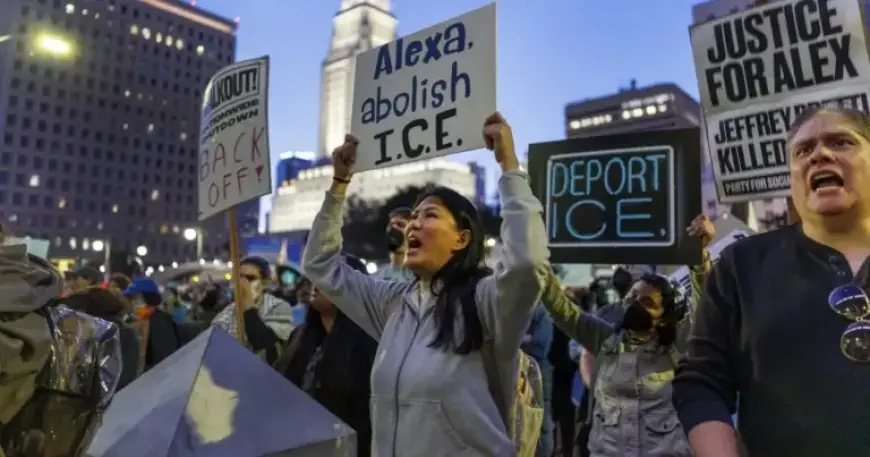
The recent fatal shooting of Alex Pretti, a 37-year-old ICU nurse, by federal agents in Minneapolis has added to these fears. This incident marks the second deadly encounter involving federal agents in just 16 days, with a total of 12 shootings reported since September.
Impact on the Soccer Community
Soccer officials, politicians, and diplomats are increasingly worried about the implications of U.S. actions. The rhetoric surrounding President Trump’s recent military threats and immigration policies has left many international observers unsettled.
Eric Coquerel, a French parliament member, questioned whether hosting the World Cup in the U.S. is appropriate amid escalating tensions and violence.
Boycott Discussions Gain Traction
Despite the escalating calls for a boycott, FIFA officials have remained silent on the matter, and it is unclear whether any action will be taken. The debate over the safety of the U.S. as a World Cup venue continues to gain traction, especially in European media.
Andrew Bertoli, an expert at IE University in Spain, noted that concerns over the violence in the U.S. are prominent in evening news coverage across Europe. However, he also expressed skepticism about the effectiveness of a boycott, given FIFA’s history of overlooking human rights issues in other tournament host countries like Qatar and Russia.
Economic Implications of a Boycott
While the 2026 World Cup is expected to break attendance records and generate substantial revenue surpassing $11 billion, the concern remains that a significant decline in international visitors could impact local economies. Many fans may opt out of attending games due to safety concerns, leaving U.S. stadiums populated mostly by domestic fans.
- Upcoming World Cup to be held in the U.S., Canada, and Mexico.
- Concerns over Federal immigration policies and safety incidents.
- Officials fear economic repercussions if international fans refrain from attending.
The U.S. government has introduced additional complexities to the visitor process, effectively pausing immigrant-visa applications for 75 countries. This policy follows an earlier travel ban impacting 39 countries, including several that have qualified for the World Cup.
As discussions around a potential boycott deepen, the global soccer community remains vigilant about the unfolding situation. The 2026 World Cup stands at a crossroads amid heightened international tensions and domestic unrest.