Rafael Pineda dies at 88, closing a defining chapter in New York Spanish-language TV news

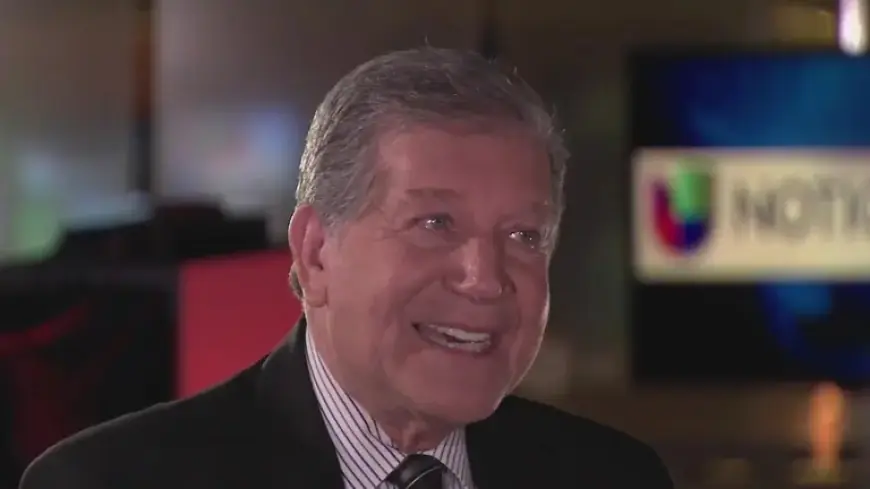
Rafael Pineda, a longtime Spanish-language television news anchor known for decades of on-air work in the New York market, has died. He was 88. Notices shared in recent days said he died Sunday, January 25, 2026, in Florida (ET).
For many viewers, Pineda wasn’t just a familiar face—he was the steady voice that made breaking news feel navigable in a second language, and local politics feel personal rather than distant. His death lands at a moment when local television news is under pressure from shrinking budgets and rapidly changing audience habits, making the loss feel bigger than one career.
A familiar voice during the city’s hardest nights
Pineda’s reputation was built less on flash than on reliability. Over years of elections, storms, tragedies, and civic celebrations, he became part of the routine in households that measured time by school pickups, late shifts, and the evening newscast.
That kind of relationship is hard to quantify, but it’s easy to recognize: viewers don’t just tune in for information—they tune in for a person they trust to translate the day’s chaos into clear steps. For immigrant families and Spanish-first households, that translation often carries practical stakes, from understanding a citywide emergency to making sense of changes in public services.
The outpouring that followed news of his death reflects how local anchors can function as community infrastructure. When the messenger has been consistent for decades, the message feels safer—especially in moments when official information arrives late, or arrives in language that feels cold and bureaucratic.
From Cuba to an American newsroom identity
Biographical accounts describe Pineda as Cuban-born, arriving in the United States as a young man and building his career in Spanish-language broadcasting in New York City. Over time, he became closely identified with local coverage that treated Spanish-speaking communities as a core audience rather than a side audience.
That distinction matters. Local news can easily slide into “translation-only” service—repeating what others already framed. The more durable model, and the one Pineda came to symbolize, is local reporting that starts with the community’s concerns: neighborhood safety, schools, housing, small businesses, immigration realities, and the daily friction points that rarely make national broadcasts.
In that sense, his career tracked a broader demographic reality: Spanish-language local news didn’t merely grow because the city changed. It grew because the city’s Spanish-speaking residents insisted on being addressed directly, with the same seriousness given to everyone else.
Legacy measured in trust, not just airtime
The most revealing part of Pineda’s legacy is what it suggests about how trust is built. It’s not built by being first; it’s built by being consistent. In local television, that means showing up night after night, speaking plainly, and acknowledging uncertainty when details are still moving.
His death is also a reminder that “institutional memory” is often carried by individuals, not organizations. Veteran anchors remember which promises were kept, which were broken, and which communities were repeatedly overlooked. When that memory disappears, local coverage can become thinner—more reactive, less grounded, and less accountable.
There’s also a second-order impact that doesn’t get discussed enough: trusted local broadcasters can reduce the spread of rumors in moments of crisis. When a community has a dependable, familiar voice, false information has a harder time gaining traction. When that voice is gone, the space is more easily filled by noise.
The questions that follow as local news keeps reshaping
Pineda’s passing arrives amid a reshuffling of local media economics: shorter segments, smaller staffs, and a growing reliance on quick-hit digital content. Spanish-language local news faces its own version of that squeeze, even as demand remains strong in communities that need reliable, daily updates.
In the days ahead, attention is likely to shift to how his work is honored and how his absence is felt on-air and off. The immediate signals to watch won’t be grand statements—they’ll be practical ones: whether stations continue investing in deep local reporting, whether younger journalists are given the time and resources to build relationships, and whether coverage stays rooted in the neighborhoods that formed the backbone of his audience.
For viewers who grew up with him, the loss is personal. For local journalism, it’s structural: the departure of a trusted bridge between city institutions and the people those institutions serve.