
























Fog Delays in Bakersfield: More Than 30 Kern County School Systems Shift Start Times as Dense Morning Fog Cuts Visibility

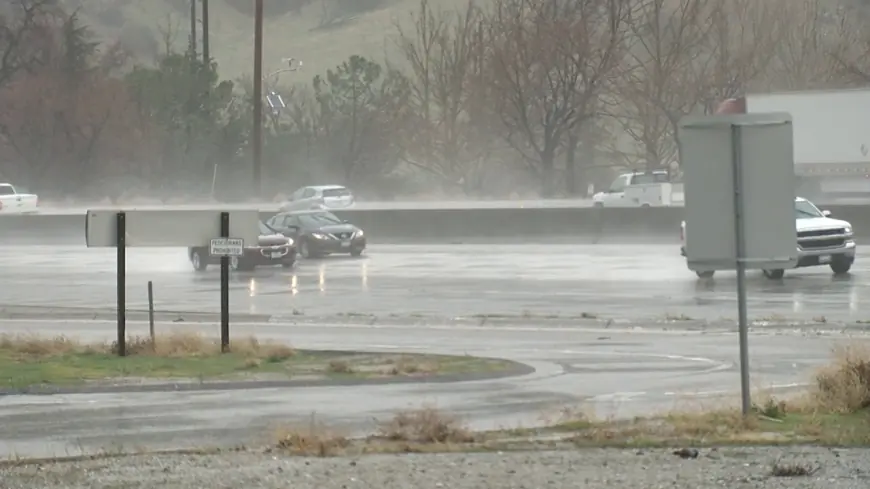
Dense morning fog settled over Bakersfield and surrounding parts of Kern County early Tuesday, January 27, 2026 (ET), prompting widespread “fog delay” announcements and turning the morning commute into a low-visibility hazard zone. The most immediate impact has been on school transportation—where bus routes, rural pickups, and crowded drop-off zones become significantly riskier when drivers can’t see more than a short distance ahead.
Forecasters also flagged a Dense Fog Advisory for the Bakersfield area through late morning, with conditions expected to gradually improve as daytime heating mixes out the shallow fog layer.
Which schools are on fog delay in Bakersfield and Kern County
Multiple districts moved to a 2-hour delay, with several districts choosing a buses-only delay (meaning the schedule change is tied mainly to transportation safety).
Notable examples of Tuesday’s announced changes include:
-
Bakersfield City School District — 2-hour fog delay (buses only)
-
Greenfield Union School District — 2-hour fog delay (buses only)
-
Panama-Buena Vista School District — 2-hour fog delay (buses only)
-
Standard School District — 2-hour fog delay (buses only)
-
Kern High School District — most high schools delayed 2 hours (with at least one exception noted)
Other districts announcing 2-hour fog delays included Arvin Union, Beardsley, Buttonwillow Union, Delano Joint Union High, Delano Union, Di Giorgio, Elk Hills, Fairfax, Fruitvale, General Shafter, Lakeside Union, Lamont, Maple, McFarland Unified, Norris, Pond, Richland, Rio Bravo-Greeley Union, Rosedale Union, Semitropic, Vineland, Wasco Union Elementary, Wasco Union High, and additional charter campuses in the Delano and Lost Hills areas. A county-operated special education program also shifted to a 2-hour delay.
What’s driving the delays: safety, buses, and the “chain-reaction morning”
Fog delays are often less about classroom safety and more about transportation risk. In the first hour of a normal school morning, traffic patterns are tightly synchronized—buses rolling, parents merging into drop-off lines, teens driving to high school, and commuters using the same intersections.
Dense fog breaks that timing. It increases:
-
Rear-end crash risk from sudden braking
-
Missed stop signs and late merges at low-speed junctions
-
Pedestrian danger near school zones where children are harder to spot
That’s why many districts opt for “buses-only” delays: if visibility is bad on outlying routes, the safest lever to pull is the bus schedule, even if some families can still drive in cautiously.
Behind the headline: why Bakersfield’s fog is becoming a recurring disruption
Bakersfield sits in a region where winter fog can become stubborn. Clear nights cool the ground, moisture condenses near the surface, and light winds fail to disperse it. Once a fog layer forms, it can linger into mid-morning—exactly when schools and commuters are most exposed.
The incentives are straightforward:
-
School leaders prioritize preventing a rare but catastrophic incident, even if a delay disrupts thousands of families.
-
Parents and employers absorb the cost: childcare gaps, late arrivals, and rescheduled morning routines.
-
Bus contractors and drivers carry the highest immediate liability; they must operate on tight routes in the worst visibility.
What makes this week’s fog events feel heavier is the cumulative effect: each new fog morning increases fatigue and complacency, and complacency is when drivers start pushing speed “because it looks fine right here”—until it doesn’t.
What we still don’t know
Even with advisories in place, fog is patchy and hyper-local. Key unknowns that matter for today:
-
How quickly visibility improves on rural routes outside Bakersfield proper
-
Whether fog re-forms after brief clearing in shaded or low-lying stretches
-
Whether additional schedule changes roll out later in the morning for activities, athletics, or afternoon transport
What happens next: realistic scenarios and triggers
-
Normal schedules resume by midday (ET) if sunlight and light mixing clear the fog decisively.
-
Extended reduced-visibility pockets persist into early afternoon if calm winds and saturated ground keep feeding surface moisture.
-
More “buses-only” decisions reappear on future mornings if fog continues, because districts can adjust transportation with less disruption than full closures.
-
Traffic incidents become the storyline if drivers fail to slow down early—especially on multi-lane corridors where speed differentials are largest.
For residents, the practical takeaway is simple: fog delays are a signal that conditions are bad enough to change institutional schedules. If your school start moved, treat your drive the same way—slow down, increase following distance, and assume the next intersection is more obscured than the last.