























Todd Lyons Faces Court Showdown as 10th Amendment Battle Over “Operation Metro Surge” Spreads Across the Twin Cities Metro

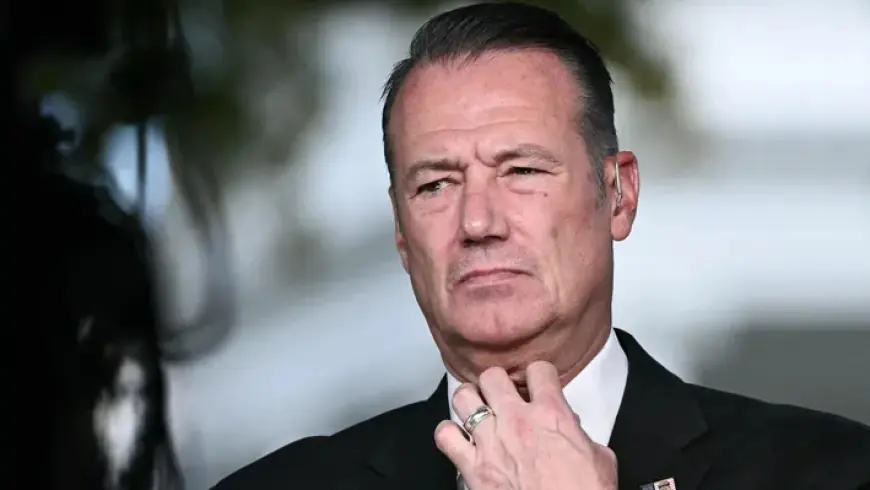
A fast-moving legal fight over federal immigration enforcement in Minnesota’s Twin Cities metro has escalated sharply this week, putting Todd Lyons—the acting head of federal immigration enforcement—on the hook for an in-person court appearance and raising broader questions about the 10th Amendment, state sovereignty, and the limits of federal power during large-scale operations.
At the center of the dispute is Operation Metro Surge, a major deployment of federal agents into the Minneapolis–Saint Paul metro area that has triggered a surge of detention challenges in federal court and a separate lawsuit by Minnesota and two major cities seeking to halt the operation entirely.
Why Todd Lyons Is Being Ordered to Appear in Court
A chief federal judge in Minnesota ordered Todd Lyons to appear in person on Friday, January 30, 2026, and explain why he should not be held in contempt in a case tied to immigration detention procedures.
The issue is not the policy debate in the abstract—it’s compliance with court orders in individual detention cases. The judge signaled that repeated failures to carry out required hearings and related directives have created significant hardship for detainees and overwhelmed the court system with emergency filings.
One prominent example cited in recent court proceedings involves a detained man whose attorneys said he remained in custody after a judge-ordered deadline for a bond hearing had passed. The judge’s message was blunt: the court will no longer treat delays as routine administrative problems when the number of alleged lapses has become persistent.
What “contempt” means here:
-
It is not a finding of guilt by itself.
-
It is a legal mechanism courts use to enforce compliance with orders.
-
The Friday session is expected to focus on why orders were not followed and what changes will be made immediately.
The 10th Amendment Argument: Minnesota’s “State Sovereignty” Claim
The separate, headline-grabbing lawsuit filed January 12, 2026 by Minnesota—joined by Minneapolis and St. Paul—leans heavily on the 10th Amendment, the constitutional principle that reserves powers not delegated to the federal government to the states (and the people).
In plain terms, the plaintiffs argue that the federal government’s conduct during Operation Metro Surge crosses a line from enforcing federal law into overriding local governance and public-safety management in the metro area. The lawsuit frames the operation as a sweeping and disruptive presence that burdens local resources and threatens residents’ ability to access essential services.
The lawsuit also alleges that the scale and tactics of the operation—especially in sensitive public spaces—have produced fear and instability across the Twin Cities metro, with ripple effects on schools, hospitals, and everyday city services. These claims remain allegations, and the case is still working its way through the court process.
What “Metro” Means in This Dispute
In this context, “metro” is not a transit agency or a newspaper shorthand—it’s the Minneapolis–Saint Paul metropolitan area, the focal point of a federal enforcement surge that has become both a legal test and a governance stress test.
The phrase Operation Metro Surge itself signals the intended scope: a concentrated push in a major urban region, with rapid arrests and detentions that generate immediate legal consequences—especially when courts require individualized hearings and deadlines.
How Operation Metro Surge Is Straining Courts and Local Systems
Two tracks are now colliding:
-
Individual detention cases
These cases move fast, because judges can order bond hearings, releases, or deadlines tied to due process. When deadlines are missed, judges escalate remedies—sometimes dramatically, as seen with the order requiring Todd Lyons to appear. -
The broader 10th Amendment lawsuit
This is the structural case: Minnesota and the metro cities asking a judge to curb or stop aspects of the operation itself, arguing it undermines state and local authority and public safety.
This combination creates a feedback loop: the larger the surge, the more detentions occur; the more detentions occur, the more petitions and emergency motions hit the court; the heavier the court load becomes, the more intense the judicial scrutiny over whether federal agencies are meeting basic procedural requirements.
What Happens Next: Friday’s Hearing and the Bigger Federalism Test
Friday’s appearance by Todd Lyons is the immediate flashpoint. The court will be looking for clear answers on:
-
Why court-ordered hearings and deadlines were missed
-
Whether staffing, logistics, or policy decisions caused noncompliance
-
What concrete steps will prevent repeat violations
-
Whether the court should impose penalties or other enforcement measures
Beyond Friday, the 10th Amendment case remains the wider battlefield—one that could shape how far future “surge” operations can go inside major metro areas when state and city leaders argue the federal government is imposing an unmanageable public-safety and governance burden.
For now, the Twin Cities metro is where the constitutional argument meets operational reality: a high-volume enforcement campaign, a packed federal docket, and a judge signaling that patience has run out.