























Global Communities Unite to Honor International Holocaust Remembrance Day

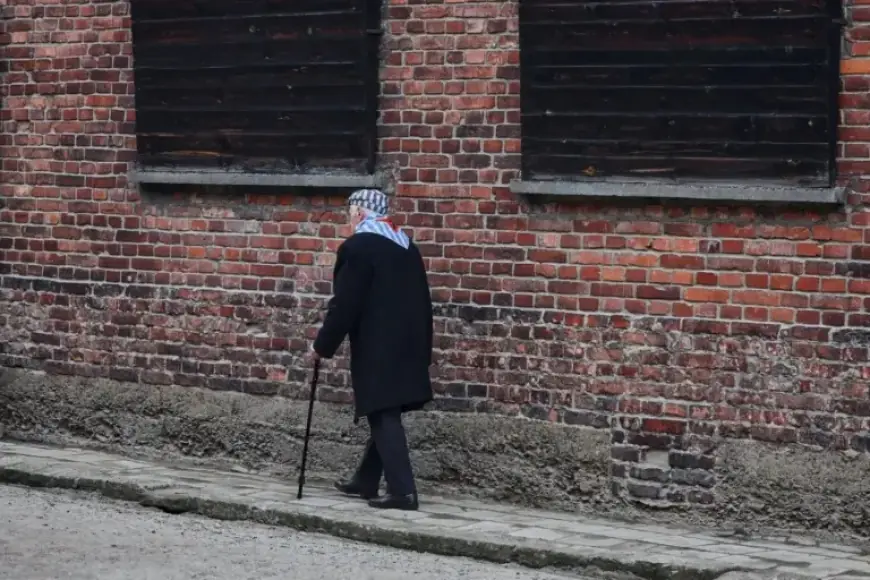
On January 27, communities around the globe came together to mark International Holocaust Remembrance Day. This date honors the liberation of Auschwitz-Birkenau, the most infamous death camp during World War II. The establishment of this day as an annual commemoration was solidified by a 2005 resolution from the United Nations General Assembly.
Significant Events Across Europe
Memorial services took place in various European locations, reflecting on the magnitude of Nazi Germany’s atrocities against millions. In Auschwitz, located in southern Poland, former prisoners laid flowers at a memorial site where many were executed. Poland’s President Karol Nawrocki was present for ceremonies at Birkenau, recognizing the vast extermination of Jews.
Meanwhile, in Berlin, candles were lit at the Memorial to the Murdered Jews of Europe, a structure featuring 2,700 concrete slabs. This site stands as a poignant symbol of Germany’s remorse for the loss of six million Jewish lives during the Holocaust.
Candlelight March in the Czech Republic
In the Czech Republic, a candlelight march in Terezin commemorated the victims of the former concentration camp Theresienstadt. Many individuals were transported from this camp to Auschwitz, where the majority faced certain death. Auschwitz saw about 1.1 million deaths, predominantly Jewish, in addition to Poles and Roma.
The Community of Survivors
Despite the commanding presence of memorials, the number of Holocaust survivors decreases each year. Current estimates suggest approximately 196,600 survivors remain worldwide, a decline from the previous year’s 220,000. Among them, the majority, about 97%, are “child survivors” born in 1928 or later.
One poignant gathering occurred at the upper house of the Czech Parliament. Ninety-year-old Pavel Jelinek shared his story as the last surviving member of the 37 Jews who returned to his hometown post-war. The median age of survivors is now 87, reflecting the diminishing time left to hear their stories.
Highlighting Personal Accounts
In a historic moment in London, Holocaust survivor Mala Tribich addressed the British Cabinet, marking a first for such an occasion. Tribich, 95, recounted the hardships she faced during the Nazi invasion of Poland in 1939. Her family was murdered, and she was eventually sent to Ravensbrück and Bergen-Belsen, where she was liberated in April 1945.
She called on leaders to combat antisemitism, emphasizing the importance of remembrance as the witness community ages. “Soon, there will be no eyewitnesses left,” she warned, stressing the necessity of learning from history.
Reflections on Modern Threats
Leaders worldwide emphasized the importance of unity in the face of resurging antisemitism and contemporary challenges. Kaja Kallas, the EU’s foreign policy chief, highlighted dangers posed by misinformation and historical distortion. Ukrainian President Volodymyr Zelenskyy drew parallels between past and present conflicts, advocating for collective action against hate and war.
- Key Date: January 27 – International Holocaust Remembrance Day
- Memorial Locations: Auschwitz-Birkenau, Memorial to the Murdered Jews of Europe, Terezin
- Estimated Survivor Count: 196,600 (as of January 2023)
- Median Age of Survivors: 87 years
The reflections and stories shared on this day serve to remind individuals of the past’s atrocities and the ongoing fight against prejudice. International Holocaust Remembrance Day acts as a powerful call for remembrance and action against antisemitism in all its forms.