






















Guy Fieri’s New Look and New Hair Explained: Why the TV Icon Suddenly Went Clean-Cut

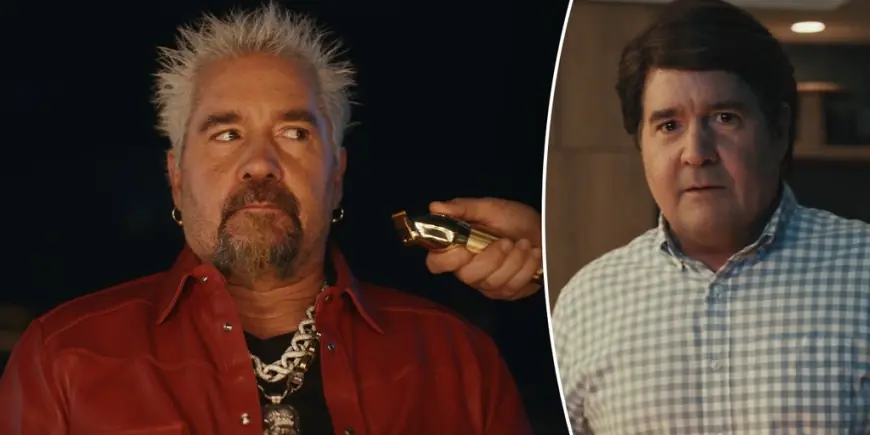
As of January 27, 2026, Guy Fieri’s “new look” is real—but it isn’t a permanent makeover. The spiky blond hair and goatee that helped define his on-camera persona have been temporarily swapped out for a clean-shaven face and neatly parted darker hair as part of a character-driven Super Bowl 2026 ad campaign.
The quick flip from “Flavortown” swagger to buttoned-up “regular guy” has set off a wave of double-takes online, with fans trying to figure out whether they were looking at a full transformation, a digital trick, or something in between.
Guy Fieri’s New Hair: What Changed (and What Didn’t)
The version of Guy Fieri that surprised people this week is deliberately understated: tidy brown hair, conservative outfit, and a more corporate, middle-of-the-road vibe. The point is the contrast—because the new look is designed to make viewers question if it’s really him for a few beats.
Here’s what viewers are reacting to in the Guy Fieri new hair moment:
-
Clean-shaven face (the signature facial hair is gone)
-
Darker, neatly parted hair replacing the bleach-blond spikes
-
Neutral, “office casual” wardrobe instead of bold prints
-
A toned-down presence that reads like a character, not a lifestyle shift
What didn’t change: he hasn’t signaled a long-term rebrand. The visual shock is the whole hook, and the familiar Guy Fieri persona is still central to the campaign. What to watch: whether he returns to his usual style immediately after the ad rollout, or keeps elements of the new look for public appearances.
Why Guy Fieri Debuted the New Look on His Birthday
The timing wasn’t random. Guy Fieri turned 58 on January 22, 2026, and used the birthday moment to tease the makeover in a way that felt like a playful personal announcement—before it became clear it was tied to a bigger on-screen project.
That strategy did two things at once: it made the reveal feel organic (a birthday “new year, new me” type of post), and it ensured the makeover traveled fast, because the conversation started with genuine confusion. Even people who follow him casually had to stop scrolling to figure out what they were seeing.
It also helped that the look is convincing at first glance. When a celebrity’s identity is tightly linked to a signature hairstyle, changing it isn’t just cosmetic—it changes how the brain recognizes them. That’s why the reaction has been less “new haircut” and more “wait, is that actually Guy Fieri?” What to watch: whether more teaser clips drop before the game, or if the campaign goes quiet to preserve the surprise.
Is Guy Fieri’s “New Look” AI?
A big part of the chatter has been whether the Guy Fieri new hair look was created with AI. The short answer: the campaign has been described as a practical transformation that used professional styling, plus high-end post-production visual effects—rather than being generated by AI.
That distinction matters because the end result sits in an uncanny middle ground: it looks convincingly real, but it’s also “too perfect” in the way big-budget ads often are. In 2026, viewers are trained to suspect AI whenever a face looks slightly unfamiliar or overly polished, especially when the change is this dramatic.
The more useful takeaway is simpler: this is a performance choice. The “new Guy Fieri look” is playing a role—clean-cut on purpose, ordinary on purpose—so the eventual reveal lands harder when he snaps back into the high-energy version audiences expect. What to watch: how the finished commercial balances practical makeover with post-production tweaks, and whether viewers still debate what’s real once the full spot airs.
What Happens Next: The Super Bowl Ad and the Return of Classic Guy
The makeover is tied to a Super Bowl commercial set to air on February 8, 2026. That date is important because it frames everything as a countdown: the “new look” is the teaser, and the ad itself is the payoff.
For fans, the stakes are light but personal. People don’t just watch Guy Fieri; they feel like they know him. A sudden hair and style shift can feel like the end of an era—even when it’s temporary—because it disrupts a familiar TV comfort. For brands, that’s the advantage: the conversation becomes the marketing.
Expect the next phase to focus on recognition and misdirection: more clips, more reaction shots, and a final spot designed to make viewers do a double-take before the punchline lands. What to watch: whether he keeps the clean-cut “just a guy” look in promotional appearances leading up to February 8, or flips back to the signature spikes to keep the contrast sharp.