























Ryan Wedding Arrested in Mexico After FBI Ten Most Wanted Listing, Bringing a High-Profile Drug Case Back to Court

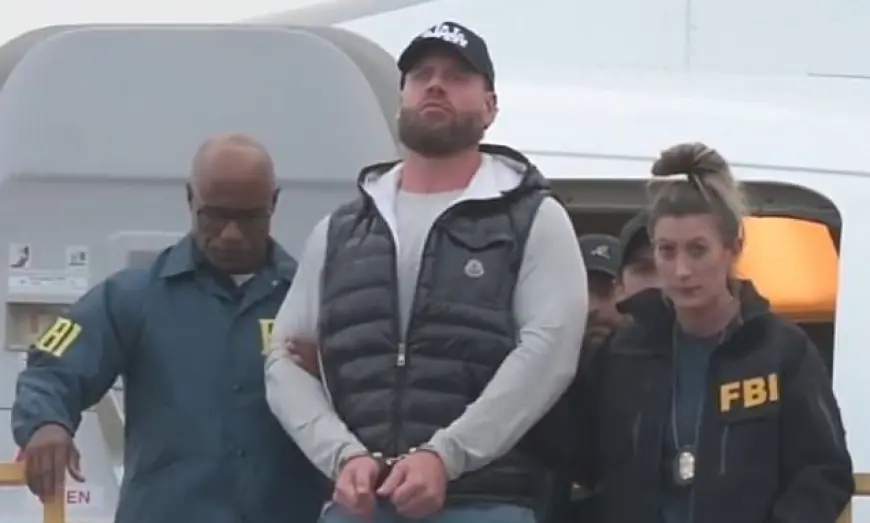
Ryan Wedding, also known as Ryan James Wedding, is in US custody after being taken into custody in Mexico in late January 2026 and quickly moved into the US court system. Prosecutors allege the former Canadian Olympic snowboarder helped lead a large cross-border cocaine trafficking network with ties to Mexico-based organized crime and that the operation was linked to multiple killings and an attempted killing tied to drug enforcement and witness intimidation.
Wedding has entered a not-guilty plea in federal court, setting up a high-stakes prosecution that blends narcotics trafficking, violence allegations, extradition diplomacy, and the public pressure that comes with an FBI Ten Most Wanted case.
What happened: Ryan Wedding captured, then brought to federal court
Authorities say Wedding was arrested in Mexico City on Thursday night, January 22, 2026 (ET). By Monday, January 26, 2026 (ET), he made an initial federal court appearance in Southern California and pleaded not guilty to the charges.
A trial date has been publicly discussed for late March 2026 (ET), with additional court dates expected in February as the case moves through detention, evidence schedules, and pretrial motions.
A quick timeline in ET
-
March 6, 2025: Wedding was added to the FBI Ten Most Wanted Fugitives list.
-
November 19, 2025: US officials announced a larger reward tied to his capture.
-
January 22, 2026: Authorities say Wedding was taken into custody in Mexico.
-
January 26, 2026: Wedding pleaded not guilty in federal court in California.
Who is Ryan Wedding, and why was he on the FBI Ten Most Wanted list?
Wedding competed for Canada in snowboarding at the 2002 Winter Olympics. After that athletic career, prosecutors allege he shifted into organized narcotics trafficking. The central claim is that he helped direct a transnational pipeline moving cocaine from Colombia through Mexico and into the United States and Canada, using logistics networks that could push large volumes over long periods.
The FBI Ten Most Wanted designation is reserved for fugitives whose cases combine public-safety risk, enforcement priority, and a belief that public tips can help. Wedding’s placement signaled that investigators viewed him as both difficult to locate and unusually dangerous, with allegations extending beyond drugs into orchestrated violence.
Ryan Wedding height and identifying details
Law enforcement bulletins have described Wedding as unusually tall and physically distinctive. One published description lists him at about 6 feet 3 inches tall and roughly 240 pounds. As with many fugitive cases, authorities have also warned he may alter appearance to avoid identification.
Behind the headline: why this arrest matters now
This is not just a single arrest; it is a test of how North American partners are handling three realities at once:
First, the logistics of modern cocaine distribution. Large-scale trafficking today depends less on one dramatic shipment and more on repeatable systems: transportation brokers, stash locations, corrupt facilitation, encrypted coordination, and money movement that can survive arrests. The allegations against Wedding sit in that system-focused category.
Second, extradition and leverage. An arrest in Mexico followed by rapid movement into US court proceedings highlights cooperation incentives on both sides: Mexico demonstrating enforcement reach, and US agencies emphasizing measurable outcomes in high-profile fugitive captures.
Third, the optics of a famous backstory. A former Olympian accused of cartel-linked trafficking is a headline magnet. That notoriety increases pressure on prosecutors to deliver a clean case and on defense counsel to challenge investigative narratives that could bias a jury pool long before trial.
Stakeholders and incentives
-
US prosecutors and investigators: Incentivized to show that Ten Most Wanted designations and reward programs convert into arrests, while also proving allegations beyond reasonable doubt in court.
-
Mexican authorities: Incentivized to demonstrate capacity and cooperation on transnational crime, especially when cases involve violence and high volumes.
-
Canadian law enforcement: Incentivized to address domestic impact claims, including allegations that the network supplied Canadian markets at scale.
-
The defense: Incentivized to separate proven conduct from alleged conduct, attack conspiracy breadth, and challenge any evidence tied to cross-border sources, informants, or cooperating witnesses.
-
Communities along trafficking corridors: Directly affected by drug supply, violence spillover, and the economics that criminal networks inject into local ecosystems.
What we still don’t know
Even with the arrest, several key pieces remain unclear in public:
-
The exact evidence prosecutors plan to foreground at trial versus hold for negotiation leverage.
-
How central Wedding allegedly was to day-to-day decisions, versus being portrayed as a top-level organizer.
-
Whether additional sealed charges or co-defendants will surface as the case proceeds.
-
The extent to which financial sanctions, asset seizures, and forfeiture actions will reshape the alleged organization’s capacity.
What happens next: realistic scenarios and triggers
-
Pretrial detention fight: A bond review could become a major early battleground if the defense argues flight risk and danger claims are overstated.
-
Expanded cooperation: If more insiders flip, prosecutors may broaden the alleged enterprise picture; the trigger is new plea agreements from co-defendants.
-
Evidence challenges: Expect motions targeting wiretap scope, informant credibility, cross-border evidence handling, and any statements made around arrest and transport.
-
Plea negotiations: High sentencing exposure can push talks, especially if prosecutors hold strong documentary evidence. The trigger is early rulings on evidence admissibility.
-
A public trial: If no deal occurs, jury selection and venue management will be critical given the case’s notoriety and pretrial publicity.
Why it matters
The Ryan Wedding arrest is a headline because of who he once was. It matters because of what the case represents: how drug trafficking networks operate across borders, how governments use public fugitive lists to generate pressure and tips, and how violence allegations amplify legal and political urgency. The court process now becomes the real proving ground, where dramatic claims must translate into admissible evidence and a verdict.