
























Chris Madel Minnesota: GOP Governor Candidate Quits Race, Blaming Federal ICE Crackdown and Party “Retribution”

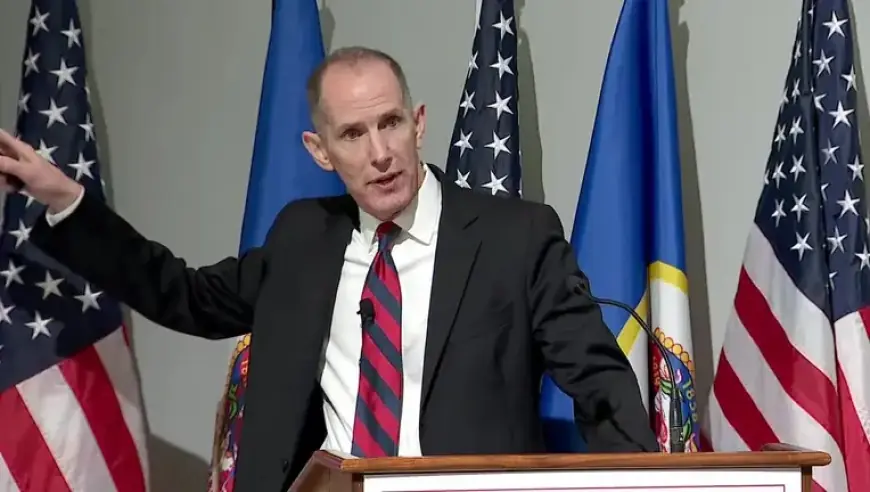
Chris Madel, a Minneapolis attorney who entered the Minnesota governor’s race as a Republican outsider in early December, announced Monday, January 26, 2026, that he is ending his campaign. His decision lands amid a turbulent stretch for Minnesota politics, where federal immigration enforcement has become a dominant—and increasingly volatile—issue, and where the 2026 governor field is shifting quickly.
Madel’s exit is notable not just because he had begun to gain traction with party activists, but because he framed his withdrawal as a moral and constitutional break with the national direction of his own party.
What Chris Madel Said About the Minnesota Immigration Crackdown
In a video statement released Monday morning ET, Madel argued that the federal immigration operation in Minnesota has moved far beyond its original mission. He said he initially accepted the premise of prioritizing dangerous offenders, but described the current reality as broader sweeps that have left U.S. citizens—especially people of color—feeling targeted and fearful.
Madel also warned that it is wrong for citizens to feel compelled to carry documents to prove citizenship, and he pointed to reports of stops involving local law enforcement officers and other residents who were not the intended focus of enforcement efforts. He criticized the idea of home entries based on civil immigration paperwork rather than judicial warrants and objected to what he described as politicized use of investigations.
His bottom line: he said he could not support what he characterized as “retribution” aimed at Minnesota residents, and he could not remain aligned with a party leadership approach he believes enabled it.
Why the Timing Matters in Minnesota
Madel’s announcement comes as Minnesota’s immigration enforcement debate has been inflamed by recent fatal encounters involving federal agents in Minneapolis, prompting protests, legal challenges, and escalating scrutiny of operational tactics and oversight. The political temperature has risen further because the governor’s race itself is in flux, with major names and strategies shifting in response to statewide investigations and the national spotlight on Minnesota.
Madel also made a practical argument: he suggested that national party decisions have made it extremely difficult for any Republican to win statewide in Minnesota under current conditions—and that he lacks the financial runway to pursue a credible statewide run outside the party structure.
Behind the Headline: Incentives, Stakeholders, and the Political Math
Madel’s move reads like a collision of principle, positioning, and political arithmetic.
Incentives: By stepping away now, Madel avoids owning a statewide campaign brand during a period when federal enforcement actions are dominating local news and energizing opposition. He also preserves a lane for a future identity as a constitutional critic of overreach—an identity that can resonate beyond the Republican base in Minnesota.
Stakeholders:
-
Republican rivals gain oxygen in a crowded primary field and may face more pressure to clarify whether they back the enforcement surge or want it narrowed.
-
National party strategists risk a narrative that their approach is costing candidates in states that require broader coalitions.
-
Communities affected by enforcement may view Madel’s statement as evidence that the political center is reacting to perceived excesses, even if trust remains thin.
-
Law enforcement and federal agencies face intensified scrutiny over rules of engagement, warrants, and accountability—issues that can outlast a single election cycle.
The complicated wrinkle: Madel has recently been publicly associated with providing legal assistance connected to a federal agent involved in a fatal shooting case. He defended that role as a matter of due process and the right to counsel. Politically, that combination—defending constitutional rights while denouncing enforcement expansion—signals an attempt to separate the rule of law from the tactics of a specific operation.
What We Still Don’t Know
Several key pieces remain unclear:
-
Whether Madel will endorse another candidate—or attempt to build an independent movement without running himself.
-
How much internal polling, donor feedback, or party pressure influenced the timing.
-
Whether federal immigration operations in Minnesota will change tactics, transparency, or scope in response to legal challenges and political backlash.
-
Whether other candidates will follow Madel in publicly distancing themselves from the surge, or instead double down.
What Happens Next for Chris Madel Minnesota Politics
Watch for these realistic next steps in the coming days and weeks:
-
Other Republicans recalibrate messaging if they see broader voter fatigue with aggressive enforcement imagery.
-
Legal proceedings accelerate around limits on enforcement methods, evidence access, and warrant standards.
-
Democratic contenders consolidate attention as the field clarifies, especially if they can tie state stability to oversight and de-escalation.
-
Madel re-emerges as a surrogate voice on constitutional process, potentially influencing debate without holding a ballot line.
-
Federal officials adjust public posture to counter perceptions of indiscriminate actions and reduce political blowback.
Why It Matters
Madel’s exit underscores how immigration enforcement—once a national talking point—has become a day-to-day, street-level political fault line in Minnesota. When a candidate leaves a race citing constitutional concerns and fear among citizens, it signals a widening political risk: not only for party branding, but for public trust in institutions that rely on consent and legitimacy.
In the short term, it reshapes the Republican contest. In the longer term, it adds momentum to a broader question Minnesota voters will keep asking through 2026: where is the line between public safety enforcement and civil liberties—and who, if anyone, is willing to draw it publicly.