

























ICE and Border Patrol Face Escalating Clashes, Confidence Crisis

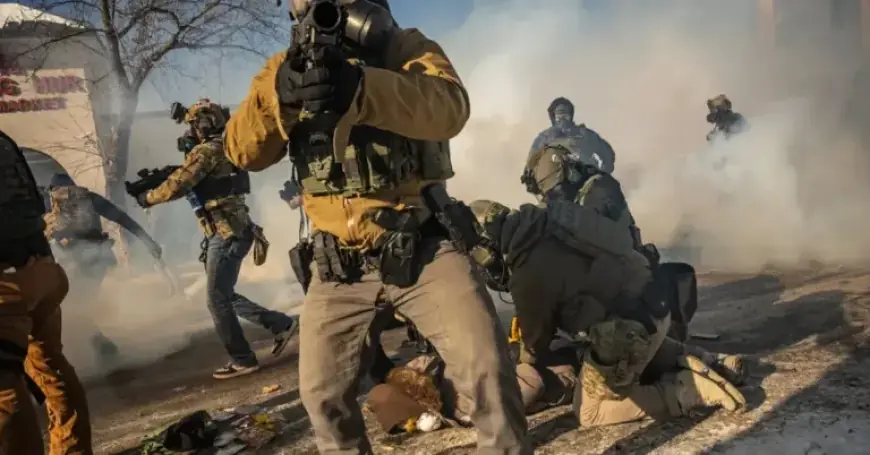
Amid rising tensions, Immigration and Customs Enforcement (ICE) and the U.S. Border Patrol face significant challenges in urban environments. Recent events, particularly violent incidents in Minneapolis, underscore the escalating clashes these agencies confront while enforcing immigration laws.
Former Officials Voice Concerns
Oscar Hagelsieb, a former immigration officer with nearly 25 years of experience, expressed deep frustration over the current deployment of federal agents. Following a recent fatal shooting in Minneapolis, he described the situation as chaotic and dangerous for both agents and civilians.
Hagelsieb criticized the administration’s tactic of sending agents, saying, “You’re not addressing the problem by throwing a 500-pound gorilla into these inner cities.” His sentiments reflect a growing fear among current and former ICE and Border Patrol officials regarding their safety and morale.
Agent Morale Declines
More than 20 immigration officials discussed their concerns in interviews, revealing widespread anxiety about the effectiveness and public perception of the agencies. Issues such as long hours, arrest quotas, and negative public opinion are having a detrimental effect on morale.
- Many officials fear long-term damage to ICE and Border Patrol’s image.
- Concerns about potential shutdowns of these agencies intensify with changing political climates.
Gregory Bovino, head of the Border Patrol, has drawn scrutiny for aggressive tactics, using phrases like “turn and burn” to describe operations that include heavy-handed actions. Gil Kerlikowske, a former Customs and Border Protection leader, noted that urban policing is not a typical area of expertise for most Border Patrol agents.
Concerns Over Tactics and Training
Many current and former officials criticized the aggressive methods employed during recent confrontations with protesters. They noted an absence of standard practices in law enforcement, particularly regarding the use of force against nonviolent individuals.
According to a report by the Government Accountability Office, most ICE agents lack specialized training in crowd control. This raises concerns as the administration pushes for increased arrests, with a target of 3,000 per day. This rapid increase has diminished careful preparation and heightened the risk of chaotic confrontations.
Public Outcry and Political Ramifications
As tensions rise, public opinion has increasingly turned against ICE. A recent poll indicated that only 36 percent of voters approve of ICE’s operations, while 63 percent disapprove. This shift adds pressure to government funding discussions related to Homeland Security.
Amid these challenges, Hagelsieb highlighted the reallocation of special agents from critical investigations to immigration enforcement. He compared this shift to a police department reallocating homicide detectives to manage minor offenses, emphasizing the potential consequences of such strategic choices.
Looking Ahead
The current state of ICE and the Border Patrol reflects a complex interplay of public safety, agent morale, and political pressures. With public sentiment increasingly critical and agency morale waning, the future of these immigration enforcement efforts remains uncertain.
As clashes continue and scrutiny intensifies, it is essential for federal immigration agencies to reassess their strategies and operations. A more balanced approach may be necessary to ensure the safety of agents, the public, and the integrity of immigration enforcement.