
























FAA Finalizes Permanent Rules Following Airliner-Army Helicopter Collision

The Federal Aviation Administration (FAA) is making new regulations permanent following the tragic collision of an airliner and an Army helicopter last year. This decision aims to enhance safety in the busy airspace around Washington, D.C.
Details of the Permanent Regulations
In response to the January 29, 2023, accident, the FAA introduced rules immediately to separate airspace used by military helicopters from commercial airliners near Reagan National Airport. The FAA’s measures include:
- Prohibiting reliance on visual separation by air traffic controllers.
- Mandating that all military aircraft broadcast their locations.
Background of the Incident
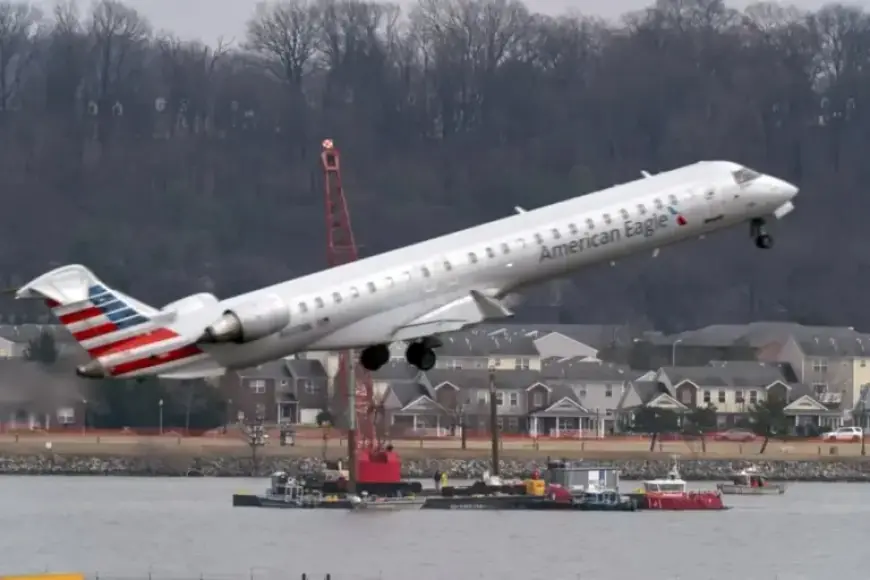
The collision resulted in the deaths of 67 people when an Army Black Hawk helicopter collided with an American Airlines jet during landing. This event marks the deadliest aviation disaster in the U.S. since 2001. In the upcoming week, the National Transportation Safety Board (NTSB) will hold a hearing to examine the factors leading to this crash.
Transportation Secretary Sean Duffy emphasized the administration’s commitment to securing airspace over the nation’s capital, promising thorough actions to prevent a similar tragedy in the future.
Community Response
Families affected by the disaster are advocating for more stringent safety measures. Matt Collins, who lost his brother in the incident, expressed determination to keep pressure on lawmakers for change. He urges Congress to act on the forthcoming NTSB recommendations to enhance aviation safety.
Key Findings from NTSB Investigation
The NTSB’s investigation revealed that the Black Hawk helicopter was operating at an altitude of 78 feet, exceeding the 200-foot limit for its route. Additionally, a malfunctioning altimeter was suspected. Even if the helicopter adhered to the altitude restrictions, there was insufficient separation in the route design, raising significant safety concerns.
Air traffic controllers had previously identified risks associated with increased helicopter traffic in the area, reporting 85 near misses in the three years leading up to the crash. Despite this, officials failed to address the issue adequately.
New Regulations Implementation
The final regulations will take effect soon, requiring military aircraft to utilize ADS-B Out systems for location broadcasting. This practice was reportedly neglected before the accident. Furthermore, air traffic controllers will be prohibited from depending on visual separation when aircraft are within five miles of Reagan National Airport.
The tragedy has left a lasting impact on many families, particularly affecting those who traveled on the flight, including young figure skaters returning from a camp in Wichita, Kansas. The FAA’s regulations are a response aimed at preventing future incidents and ensuring the safety of both military and commercial aviation.