
























“World No.1 Sparks Outrage Over Pre-Match Device Removal”

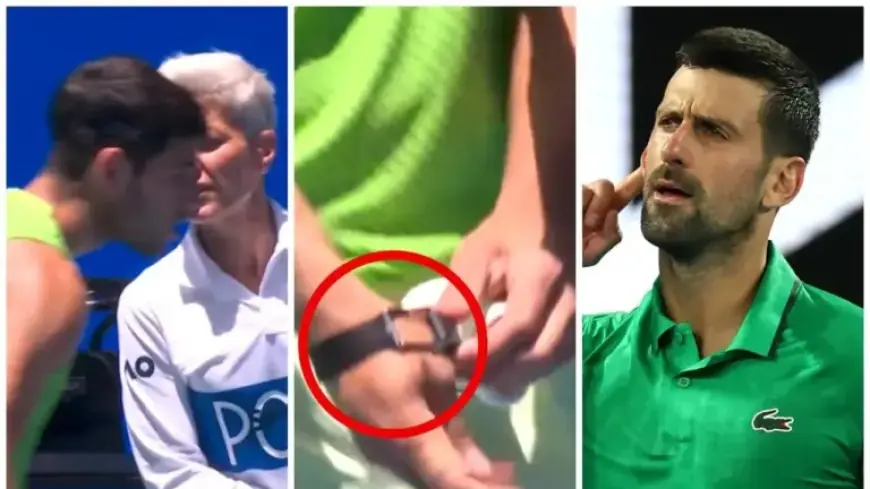
Carlos Alcaraz is set to battle Alex de Minaur in the quarter-finals, but controversy has arisen ahead of the match. During the fourth-round victory against Tommy Paul, the world No.1 encountered unexpected tension with the chair umpire and the tennis authorities.
World No.1 Sparks Outrage Over Pre-Match Device Removal
The incident occurred on Rod Laver Arena when chair umpire Marija Cicak noticed Alcaraz wearing a Whoop fitness-tracking watch. This device is banned in the tournament, leading Cicak to request its removal. Although Alcaraz complied, the decision has drawn criticism from various corners.
Reaction from Whoop’s Founder and Tennis Icons
Will Ahmed, the founder of Whoop, took to social media to express his frustration over the prohibition of the device. He argued that the Whoop watch is sanctioned by the International Tennis Federation (ITF) for in-match wear and does not pose safety risks. Ahmed stated:
- “Ridiculous. Let the athletes measure their bodies. Data is not steroids.”
Australian tennis legends Todd Woodbridge and Lleyton Hewitt also voiced their displeasure. Woodbridge criticized the inconsistency in regulations between men’s and women’s tournaments. He emphasized the need for uniformity, stating:
- “Now, a Whoop is to collect data about how you’re feeling. We’ve got coaching; why can’t you have your own data?”
- “It provides blood readings, pulse rates, sleep patterns, and recovery metrics. Why isn’t a player allowed to have their own data?”
Hewitt joined the conversation, questioning the necessity of the ITF’s involvement. He referred to recent issues with the Davis Cup and stated:
- “When you can use it on the WTA Tour, it doesn’t make any sense whatsoever.”
Both athletes emphasized the importance of player wellness and the absurdity of restricting access to personal health data.
Conclusion
The removal of the Whoop device from Alcaraz’s wrist has sparked significant debate in the tennis community. As players advocate for their rights to manage their health data, it remains to be seen how the governing bodies will respond to these concerns.