“Train Dreams” surges into the awards conversation—and rewrites expectations for what a quiet film can do

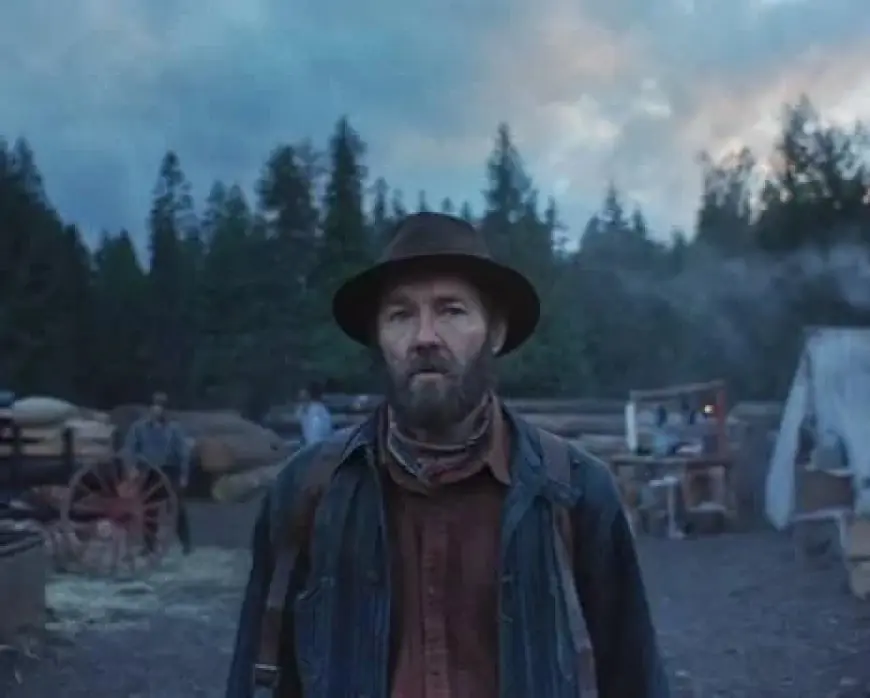
A small, lyrical period drama doesn’t usually become a centerpiece of awards season. Yet “Train Dreams” has pushed into the top tier of this year’s race, and its momentum is changing the way voters and audiences are talking about “serious” filmmaking: not as spectacle, but as atmosphere, craft, and emotional aftershock. The ripple effects are practical as well as cultural—renewed interest in the source novella, a late-breaking wave of first-time viewers trying to catch up, and a widening argument over whether intimacy can compete with flashier contenders when ballots are due.
Why the film’s rise matters beyond trophies
“Train Dreams” is built around work—railroad labor, logging, and the lonely infrastructure of an expanding America—yet it has become an unlikely test case for modern attention spans. Its ascent signals that awards bodies are still willing to reward restraint: long silences, harsh weather, incremental lives, and grief that doesn’t announce itself.
That matters because it reshuffles the assumptions studios and financiers make after nominations land. If a measured, visually driven drama can gather major categories at the industry’s biggest ceremony, it strengthens the case for films that lean on cinematography, performance, and tone rather than big plot mechanics. It also encourages distributors to keep quieter releases in theaters longer, instead of rushing them into the archive once opening-weekend chatter fades.
The story and craft that powered “Train Dreams” into contention
Adapted from Denis Johnson’s celebrated novella, “Train Dreams” follows Robert Grainier, a railroad worker and logger whose life is shaped by distance—between towns, between people, between the life he expected and the one he ends up living. The film’s emotional engine isn’t a sequence of twists. It’s accumulation: seasons passing, bodies tiring, an expanding country that feels both promising and indifferent.
The film’s buzz has been anchored by three elements that travel well in awards voting:
-
A lead performance that works quietly. The central character is often reacting more than speaking, which puts unusual pressure on physicality and micro-expression.
-
Cinematography that treats landscape as destiny. Nature isn’t backdrop; it’s an active force—beautiful, punitive, and often isolating.
-
A sense of time that feels lived-in. The film resists modern pacing, letting small moments land with weight.
That combination has helped “Train Dreams” stand out in a season crowded with louder narratives and higher concepts.
Where it stands now in the 2026 Academy Awards race
The film has secured multiple nominations at the 98th Academy Awards, including Best Picture, Best Adapted Screenplay, Best Cinematography, and Best Original Song. The nomination package tells you how the film is being valued: not just as a good story, but as a feat of adaptation and visual storytelling, with music used as a finishing note rather than the main engine.
It also places “Train Dreams” in a competitive cluster where prestige dramas live or die on preferential-ballot dynamics—strong second- and third-choice support can matter as much as “favorite to win” enthusiasm. Films like this often benefit from being broadly admired even if they’re not everyone’s top pick.
Mini timeline of how “Train Dreams” got here
-
Early 2025: Festival debut introduces the film as a craft-forward drama rather than a mainstream event.
-
Late 2025: Wider release expands the audience and hardens its reputation as an actor-and-cinematography showcase.
-
January 2026: Awards nominations consolidate its standing with major-category recognition.
-
Next checkpoint: Guild results and final-round voting will reveal whether the film’s strength is broad affection or true front-runner heat.
The real-world effect: a late wave of viewers, and a new kind of “must-see”
The film’s nomination profile is already changing how people approach it. Instead of “Should I watch this?” the question has become “Will I regret missing it before winners are announced?” That’s a different kind of urgency—less hype, more homework. Expect a surge in discussion around the novella as well, particularly among readers curious about what was preserved, what was compressed, and what cinema can do differently than prose when it comes to inner life.
The broader takeaway is simple: “Train Dreams” has turned stillness into a competitive advantage. In a season where many contenders chase volume—bigger themes, bigger turns, bigger scenes—this film is betting on permanence. And in awards terms, permanence is often what ends up on the ballot when the noise fades.