

























Veronika the Cow: Pioneering Flexible, Multipurpose Tool Use

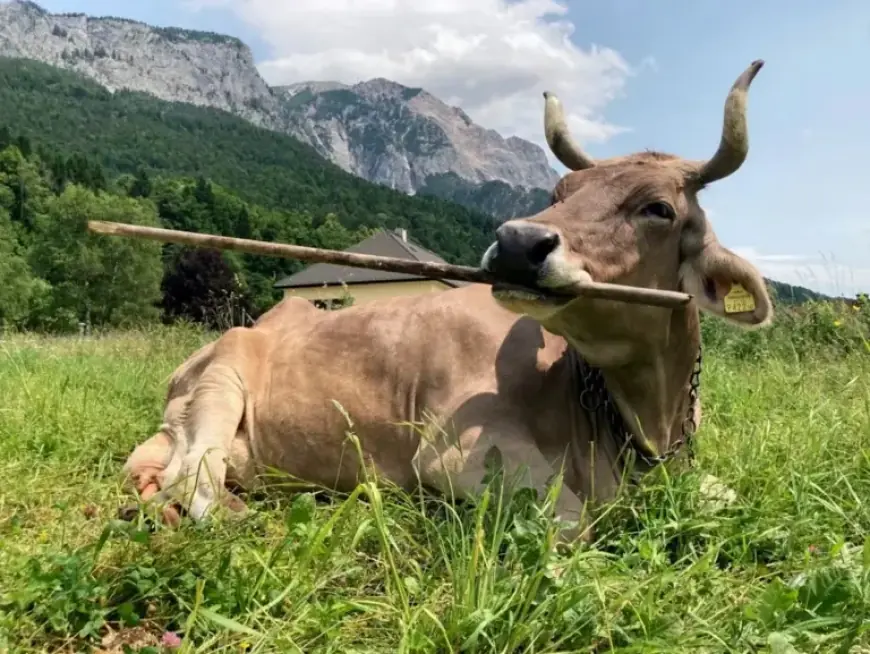
Veronika, a Swiss Brown cow, has captured the attention of researchers by demonstrating sophisticated tool use. This finding challenges common perceptions of farm animal intelligence. Tool use in animals is often underestimated, and Veronika’s abilities highlight the cognitive skills that may exist in various species.
Documented Tool Use by Veronika
The story of Veronika begins over a decade ago in Nötsch im Gailtal, Austria. Organic farmer Witgar Wiegele noticed that Veronika would pick up sticks to scratch herself, particularly when dealing with insect irritation. This observation prompted cognitive biologist Alice Auersperg from the University of Veterinary Medicine in Vienna to investigate further.
After viewing a video of Veronika, Auersperg asserted that her actions were intentional and not accidental. This led to a study into Veronika’s unique behavior.
Research Observations
Researchers, including Auersperg and postdoctoral researcher Antonio J. Osuna-Mascaró, conducted extensive observations of Veronika’s use of a deck brush to scratch herself. Key findings include:
- Veronika used the broom mainly to scratch her rear body, which includes sensitive and hard-to-reach areas.
- She manipulated the broom creatively, using her tongue and teeth to achieve effective scratching.
- Veronika switched between the bristled and smooth ends of the broom based on the area she was targeting.
This multifaceted approach to using a single object emphasizes her cognitive skills, akin to tool-using behaviors observed in primates and corvids.
Implications of the Study
The researchers suggest that Veronika’s skills are not unique and might be a reflection of broader cognitive capacities in cattle. Osuna-Mascaró indicated that various anecdotal reports of tool use among cattle in South Asia align with this theory.
Such behaviors may stem from evolutionary roots but are typically expressed under favorable conditions. Veronika’s life as a companion animal, enriched with opportunities for exploration and engagement, has likely contributed to her abilities.
Environmental Influence on Animal Behavior
Veronika, now 13 years old, has lived in an ideal environment, allowing her to develop her skills. Witgar Wiegele has provided tools like fallen branches and rakes for Veronika to practice her scratching techniques.
In contrast, many cattle live in challenging conditions that hinder their cognitive development. This research brings to light the potential for welfare standards to evolve in livestock settings.
Expert Insights
The findings have been met with enthusiasm from experts. Jill Pruetz, a primatologist, expressed her respect for Veronika’s skills after studying her companion cows. She noted the need for enrichment in the lives of cattle globally.
With an estimated 1.5 billion cattle worldwide, the study emphasizes the importance of understanding their behaviors and improving their quality of life. Osuna-Mascaró remarked on the shocking oversight in scientifically studying domestic animals compared to their exotic counterparts.
Conclusion
The discovery of Veronika’s tool use is a significant breakthrough in animal behavior research. It illustrates the cognitive abilities that may exist within farm animals and highlights the need for better living conditions that foster their natural instincts. As awareness grows, further studies may continue to reveal the depths of animal intelligence.