

























New York Startup Innovates Fridge-Sized Machine Converting Air to Gasoline

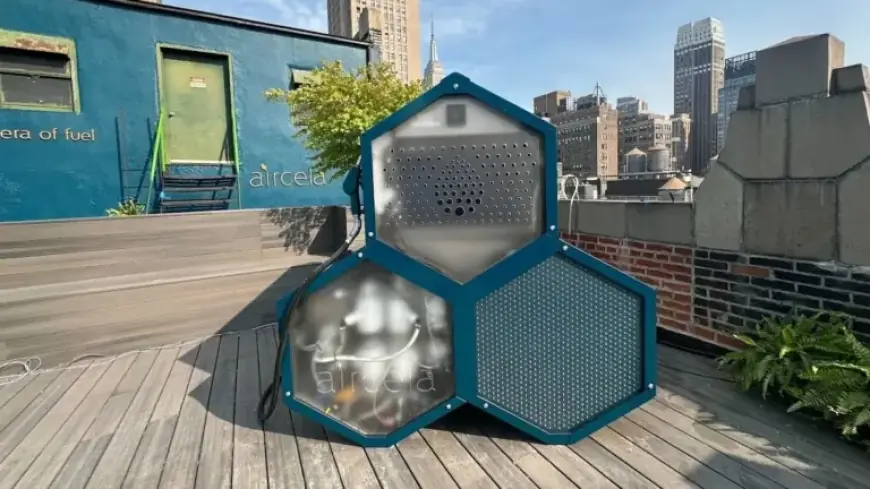
In a remarkable innovation, New York-based startup Aircela has developed a machine capable of converting air into gasoline. This fridge-sized device utilizes a three-step process to create fuel from electricity and carbon dioxide, promising potential applications in small-scale energy production.
Aircela’s Innovative Technology
Aircela’s operation begins by capturing carbon dioxide directly from the atmosphere. This method, although less effective than larger carbon capture systems, is a promising step toward reducing emissions. The device also extracts water vapor, using electrolysis to separate water into hydrogen and oxygen.
The released oxygen is discarded, while the remaining hydrogen and carbon dioxide undergo a process known as direct hydrogenation. This transforms them into methanol, a precursor to gasoline. Lastly, the machine converts methanol into gasoline, delivering the final product through a standard gas pump.
Limitations of the Aircela Machine
- The machine produces only one gallon of gasoline per day.
- It can store up to 17 gallons of gas.
- The estimated cost of the Aircela machine ranges between $15,000 and $20,000.
While this production capacity may not fulfill the needs of high consumption vehicles, it is suitable for light users. Aircela aims to make gasoline production accessible, especially in remote areas where transport costs are high.
Cost and Sustainability
Despite its innovative approach, Aircela does not offer free gasoline. The process requires significantly more energy to create gasoline than it produces. Specifically, it takes about 75 kWh of electricity to generate a gallon of gasoline, targeting an end-to-end power efficiency of over 50%.
For optimal cost efficiency, Aircela recommends using off-grid solar panels to power the machine. This method could bring the energy cost down to less than $1.50 per gallon, making it more viable for certain environments.
Potential Applications
Aircela’s machine could be transformative in regions lacking easy access to fuel. Its small scale and ability to be combined with solar power can offer a sustainable solution for energy needs.
In conclusion, Aircela’s breakthrough in converting air to gasoline presents a blend of science fiction and real-world application. While more research and investment are needed, the concept holds promise for the future of sustainable energy production.