
























Chinese Scientists Miniaturize Semiconductor Chip to Human Hair-Thin Fiber

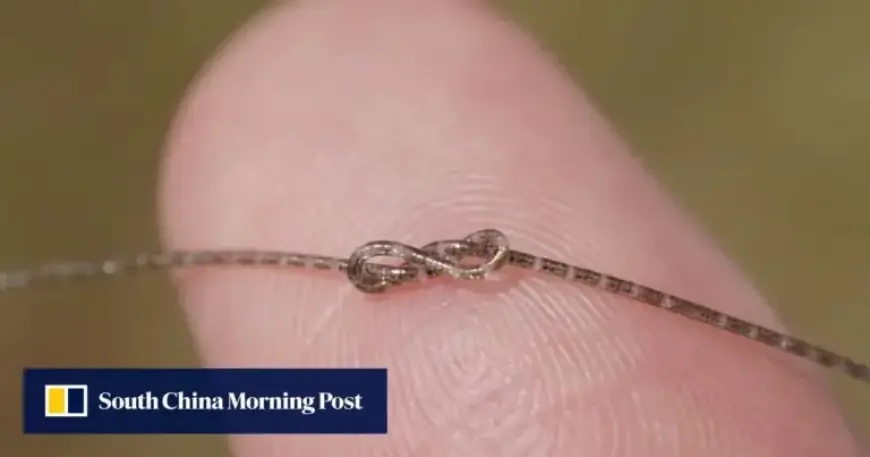
Chinese scientists have made significant advances in semiconductor technology by creating fibre chips as thin as human hair. These innovations integrate circuits into stretchable strands, achieving a remarkable density comparable to conventional home computer CPUs.
Development of Flexible Fibre Chips
The development centers around a novel electronic device known as the Fibre Integrated Circuit (FIC). This innovative technology allows circuits to be embedded in elastic substrates, which can then be rolled into fine fibres. These fibres are not only flexible but also functional, capable of performing tasks similar to traditional computer chips.
Applications of Fibre Integrated Circuits
- Power supply and sensing functions
- Electronic textiles that can compute and display information
- Machine-washable fabrics that operate like computers or televisions
With a transistor density of 100,000 per centimetre, these fibres meet industry standards for very large-scale integration (VLSI). This breakthrough signifies a leap forward in the realm of flexible electronics.
Impact on Future Technology
The integration of circuits into such thin strands opens up new possibilities in technology and fashion. The potential for machine-washable electronics could revolutionize everyday apparel, making it smarter and more efficient.
As researchers continue to refine this technology, the implications for electronic design and consumer products are substantial. The combination of flexibility, functionality, and high-density integration may lead to new innovations in various fields, including healthcare and wearable technology.
In conclusion, the miniaturization of semiconductor chips by Chinese scientists marks a pivotal moment in the evolution of electronics, merging the capabilities of computing with the versatility of textiles.