






















John Wayne’s Masterpiece: A Timeless Ending Quote 64 Years Later

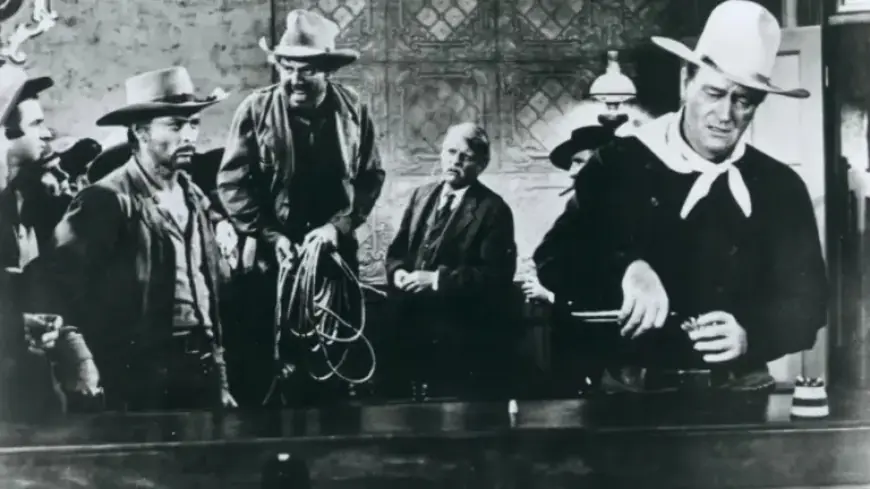
In the world of classic Western films, few movies resonate as profoundly as John Wayne’s iconic masterpiece from 1962, The Man Who Shot Liberty Valance. This film not only features one of the best ending quotes in cinema history but it also exemplifies the elements of the revisionist Western genre.
Key Details of the Film
The Man Who Shot Liberty Valance was directed by John Ford and starred John Wayne alongside James Stewart. Wayne portrayed Tom Doniphon, a rancher, while Stewart played Ransom Stoddard, a young lawyer. The film explores themes of truth, legend, and personal sacrifice.
Plot Summary
The narrative begins with the return of Senator Ransom Stoddard to a small town for Tom Doniphon’s funeral. In a revealing exchange with a reporter, Ransom recounts his experience against the notorious outlaw, Liberty Valance, played by Lee Marvin. Faced with death, Ransom seeks justice but realizes he is outmatched.
Tom Doniphon steps in to mentor Ransom, teaching him how to use a gun. This training culminates in a climactic showdown between Ransom and Valance. In an unexpected turn, Ransom fires his weapon, but it is revealed later that Tom was the one who actually killed the outlaw from the shadows.
Memorable Ending Quotes
After Liberty Valance’s death, Ransom achieves fame. However, he grapples with guilt over the truth—that he did not truly kill the outlaw. Tom convinces him to keep this secret, understanding that Ransom’s political ascent depends on the legend of his heroism.
In a poignant moment, as Ransom prepares to leave town, the conductor remarks, “Nothing’s too good for the man who shot Liberty Valance.” This line captures the film’s central irony and serves as a fitting conclusion to the story.
Impact on the Revisionist Western Genre
- Subversion of Traditional Heroism: Unlike most Westerns, Ransom is not the true hero.
- Real Heroism Recognized Too Late: Tom Doniphon sacrifices his legacy to protect Ransom.
- Legacy and Myth: The film highlights how myths can overshadow the truth, illustrated by the editor’s remark, “When the legend becomes fact, print the legend.”
The complexity of The Man Who Shot Liberty Valance lies in its critique of the archetypal Western narrative. The film suggests that the glorification of heroic figures often masks a more complicated reality.
Conclusion
John Wayne’s portrayal in this classic film remains timeless, resonating with audiences even 64 years later. The Man Who Shot Liberty Valance stands the test of time, demonstrating the power of storytelling in cinema.