
























Democrats Refuse ICE Funding Post-Shooting, Threatening Spending Deal

Negotiations over a bipartisan spending bill to prevent a government shutdown are precariously hanging in the balance. Key Senate Democrats have expressed their intention to oppose the legislation following a tragic incident in Minnesota, where federal agents fatally shot a local resident. This incident has intensified the backlash against the package, which allocates $64.4 billion for the Department of Homeland Security (DHS), including $10 billion for Immigration and Customs Enforcement (ICE).
Democratic Opposition to ICE Funding
The Democrats’ refusal to support funding for ICE poses significant challenges for advancing the spending bill in the Senate. This legislation requires 60 votes to overcome a filibuster, making Democratic support essential. Senator Chuck Schumer, the Senate Minority Leader, described the events in Minnesota as “appalling” and indicated that Democrats would not authorize the appropriations bill if it includes DHS funding.
Impact on Bipartisan Support
The growing opposition among Senate Democrats has led Republican leaders to consider separating the DHS funding from the broader funding package. Senator Susan Collins, chairwoman of the Appropriations Committee, is assessing various options to protect the overall agreement. She stated that several vital bills must pass and expressed confidence in their support.
- Funding for the Pentagon and State Department is included in the package.
- Programs for health, education, labor, and transportation are also addressed.
Democrats are facing a tough dilemma ahead of a planned vote on the funding package. While many aim to avoid a government shutdown, recent violent events have left them reluctant to fund ICE. A notable shift occurred as previously supportive senators announced their opposition following the Minnesota shooting.
Statements from Key Senators
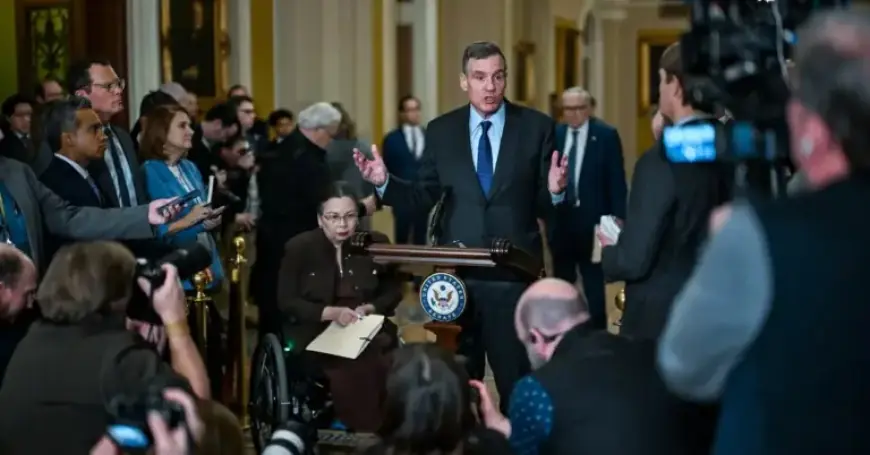
Senator Catherine Cortez Masto of Nevada criticized the Trump administration’s handling of federal agents. She claimed these agents are “oppressing Americans” and acting contrary to local law enforcement. Senator Mark Warner of Virginia echoed similar sentiments, stating he cannot support funding DHS while federal authorities continue violent interventions.
Legislative Details
The spending measure under consideration incorporates six bills that have already cleared the House. Importantly, the House separated the homeland security portion due to the intensity of Democratic opposition. Most House Democrats voted against this component.
- The proposed budget does not accommodate President Trump’s $840 million funding increase for ICE.
- Previous funding levels for ICE remain unchanged from the prior year.
If Senate Democrats block the spending package, ICE could still access $75 billion allocated to it under Republican domestic policy legislation. This piece of legislation included taxes and spending cuts across various programs, alongside $190 billion for the Department of Homeland Security.
Negotiating Challenges and Accountability Measures
In past negotiations, Republicans rejected efforts by Democrats to limit ICE’s funding for detaining or deporting U.S. citizens. Democrats, however, did secure $20 million for body cameras for ICE agents, as well as a reduction of $29.5 million from the office of South Dakota Governor Kristi Noem.
Senator Collins has called for an investigation into the recent shooting and emphasized the inclusion of new regulations on ICE funding, aimed at improving accountability and agency oversight. Despite these measures, many Senate Democrats demand stronger reforms before considering any funding for DHS.
- Senator Brian Schatz stated he would withhold support for DHS funding without more effective controls on ICE.
- Senator Schumer criticized the Republican approach, claiming it inadequately addresses ICE abuses.
As the situation unfolds, the risk of a government shutdown looms larger without significant bipartisan cooperation on the funding deal.