Jack Smith’s public testimony isn’t “today” — but the fallout is still moving fast

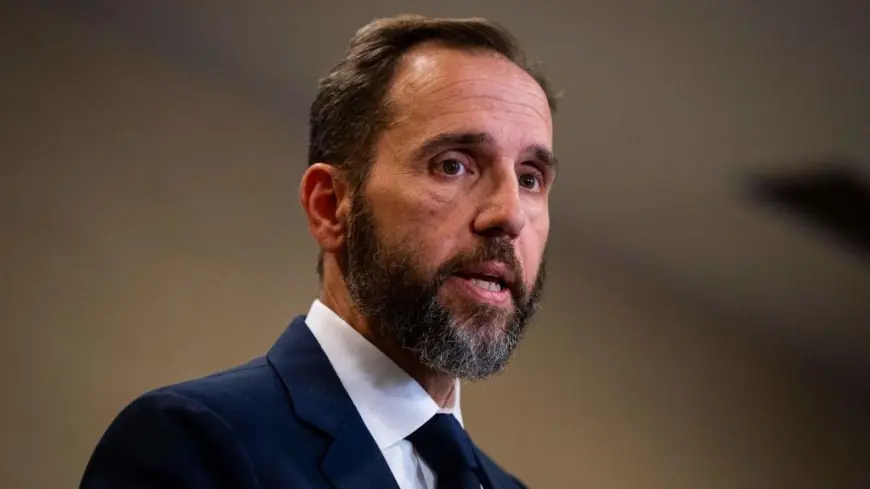
If you’re looking for “Jack Smith testimony today,” here’s the key reality: there is no scheduled public testimony by Jack Smith on Saturday, January 24, 2026. His public House Judiciary appearance took place on Thursday, January 22, 2026, and the debate since then has shifted to what the testimony set in motion—new demands for records, new claims of politicization, and a renewed fight over what parts of Smith’s work the public will ever see.
That uncertainty is the point. Smith’s testimony created a formal record under oath, but it didn’t settle the underlying conflict: whether the investigations into President Donald Trump were a rule-of-law case that ran into constitutional limits on prosecuting a sitting president, or an abuse of prosecutorial power. The answer won’t come from one hearing. It’s going to be fought through court filings, oversight requests, and the Justice Department’s choices over what remains sealed.
Why the hearing matters now: the battle moved from indictments to narratives and documents
Smith’s investigations once carried the possibility of trials. With those cases no longer moving forward while Trump is in office, the pressure has migrated to two arenas:
-
Congressional oversight: lawmakers using hearings, depositions, and document requests to define the story for the public.
-
Courts and Justice Department decisions: disputes over what parts of Smith’s work product—especially his reports—remain confidential versus released.
In recent days, the most consequential question has become less “What did Smith allege?” and more “What will the government allow the public to read?” That’s where the stakes live now: the permanent record is shaped by what is released, what is sealed, and what is summarized rather than shown.
What happened at Jack Smith’s public testimony
Smith testified publicly before the House Judiciary Committee for several hours on January 22, 2026, facing an aggressive, polarized session.
He defended the core premise of his work: that the evidence supported criminal charges related to efforts to overturn the 2020 election and the retention of classified materials after Trump left office, and that prosecutorial decisions were made without political direction. He argued investigative steps attacked by critics—such as seeking phone toll records—were standard tools used to build timelines and assess possible obstruction.
Republicans on the panel, led by Chairman Jim Jordan, pressed Smith on investigative tactics and alleged overreach. Rep. Darrell Issa became one of the sharpest interrogators, repeatedly framing the pursuit of lawmakers’ phone records as political “spying.” Smith rejected that framing and maintained the methods were lawful and routine in complex investigations.
The hearing did not produce a single “gotcha” moment that ends the argument. Instead, it cemented the two competing narratives that will likely define the next phase: (1) accountability work constrained by presidential-immunity realities, versus (2) weaponization claims that demand institutional consequence.
How to watch Jack Smith’s testimony now
Since the hearing already happened, you’re looking for either the official recording or the official transcript.
Here are the most reliable ways to find it without relying on unofficial clips:
-
House Judiciary Committee website: Go to the committee’s hearings page and look for the January 22, 2026 hearing entry. The full video is typically posted with the hearing title and date.
-
Congress’s official video archive: Search the U.S. Congress’s hearing video listings for “House Judiciary” and “Jack Smith,” then filter by the January 2026 date range. This is often the cleanest source for the full, uninterrupted feed.
-
Official transcript/record: Committee hearings commonly generate an official record. Check the hearing’s page for a posted transcript or the committee’s document repository for the hearing record.
If you tell me whether you want full video, key exchanges (Jordan/Issa), or a transcript, I can point you to the exact place inside the official archive to find it fastest—still using only government-hosted pages.
What’s happening after the testimony
Since the hearing, attention has turned to Smith’s reports and how the Justice Department is handling them. The election-related portion of Smith’s reporting has been public, but the portion tied to the classified-documents investigation remains contested and partly sealed. That fight is now a proxy war over transparency: one side wants disclosure to validate the investigation; the other wants it buried to delegitimize it.
So even though there’s no “Jack Smith testimony today,” the story remains live because the real action is now in the paper trail—court deadlines, release decisions, and the next round of oversight demands that try to turn sworn testimony into enforceable consequences.