























UF Enforces Neutrality Policy, Retired Faculty Challenge Speech Restrictions

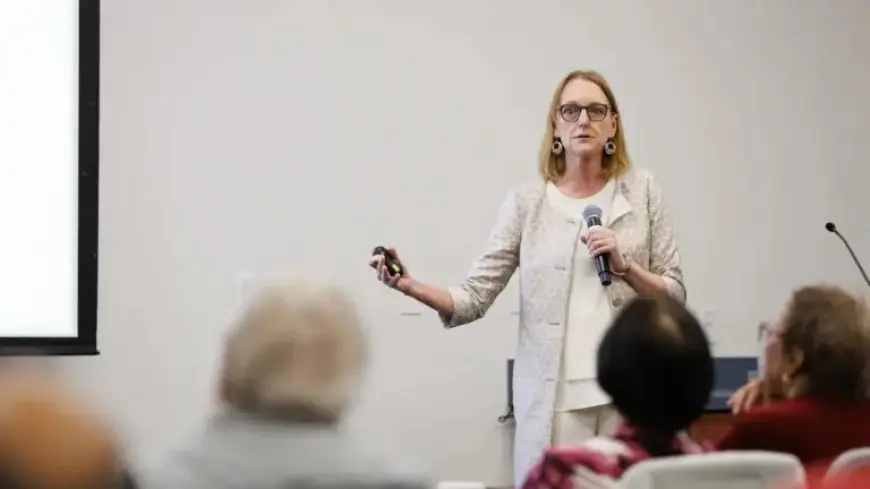
Seventy retired faculty members from the University of Florida (UF) recently gathered to discuss the implications of the university’s new institutional neutrality policy. The event featured Lyrissa Lidsky, a UF constitutional law expert, who explained how this policy intersects with academic freedom and First Amendment protections.
UF’s Institutional Neutrality Policy Explained
UF’s administration implemented a policy designed to limit when university leaders can publicly comment on political issues. Supporters argue that this preserves free expression by preventing political biases in academic environments. However, critics fear it may stifle classroom speech and undermine academic freedom.
Lidsky described institutional neutrality as a necessary boundary, separating official university positions from personal opinions. She emphasized that faculty should advocate and teach based on their expertise while adhering to the policy.
First Amendment Protections
According to Lidsky, neutrality policies do not infringe on First Amendment rights. She cited a 2022 ruling by U.S. District Judge Mark Walker, affirming that faculty have protection when discussing their expertise in non-official capacities. However, she cautioned that these policies should be well-defined to avoid ambiguity that may discourage scholars from expressing their views publicly.
Concerns from the Faculty
- Anna Calluori Holcombe, a retired professor emeritus from the College of the Arts, expressed unease about the policy’s implications for faculty.
- Holcombe referenced the case of Jeffrey L. Harrison, a retired law professor who lost his emeritus status for a political comment made on social media.
- She questioned the value of neutrality if it limits the faculty’s ability to teach effectively.
Support for Institutional Neutrality
Conversely, Chris Curran, director of UF’s Education Policy Research Center, endorsed the neutrality policy. He argued that it is aimed at university leaders and serves to prevent statements that might polarize the campus community. Curran noted that while individuals can express personal opinions outside of work, official roles come with responsibilities that may necessitate certain speech limitations.
He further asserted that clarity around the policy will determine its impact. Faculty need explicit guidance to distinguish between academic commentary and political advocacy comfortably.
Looking Forward
UF plans to offer additional clarification on the policy via a set of frequently asked questions, as per university spokesperson Cynthia Roldán. Until more concrete guidance is provided, Lidsky warned that uncertainty may linger, influenced by the current political climate challenging higher education.
In summary, UF’s neutrality policy raises significant questions about academic freedom and speech on campus. The ongoing dialogue among faculty members reflects a community striving to navigate the boundaries of expression in an increasingly polarized environment.