AHSAA’s 2026 reclassification reshapes Alabama public-school playoffs—and redraws the map for rivals, travel, and titles

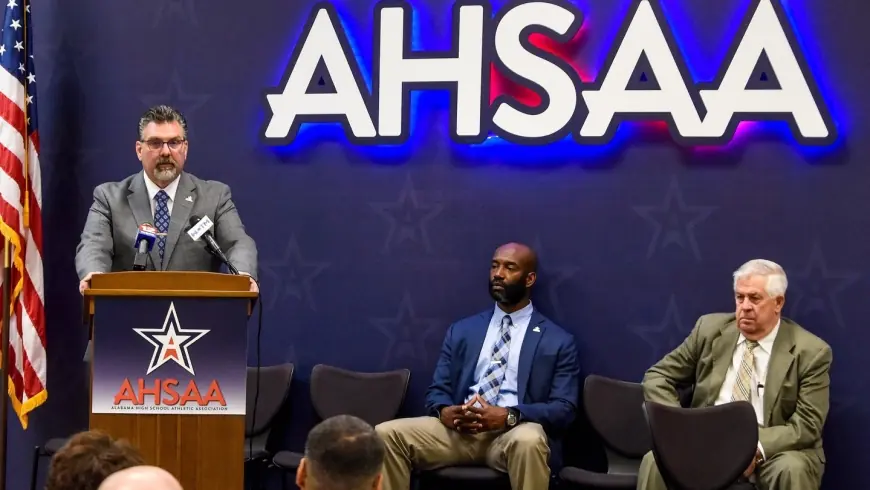
Alabama’s public high schools are about to feel a real, on-the-ground change in how championships are won. The AHSAA Central Board of Control has approved a new reclassification and postseason structure for the 2026–27 and 2027–28 school years that separates championship play between public schools and private (independent) schools. For public programs, it also marks a return to a six-class system (1A–6A), replacing the seven-class model that’s been in place for more than a decade. The result isn’t just a new label beside a school’s name—it’s new playoff paths, new “must-win” region games, and, in many cases, new travel routines and rivalries.
Why public schools will notice it first
For public-school football, basketball, baseball, and other sports that lean heavily on postseason brackets, the biggest effect is immediate: more teams competing against similar enrollment peers inside a public-only championship track. That changes the meaning of “state champion” in a practical way—public schools will no longer run into private-school contenders in the title chase under this structure.
Public schools will be grouped into six classifications:
-
Class 6A: the 32 largest public schools in the state
-
Classes 1A–5A: the remaining public schools distributed across five classes
Private schools will have two classifications for championship play:
-
Private AA: the 17 largest private schools
-
Private A: the remaining private schools
Regular-season scheduling can still include public vs. private matchups; the separation applies to postseason championships.
What the board approved, and what’s still being finalized
The board’s decision establishes the classification framework for championship play across the next two academic years, but some of the “nuts and bolts” that determine weekly pressure points are still in progress—especially for football. Region alignments, brackets, and tiebreaker procedures are expected to be worked out in upcoming meetings.
A second notable change: private schools will be classified by enrollment without an enrollment multiplier, and the competitive balance system is being eliminated under this new plan. That’s a meaningful shift in how competitive parity has been handled and will be a major talking point in private-school circles—even though the playoff tracks are now separate.
Mini timeline (how this lands on calendars)
-
Late January 2026: The board approves the 2026–28 classification and postseason model.
-
Early February 2026: Follow-up meeting(s) are expected to address bracket formats, region structures, and tiebreaker rules.
-
Spring–Summer 2026: Schools adjust non-region scheduling, travel assumptions, and rivalry slots as regions become clear.
-
Fall 2026: First football season operating under the new public/private championship separation.
The real-world ripple effects for communities
Reclassification stories can sound abstract until the first bus leaves on a longer trip or a familiar rival disappears from the region list. Here are the pressure points public schools are already bracing for:
-
Rivalries may shift: Traditional matchups can survive as non-region games, but region schedules often dictate the games that “matter most.”
-
Travel could rise or fall: Regions built around enrollment and geography don’t always align cleanly; some schools will see longer district trips, others shorter.
-
Playoff math changes: With a reworked class structure, the number of true contenders inside each bracket can change, making region finishes more valuable.
-
Bigger stakes in fewer slots: If region sizes or playoff-entry rules change, a single upset can carry more weight than it did under prior alignments.
For public-school coaches, the practical question isn’t philosophical—it’s tactical: “Who’s in our region, how do we qualify, and what kind of team do we need to build to survive it?”
What to look for next—without guessing
The approved structure answers the “how many classes and who plays for which trophies” question. The next phase will answer the questions fans argue about in August:
-
The region-by-region alignments (who you must beat to make the playoffs)
-
The tiebreaker system (how two- and three-team ties are settled)
-
The bracket format (how many rounds, how seeding works, and how travel is assigned)
Until those pieces are published, schools can’t fully finalize schedules—or predict which Friday nights will become the season’s hinge points. But the direction is now set: for 2026–28, Alabama public schools are returning to a six-class championship track, and the postseason landscape will look meaningfully different the moment the first brackets are drawn.