























Middle East Military Buildup Grows: Trump Mentions “Big Flotilla”

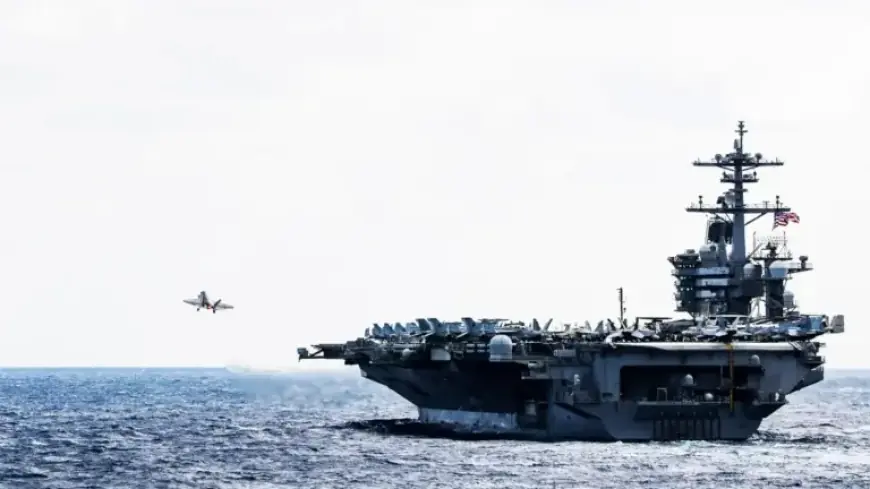
The military buildup in the Middle East is rapidly escalating as tensions rise between the United States and Iran. U.S. military assets are being deployed in response to the Iranian government’s violent crackdowns on protestors. Details regarding the military maneuvers and political implications are becoming increasingly urgent.
Trump’s “Big Flotilla” Statement
Recently, U.S. President Donald Trump announced significant naval movements toward the Middle East, referring to a “big flotilla.” This declaration echoes rising concerns regarding U.S.-Iran relations and potential military action in the region.
Naval Fleet and Air Assets in the Region
The USS Abraham Lincoln Carrier Strike Group (CSG) has relocated from the South China Sea to the Indian Ocean. This shift highlights the U.S. administration’s commitment to countering Iranian threats. The CSG includes a variety of aircraft, such as:
- F-35C Lightning II
- F/A-18E/F Super Hornets
- EA-18G Growlers
- E-2D Hawkeyes
- CMV-22B Ospreys
- MH-60R/S Sea Hawks
In addition to naval assets, increased cargo jets and aerial refueling tankers are being dispatched to support operations and maintain regional stability. U.S. forces are also sending additional missile defense systems, including Patriot and Terminal High Altitude Area Defense (THAAD) systems, in anticipation of potential Iranian responses.
Iran’s Response and Regional Tensions
As U.S. military assets mobilize, Iranian officials have issued stern warnings. General Mohammad Pakpour of the Islamic Revolutionary Guard Corps (IRGC) cautioned against miscalculations and underscored Iran’s readiness for conflict. This rhetoric comes amid ongoing civil unrest within Iran, exacerbated by economic hardship.
Potential Consequences of Escalation
The Strait of Hormuz, a critical maritime passage, remains a focal point for potential Iranian retaliation. Approximately 20 million barrels of oil transit this strait daily, accounting for a substantial portion of global petroleum consumption. Any military confrontation could severely disrupt global energy flows.
Key factors influencing U.S. military strategy include:
- The need for a strong defense posture against Iranian actions.
- The complexity of orchestrating a potential regime change in Iran.
- The importance of coordinating with allies in the region, including Israel.
International Military Collaborations
The United Kingdom has also bolstered its military presence in the region by deploying RAF Typhoon jets to Qatar. This deployment emphasizes the strong defense relationship between the U.K. and Qatar amid heightened tensions.
As America and its allies strengthen forces in the Middle East, the situation remains volatile. Though direct confrontation has not yet materialized, preparations are ongoing, and all parties involved are bracing for what could be an extensive conflict.
In conclusion, the military buildup in the Middle East is marked by President Trump’s assertive declarations and significant U.S. naval reinforcements. As both sides prepare for the potential fallout, the situation continues to develop, warranting close observation from the international community.