

























Coco Gauff’s Forehand Defines Her Australian Open Tennis Mastery

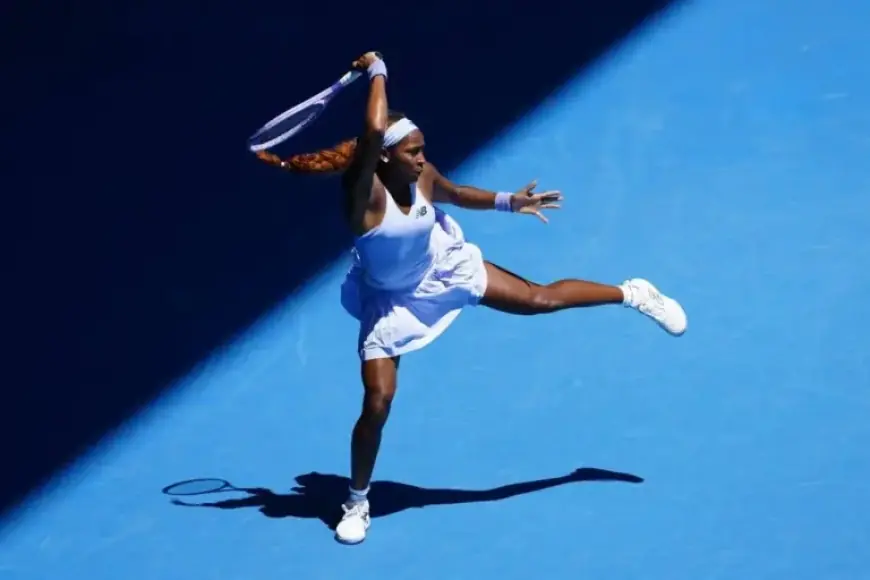
Coco Gauff, the 21-year-old tennis sensation and current world No. 3, continues to captivate audiences with her powerful forehand. As she competes at the Australian Open, her ability to leverage this shot is pivotal to her success on the court.
Coco Gauff’s Forehand: A Key Weapon
Gauff’s forehand is an intricate blend of athleticism and strategy. During matches, she often finds herself backpedaling as the ball approaches her. This movement, while instinctive, can lead to defensive play rather than the dominant style she prefers.
When Gauff is on the back foot, her typical fluidity diminishes. She described her current focus as working on the consistency of her forehand. “It is something I work on now, making it more consistent and better,” she stated. The Australian Open is an opportunity for her to showcase this improvement after achieving a solid start with a 6-2, 6-3 victory over Uzbekistan’s Kamilla Rakhimova.
Performance Metrics at the Australian Open
- Match Result: 6-2, 6-3 against Kamilla Rakhimova
- Double Faults: 7
- Unforced Errors: 31
Rakhimova struggled to capitalize on these errors. However, Gauff must address her mistakes, especially the high number of unforced errors, as tougher opponents await.
Challenges Ahead
Gauff’s upcoming match against Serbia’s Olga Danilović presents further challenges. To advance, she must refine her serve, which can reach speeds of 130 mph but often falters under pressure. Her inconsistencies in serving lead to double faults and can put her at a disadvantage.
Despite these hurdles, Gauff’s presence in elite tennis remains strong. She has made a name for herself, shifting from a 15-year-old phenom into a formidable competitor. Winning two out of the last nine Grand Slams, she aims for more, indicating her desire to achieve “double-digit” Grand Slam victories.
Coaching Influence
To enhance her game, Gauff has enlisted biomechanics coach Gavin MacMillan. His expertise aims to bolster her serve and forehand, two strokes critical to success. MacMillan emphasizes the importance of harnessing energy and introducing tactical precision to her game.
While her forehand has potential, Gauff often resorts to ineffective defensive shots. “I don’t think I was accelerating enough,” she admitted, highlighting her mental hurdles during competitive play. This mental aspect, linked to confidence, often influences on-court performance.
Strategic Playstyle
- Effective Against: Elite players like Iga Świątek
- Key Strategy: Balance of patient aggression
Gauff’s tactical awareness sets her apart from many players. She can transition from defense to offense, illustrating her ability to adapt to match situations. This skill is crucial as she seeks to establish herself as a dominant force in women’s tennis.
Looking Forward
As Gauff advances in the tournament, her focus will remain on improving consistency. Observing older players, she recognizes their steadiness, a quality she aims to develop more fully at this stage of her young career.
Overall, Gauff’s journey through the Australian Open will reflect her growth and resilience, particularly with her forehand. By refining this critical shot and her overall game, she aspires not only to win matches but to achieve greatness in her sport.