





















Bills Press Conference Raises New Uncertainty Around Keon Coleman and Terry Pegula’s Role

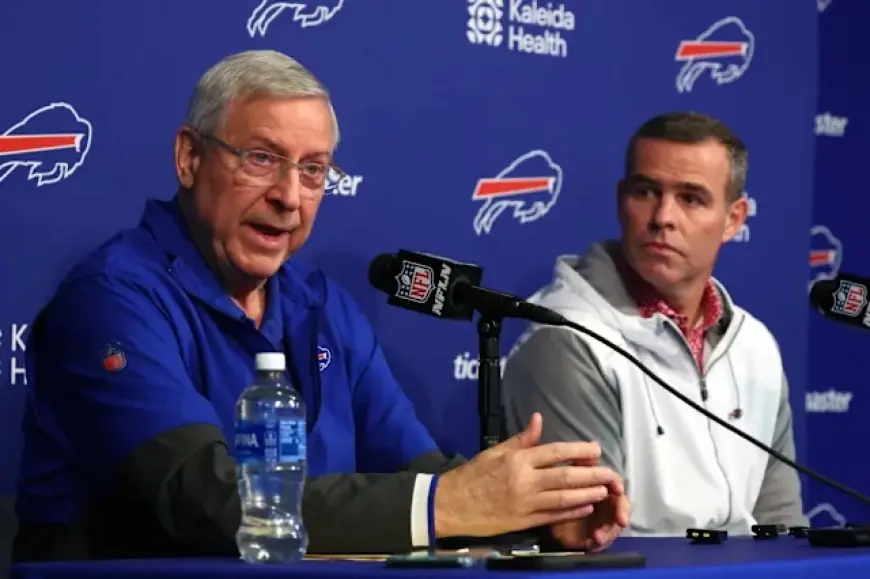
The Buffalo Bills didn’t just signal a reset at their recent press conference; they widened the margin for doubt around how football decisions get made and explained. When owner Terry Pegula stepped into a question about wide receiver Keon Coleman, the moment instantly shifted from “what’s next” to “who owns the choices.” That matters because the Bills are entering a head-coaching search and an offseason where clarity is currency. A single awkward explanation can linger longer than any roster move.
When leadership talks, the biggest risk is what it invites people to infer
In a normal end-of-season setting, ownership offers broad direction, the general manager outlines a plan, and the rest stays internal. This time, the framing created two competing takeaways at once: that the organization is collaborative, and that collaboration can turn into public finger-pointing when results disappoint.
For a team about to pitch itself to coaching candidates, that ambiguity is costly. Coaches want to know who has final say, how disagreements are handled, and whether tough conversations stay private. Players and agents want to know whether the organization protects its own during down stretches. Fans want to know whether the Bills are changing what matters, or just changing faces.
Even if the intent was to defend the front office, dragging a young player into a leadership explanation puts the spotlight in the wrong place: on blame instead of solutions.
What was said at the Bills press conference, and why Keon Coleman became the focal point
The most recent widely discussed Bills press conference took place on Wednesday, January 21, 2026, with Pegula and general manager Brandon Beane addressing the firing of head coach Sean McDermott and the direction of the franchise.
During the session, a question about roster building and the receiver room led to Pegula interjecting with comments that cast Coleman’s draft selection as a push from the coaching staff rather than Beane’s preferred choice. Beane then emphasized that the final decision was his, while also acknowledging that Coleman’s development has not tracked as hoped and pointing to maturity and consistency as areas that must improve.
That sequence created a double hit:
-
Coleman was publicly singled out in a conversation that was not primarily about him.
-
The organization’s decision-making chain was debated in public, right as it begins recruiting its next head coach.
A quick timeline of how the moment snowballed:
-
Jan. 21: Press conference remarks about Coleman’s draft path spark immediate backlash and debate.
-
Jan. 22–23: Discussion shifts to whether the comments complicate the coaching search and how Coleman responds going forward.
Questions readers are asking
Was this a message about Coleman’s future in Buffalo?
It reads more like an explanation of process than a declaration of a roster decision. Still, once a player is singled out by ownership, the football part becomes harder: every drop, every rep, every practice report will be interpreted through a new lens.
Did this undercut Beane or protect him?
Both interpretations exist because the message carried two ideas at once: the pick reflected staff input, and the responsibility rests with the general manager. The problem is not which one is true; it’s that the press conference made the internal push-and-pull the story.
Why does the head-coach search get harder from here?
Because it introduces a quiet worry: if things go sideways, will disagreements become public? That’s the opposite of what most top candidates want when choosing their next job.
What This Means Next
The Bills now have to stabilize three areas at the same time:
-
A cleaner leadership narrative: The franchise needs one consistent explanation of how choices are made and who owns them, without turning players into examples.
-
A defined offseason track for Keon Coleman: The path back is straightforward: reliability, preparation, and earning trust through routine, not speeches. If maturity and consistency are the stated issues, the response has to show up daily.
-
A coaching pitch built on alignment: The next head coach will need real authority in the building, but also clear boundaries. The Bills can’t afford uncertainty about decision rights to become part of the job description.
The press conference may fade, but the subtext will not. Buffalo’s next moves—coach selection, staff structure, and how it talks about developing young talent—will either confirm that this was a one-off messaging stumble, or cement the idea that pressure changes how the organization communicates.