
























Trump Discusses Tariffs as Argentina Receives First Chinese EV Shipment

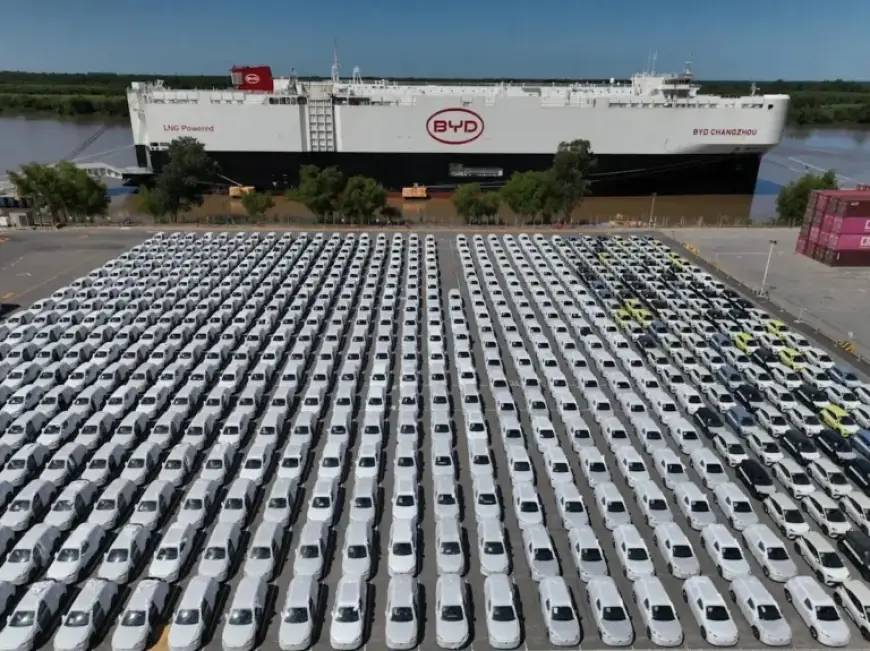
The arrival of over 5,800 electric and hybrid vehicles in Argentina marks a significant milestone for the nation’s economy. This shipment, delivered by Chinese automaker BYD, arrived at Zárate Port after a 23-day journey from Singapore. As the first of its kind for Argentina, this development highlights the changing dynamics of the automotive industry in the region.
Breaking Down Trade Barriers
Argentina’s new trade policies have caught global attention. Recently, the country has shifted from a protectionist stance to a more open economy, implemented by President Javier Milei. Under Milei, import tariffs have been significantly reduced, allowing a zero-tariff quota for 50,000 electric and hybrid vehicles under $16,000. This adjustment is part of a broader strategy to revitalize the economy.
BYD’s Ambitious Vision
Stephen Deng, BYD’s country manager in Argentina, expressed confidence in the long-term vision for the company. He stated this shipment would help expand BYD’s dealer network throughout the country. This approach contrasts sharply with Argentina’s previous policies that prioritized domestic manufacturing.
- Total electric and hybrid vehicles in the shipment: 5,800
- First arrival date: Monday
- Duration of voyage: 23 days from Singapore
- Zero-tariff vehicle quota: 50,000 units
- Price limit for zero-tariff vehicles: $16,000
The Implications for Local Industry
This influx of Chinese electric vehicles signifies a dramatic shift in Argentina’s automotive landscape. Claudio Damiano, a transportation professor at Argentina’s National University of San Martin, noted that the arrival of duty-free cars symbolizes a change in national trade practices. Historically, Peronist policies favored local manufacturing, but the recent deregulation under Milei has opened the door for international competitors.
Concerns from Local Manufacturers
Local manufacturers express concern over increased competition from foreign automakers. Pablo Naya, founder of Sero Electric, Argentina’s sole electric car producer, highlighted how the country is lagging in developing an electric vehicle infrastructure. The aging power grid and lack of service centers for Chinese EVs could pose challenges as demand grows.
Conclusion
The shipment of Chinese electric vehicles represents a transformative moment for Argentina’s economy. As the nation moves towards a more open trade policy, the implications for local industries and consumers are significant. Observers will watch closely to see how the market adapts to these changes and what it means for the future of electric mobility in Argentina.